China’s People’s Liberation Army (PLA) has dramatically escalated military pressure on Taiwan through a coordinated, large-scale joint operation dubbed Justice Mission 2025. The exercise, which began on December 29, 2025, involves a potent mix of naval, air, missile, and coast guard forces, and extends through December 30. Framed as a live-fire drill, the operation is widely perceived as a simulated blockade, intensifying strategic tensions across the Indo-Pacific region.
The Structure of Justice Mission 2025: A Strategic Rehearsal
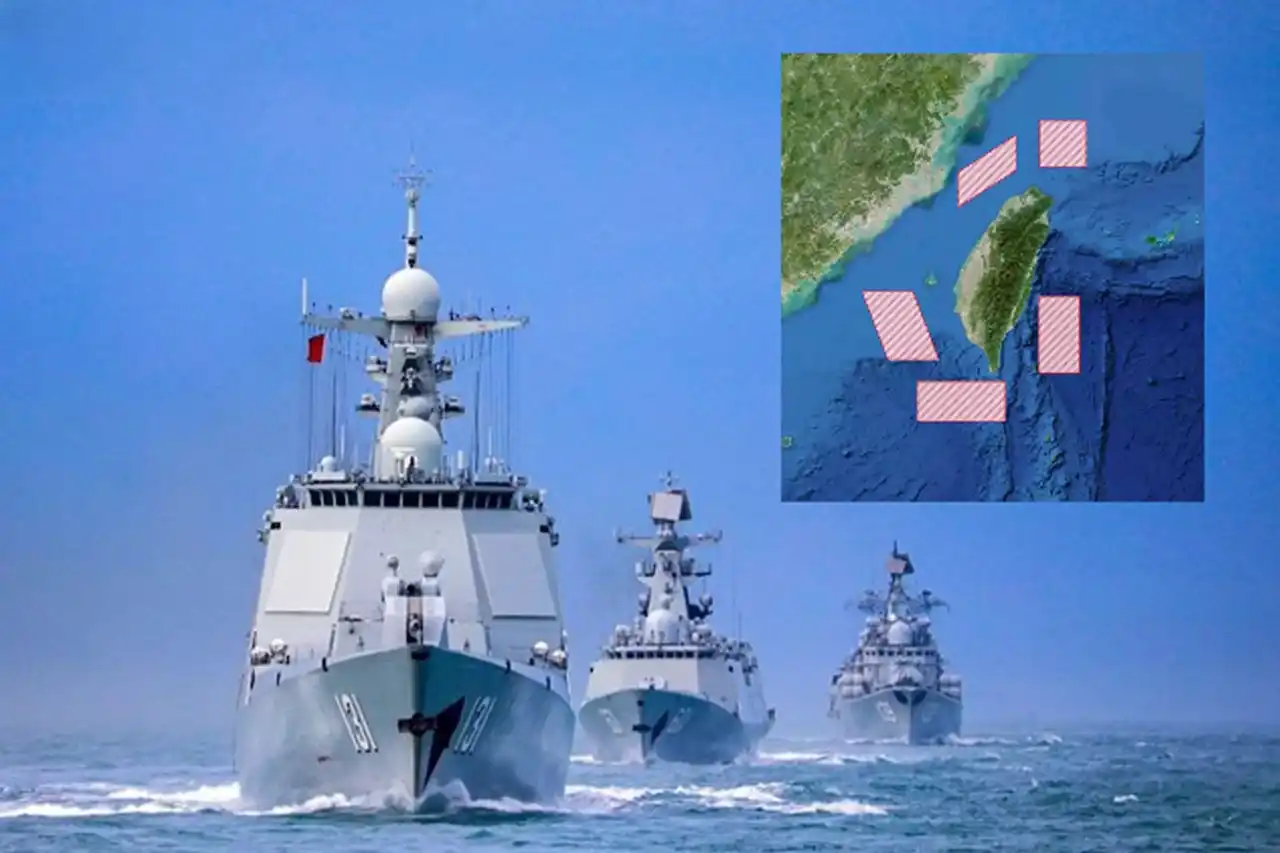
The PLA’s Eastern Theater Command orchestrated the exercise across five distinct zones encircling Taiwan’s north, south, and east, creating a semi-ring of strategic pressure. These areas are designed not only for military effect but psychological signaling. Naval surface combatants, including advanced Type-055 destroyers, joined Air Force strike aircraft, Rocket Force missile brigades, and China Coast Guard units to simulate a multi-domain encirclement of Taiwan.
Each element of the drill aligns with broader objectives:
- Surface combat patrols executed maritime containment maneuvers.
- Fighter aircraft simulated air superiority and strike operations.
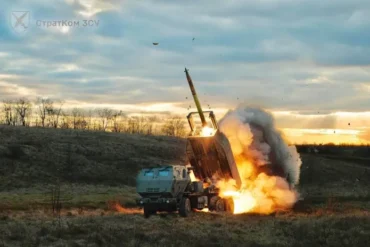
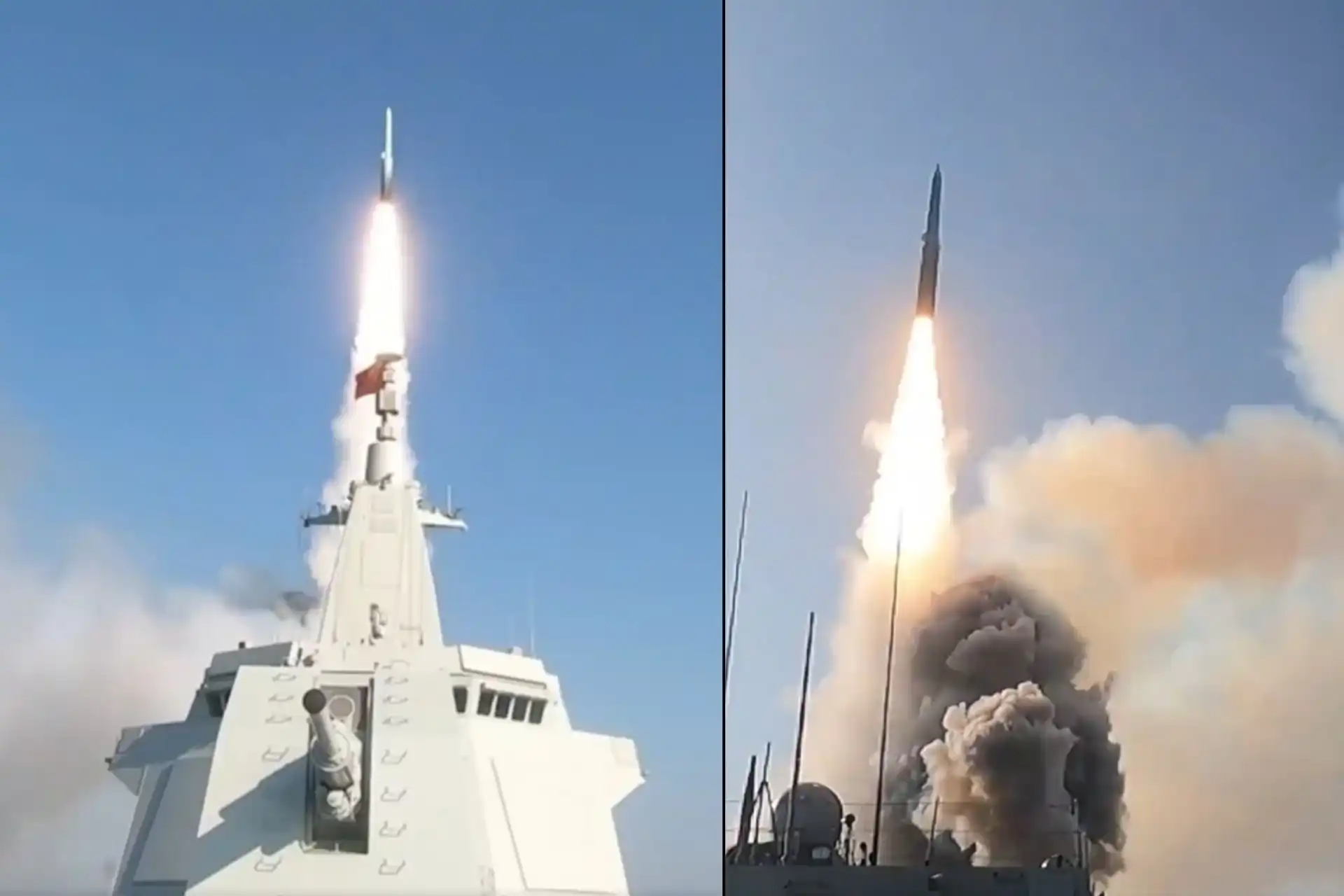
- Missile units rehearsed rapid targeting and launch coordination.
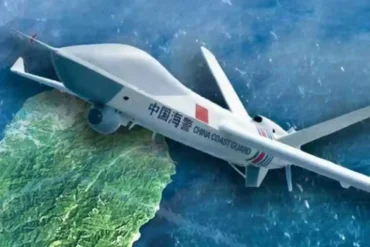
- Coast Guard vessels conducted what Beijing calls “law enforcement” patrols in contested waters.
While officially labeled as a training event, the PLA’s navigation and flight restriction zones hint at its real function: to demonstrate how China can disrupt regional logistics and defense coordination under the veneer of peacetime exercises.
Taiwan’s Response: Strategic Restraint, Tactical Vigilance
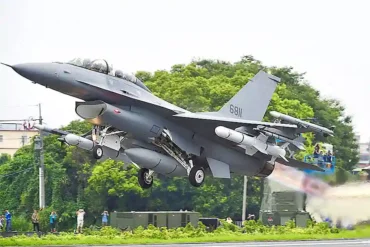
Taiwan’s Ministry of National Defense launched Rapid Response Exercises in parallel, raising alert levels across its air and naval forces. The island’s defense posture remains non-escalatory, but firm. Units have been deployed to track PLA activities in real time, supported by mobile coastal missile systems and integrated air defense networks.
Taipei’s messaging is equally calculated. Officials characterized the operation as part of a “long-term intimidation campaign”, and underscored the need for continued investment in asymmetric warfare capabilities—those optimized for repelling a larger adversary through mobility, survivability, and precision.
Crucially, Justice Mission 2025 unfolds weeks ahead of Taiwan’s presidential election, offering an opportunity for Taipei to reaffirm its democratic resilience and strategic partnerships.
Beijing’s Objectives: Multi-Layered Strategic Signaling
The PLA’s timing appears synchronized with multiple geopolitical developments:
- U.S. arms sales to Taiwan announced days prior
- Chinese sanctions on U.S. defense contractors
- Deepening security ties between Taiwan and Japan
Beijing’s message is multipronged:
- To Washington, it signals that deeper ties with Taipei carry real-world military consequences.
- To Tokyo, it underscores the geographic vulnerability of Japan’s southern islands to PLA operations.
- To regional stakeholders, it demonstrates how China can rapidly mobilize multi-domain pressure without triggering open warfare.
Implications for Japan and Regional Stability
Japan, which views Taiwan’s security as inseparable from its own, is increasingly alarmed. The PLA’s near incursions skirt just outside Japan’s Exclusive Economic Zone (EEZ), a move calculated to avoid formal escalation while highlighting China’s expanded operational reach.
For Southeast Asia and global trade networks, the maneuvers expose the fragile reliability of the Taiwan Strait, one of the world’s busiest maritime arteries. Civilian air and maritime traffic has already experienced disruptions due to PLA-issued navigational restrictions. These interruptions, though temporary, reveal Beijing’s ability to weaponize civilian domains under the pretense of training.
Integrated Warfare and the Erosion of Norms
Justice Mission 2025 showcases China’s maturing ability to conduct joint integrated warfare. This is not just about hardware but about synchronized execution:
- Real-time targeting and surveillance
- Joint command and control
- Integrated logistics
Every iteration of these drills acclimates PLA commanders to Taiwan’s vulnerabilities and defensive rhythms. For Taiwan, this leads to increased strain on command infrastructures, blurring the line between a drill and a precursor to real conflict.
The effect is cumulative. Near-continuous pressure erodes readiness, drives up defense costs, and complicates alliance coordination. It becomes a form of psychological attrition, pressing Taipei without breaching international thresholds.
The Dilemma for the United States and Its Allies
Justice Mission 2025 crystallizes a growing strategic challenge for the U.S., Japan, and Indo-Pacific allies: countering a slow, creeping form of aggression that doesn’t rely on outright war.
A “gray-zone” scenario could unfold in which Taiwan is gradually cut off and pressured, all beneath the threshold of open conflict. In such a scenario:
- Traditional deterrence tools may prove ineffective
- Political will becomes as important as firepower
- Integrated, multi-national response mechanisms must evolve
The Taiwan Strait: From Flashpoint to Permanent Contest Zone
What emerges from this exercise is a paradigm shift. The Taiwan Strait is no longer a theoretical flashpoint—it is evolving into a permanent zone of military contestation. Each Chinese drill layers additional strategic ambiguity onto the status quo, while familiarizing regional actors with China’s terms of engagement.
Key takeaways from this transformation:
- Beijing is building a toolkit of coercion without escalation.
- Taipei is pivoting to survivability and strategic signaling.
- Washington and its allies are being drawn into sustained presence operations.
Justice Mission 2025’s deeper meaning is not in the fireworks of hypersonic missile launches or destroyer maneuvers. It lies in how Beijing is rewriting the rules of peacetime, normalizing disruption as a feature of its regional strategy. It is a demonstration of how power can be projected without war, and how control can be tested without conquest.
This is not about war today—it is about shaping tomorrow’s battlefield, one rehearsal at a time.