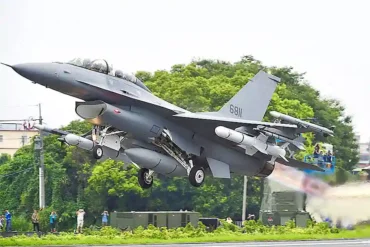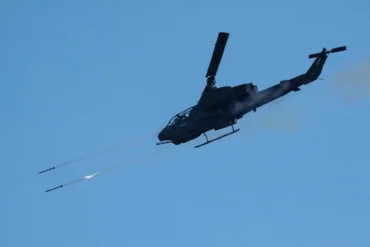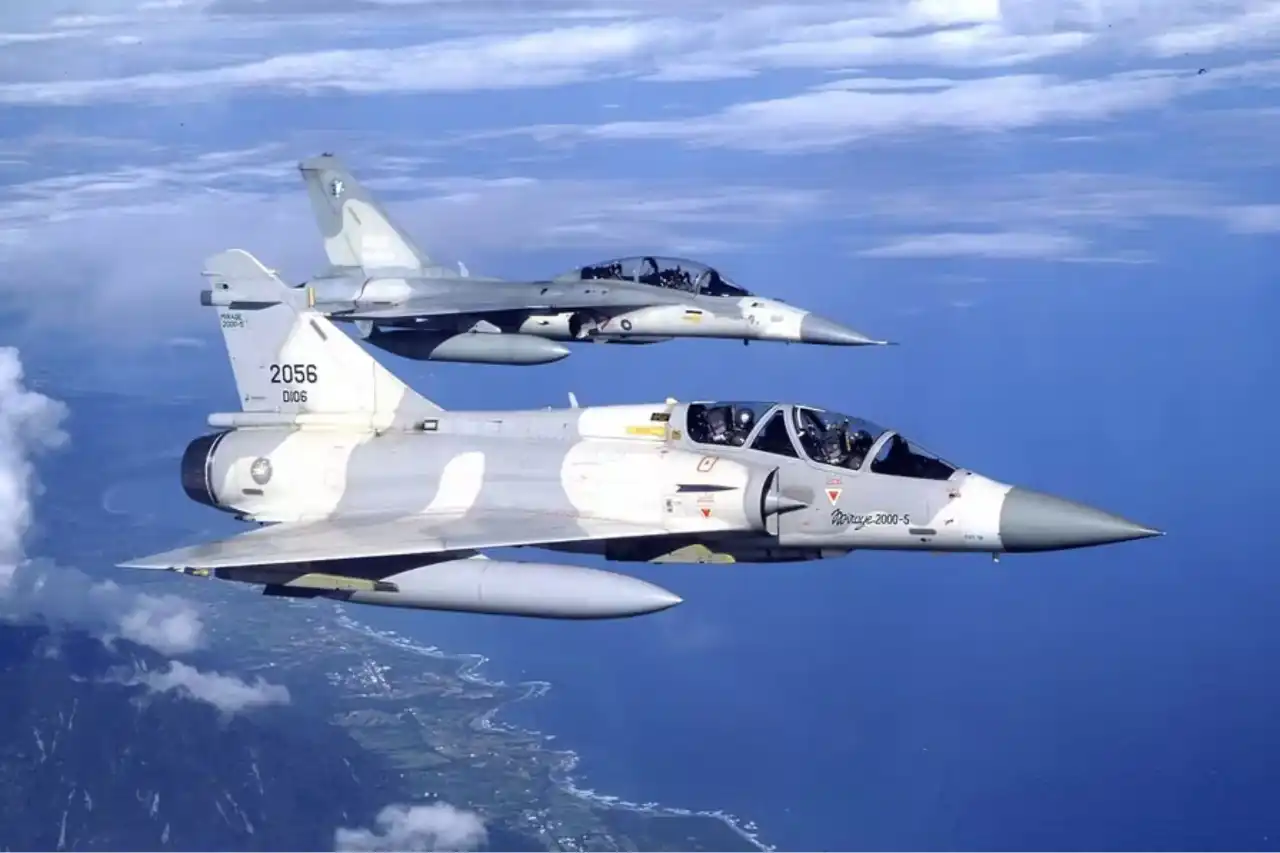
Taiwan’s air defense network was once again thrust into the spotlight on December 30, 2025, as a Mirage 2000 fighter jet roared off the runway at Hsinchu Air Base. The launch came amid escalating People’s Liberation Army (PLA) military drills circling the island. With China’s forces conducting multi-domain exercises that included aircraft sorties, warships, and missile forces, Taiwan’s response was swift, measured, and unmistakably firm.
Strategic Scramble: Hsinchu in the Crosshairs of PLA Maneuvers
Located on Taiwan’s northwest coast, Hsinchu Air Base serves as a crucial operational hub, especially for the nation’s Mirage 2000 fleet. As PLA aircraft crossed near or over the Taiwan Strait median line, Taiwan’s air force activated its quick reaction alert (QRA) protocol. The Mirage 2000s, though no longer the newest birds in the sky, took to the air under heightened readiness conditions to intercept, monitor, and shadow any encroaching aircraft.
This round-the-clock posture underscores a core reality: Taiwan cannot afford strategic pauses. As Beijing amplifies its coercive playbook with “grey zone” tactics, Taiwan’s defense forces are matching pressure with persistent vigilance.
The Mirage 2000: Aging Warrior with Modern Punch
Taiwan’s Mirage 2000-5EI fighters, procured from Dassault Aviation in the 1990s, continue to hold a frontline role in the island’s layered air defense system. Delivered by 1998, the 60-strong fleet is now integrated into a tri-force mix that includes upgraded F-16V fighters and Indigenous Defense Fighters (IDFs). Each type plays a unique role, but the Mirage 2000’s contribution to high-speed interception remains indispensable.
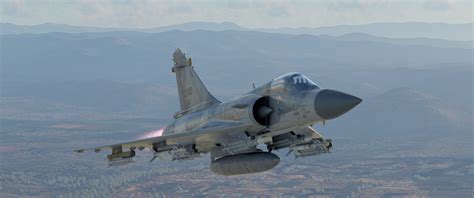
Technically, the Mirage 2000-5 is a fourth-generation multirole aircraft equipped for air dominance. Its delta-wing design and SNECMA M53-P2 afterburning turbofan engine enable blistering speeds up to Mach 2.2 and service ceilings approaching 17,000 meters. With these characteristics, the Mirage is built for exactly the kind of fast-response, altitude-versatile missions that Taiwan demands.
Equally important is the fighter’s avionics and weapons suite. With the Thales RDY multimode radar, Mirage pilots can engage multiple targets in “look-down/shoot-down” conditions. Armed with MICA EM and MICA IR missiles, pilots can launch “fire-and-forget” attacks from beyond visual range. This is a key advantage when intercepting swift, possibly armed intruders near the island’s shores. For dogfighting, the aircraft retains Magic 2 missiles and twin 30 mm DEFA cannons, ensuring lethality at close range.
China’s Blockade Rehearsals and Taiwan’s Tactical Messaging
Beijing’s latest drills are not simply martial displays—they are calculated rehearsals for blockade scenarios, airspace denials, and multi-axis pressures designed to grind Taiwan’s defenses over time. The PLA aims not just to test Taiwan’s combat response, but also to exhaust it logistically and psychologically.
Against this backdrop, every Mirage 2000 launch acts as a strategic signal: Taiwan’s skies are monitored, defended, and contested. While missiles are not always fired, the mere presence of armed interceptors forces Chinese planners to reassess, react, and recalibrate. This imposes tactical friction and feeds uncertainty into the PLA’s operational calculus.
Air Base Survivability and Infrastructure Readiness
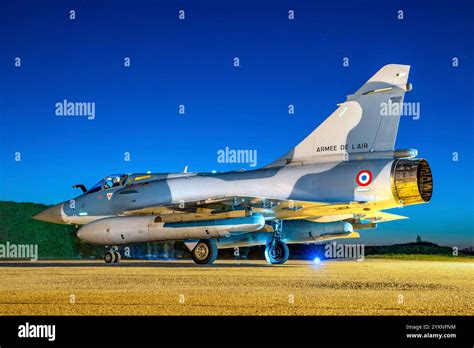
Hsinchu Air Base’s significance is not just in aircraft—it lies in infrastructure resilience. The base’s proximity to Chinese long-range precision strike systems makes it a target in any high-intensity conflict. Yet Taiwan’s ability to maintain flight operations during drills speaks volumes about its airfield hardening, runway recovery capabilities, and rapid sortie generation.
Military analysts note that the ability to sustain flight operations under threat is a critical measure of wartime readiness. Every successful Mirage 2000 scramble from Hsinchu affirms that Taiwan is not merely reactive, but operationally prepared for sustained tension scenarios.
Maintenance, Endurance, and the Mirage’s Lifespan
Despite its age, Taiwan continues to invest in life-extension programs for the Mirage fleet. With spare parts sourced from Europe and in some cases refurbished locally, Taiwan acknowledges that fleet endurance is a more pressing metric than headline-worthy new acquisitions alone. In a prolonged coercion campaign, maintaining aircraft that can take off every day matters more than unveiling fifth-generation prototypes.
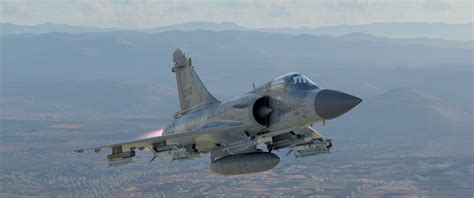
Critics have flagged the Mirage as cost-intensive to maintain, especially compared to newer platforms. But these fighters, with high-speed response and proven multirole versatility, occupy a unique niche that remains operationally valuable.
Operational Rhythms and Psychological Signaling
China’s strategic calculus involves stretching Taiwan’s defenses across air, sea, and information domains. One overlooked dimension of the December 30 Mirage sortie is its contribution to the psychological dimension of modern warfare.
Each high-alert launch conveys continuity. It reinforces to domestic and international observers that Taiwan is not passive. It also signals to regional allies—particularly the United States and Japan—that Taiwan is proactively countering military pressure with measured operational discipline.
And for the PLA, it injects doubt. Is Taiwan tracking everything? Are they staging decoys? Can a quick thrust toward Taiwan’s air defense identification zone (ADIZ) succeed, or will another Mirage 2000 already be in the sky to meet them?
Resilient Defense in a Protracted Standoff
The December 30 launch is part of a broader endurance contest now defining the Taiwan Strait. Beijing may believe that prolonged drills will create strategic fatigue in Taiwan’s command and political leadership. But Taiwan’s message is increasingly clear: airspace sovereignty is not negotiable.
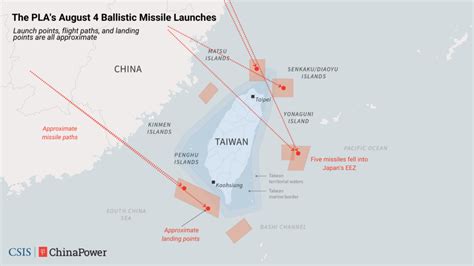
Moreover, these responses are not just military—they are political acts of assertion. They say to the world: Taiwan’s sovereignty is defended not only with statements, but with sorties.
Final Sortie: A Snapshot of Taiwan’s Defense Realities
As the Mirage 2000 climbed away from Hsinchu on that overcast morning, it encapsulated more than an air patrol—it represented a national doctrine. One built on discipline, technological integration, pilot professionalism, and a deep understanding of what deterrence means in practice.
Though not stealthy, not new, and not headline-grabbing in the age of drone warfare, the Mirage 2000 remains a battle-proven instrument of air control. In the hands of Taiwan’s pilots, it is a scalpel—fast, sharp, and deployed with clarity of purpose.
As Chinese drills escalate, each Mirage sortie becomes a piece of Taiwan’s strategic puzzle. And as of now, the message remains as clear as the afterburners lighting up Hsinchu’s skies: Taiwan is ready.