In a high-stakes operation that sent shockwaves through global defense circles, the United States executed its most audacious long-range airstrike in decades, underscoring the enduring dominance of manned stealth aircraft and exposing the current limitations of Elon Musk’s much-hyped “drone swarm” doctrine.
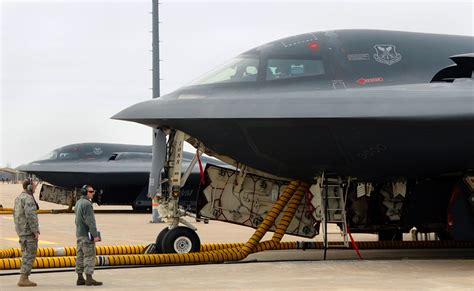
Over the weekend, seven B-2 Spirit stealth bombers embarked on a grueling 7,000-mile journey from Whiteman Air Force Base in Missouri to Iran, executing a coordinated, precision strike under the codename Operation Midnight Hammer. The mission targeted Iran’s most fortified nuclear installations—Fordo and Natanz—dropping over a dozen 30,000-pound bunker-busting bombs onto facilities buried beneath layers of rock and reinforced concrete.
The strike came after weeks of Israeli aerial assaults had failed to neutralize the sites, with Tehran’s nuclear infrastructure appearing virtually impenetrable. Yet, in the early hours of Sunday, U.S. stealth bombers pierced Iran’s defenses with near-total impunity, leveraging deception tactics, aerial refueling, and radio silence to evade detection.
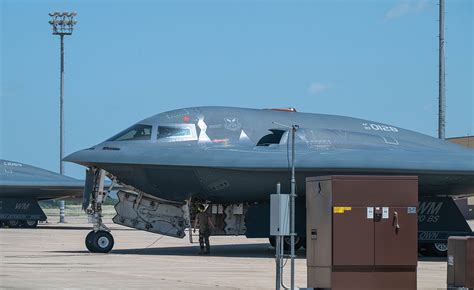
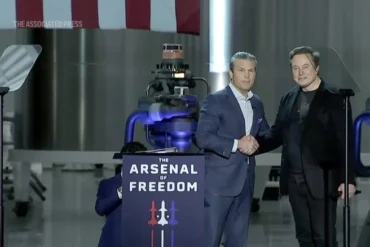
The mission stands in stark contrast to assertions made by tech mogul Elon Musk, who has repeatedly declared manned combat aircraft obsolete, championing autonomous drone swarms as the inevitable future of warfare. Inspired by Ukraine’s prolific use of drones to strike Russian targets, Musk labeled platforms like the B-2 and F-35 Lightning II as “economically wasteful” relics.
“Manned fighter jets are obsolete,” Musk posted last year, arguing that fleets of inexpensive, AI-driven drones would soon render them irrelevant.
But when faced with the challenge of destroying hardened, deeply buried nuclear facilities located within one of the world’s most heavily defended airspaces, the Pentagon didn’t turn to unmanned drones—it turned to the tried-and-tested power of human pilots, stealth engineering, and decades-old bomber platforms.
The Tactical Significance of Operation Midnight Hammer
According to Lt. Gen. David Deptula (Ret.), one of the architects behind the B-2 strike doctrine, the Iran mission isn’t just a military maneuver—it’s a real-world validation of the continuing necessity of manned stealth aircraft.
“This level of performance isn’t theoretical,” Deptula stated. “It’s a real-world demonstration that stealthy, crewed aircraft remain central to high-end operations, especially when nuclear or deeply buried targets are involved.”
Naveed Jamali, former naval intelligence officer and defense journalist, reinforced the significance of the operation, pointing to the unparalleled range, lethality, and precision of the B-2.
“It shows that the U.S. is superior to every other country in our ability to employ long-range bombers,” Jamali remarked, highlighting his unique experience as the 820th civilian to fly aboard a B-2.
The element of surprise was meticulously preserved. Iran’s air defense networks, touted as some of the most formidable outside NATO, failed to even detect the incoming bombers. Most U.S. lawmakers were kept in the dark, and President Trump’s vague public statements days prior suggested no strike decision had been made—a masterclass in strategic misdirection.
“Our B-2s went in and out and back without the world knowing at all,” confirmed Secretary of Defense Pete Hegseth, underscoring the bomber’s unmatched stealth and psychological warfare capability.

The Illusion of Drone Swarm Supremacy
The Iranian operation has ignited fierce debate over the future of airpower, with the events offering a sobering reality check to Silicon Valley’s drone evangelists. Though small drones have undoubtedly reshaped aspects of modern warfare, their limitations remain glaring in the context of high-end, contested environments.
“There’s enormous limitations to autonomous and uncrewed systems when you’re dealing with denied airspace and dynamic threats,” Deptula asserted. “There’s no drone that could’ve pulled off what the B-2s just did over Iran.”
While Elon Musk envisions AI-driven drones saturating battlefields with low-cost lethality, the Iran strike revealed the enduring advantages of human adaptability, strategic decision-making, and the psychological impact of manned bomber missions.
“You can’t automate pilot intuition—not even close,” said Deptula. “When it comes to power projection and strategic messaging, nothing replaces a stealth bomber flying halfway around the world and striking with impunity.”
Israel’s Complementary Role and the F-35 Factor
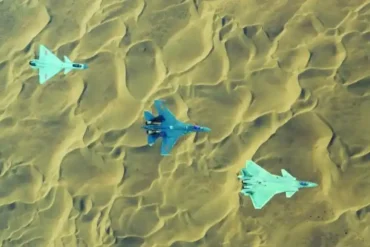
Simultaneously, Israeli forces leveraged their F-35 Lightning II stealth fighters in coordinated operations over Iran, reaffirming the relevance of manned stealth aircraft. The F-35, with its low-observable profile, sensor fusion, and network-centric warfare capabilities, penetrated Iranian airspace with similar ease, dismantling key defensive nodes and paving the way for follow-on strikes.
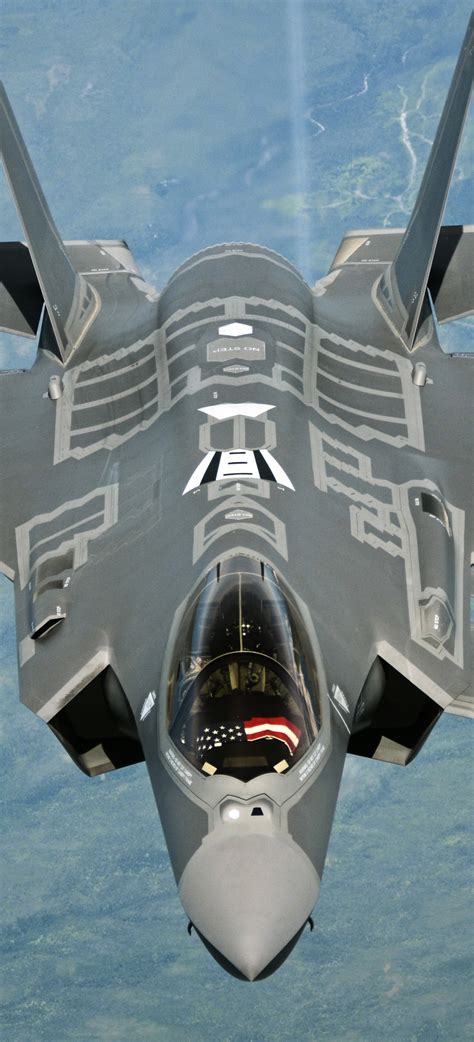
“Their aircraft were able to pierce Iran’s aerial defense systems with impunity,” observed Guy Snodgrass, former Navy fighter pilot and Pentagon strategist. “That permeability allowed Israel to peel back Iran’s defenses, and it seems there’s not much Iran can do to stop them.”
While drones played supporting roles—Israeli forces deployed small lethal drones to suppress specific Iranian defense sites—the high-impact missions remained firmly in the hands of trained pilots operating advanced stealth platforms.
From B-2 Legacy to B-21 Raider Future
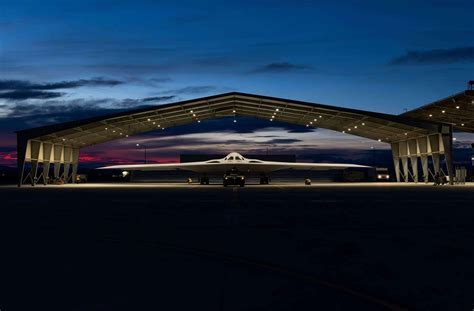
The success of Operation Midnight Hammer has revitalized enthusiasm for the next evolution of U.S. strategic bombing: the B-21 Raider, designed to extend the legacy of the B-2 while incorporating advanced modular systems, improved stealth, and future-proofed architecture.
“The B-2’s performance over Iran validates the continued relevance and necessity of maintaining this kind of capability,” said Jamali. “The B-21 is set to push those boundaries even further.”
The U.S. Air Force has already committed to building at least 100 B-21 Raiders, with the first aircraft undergoing flight testing. The new platform is engineered to penetrate modern air defenses, deliver massive ordnance payloads, and integrate rapid technological upgrades through its open-systems design.
“The strategic edge will still rely on the unique combination of stealth, precision, human adaptability, and messaging that only manned bombers like the B-2—and soon the B-21—can provide,” Deptula concluded.
Conclusion: The Enduring Role of Manned Stealth Aircraft
The Iran strike serves as a reality check for policymakers, technologists, and defense strategists enthralled by the promise of drone warfare. While autonomous systems will continue to evolve and expand their battlefield applications, they are not yet capable of replacing the unique advantages of manned stealth platforms.
Operation Midnight Hammer showcased the enduring relevance of human-controlled, high-end aircraft in executing complex, high-stakes missions where failure is not an option. It also reaffirms that in the arena of global power projection, where strategic messaging and psychological warfare intersect with raw military capability, the silent arrival of a stealth bomber remains one of the most potent tools in America’s arsenal.
Elon Musk’s vision of drone-dominated warfare may shape the future, but as the dust settles over Iran’s nuclear sites, it’s clear that for now, the world’s most formidable adversaries still fear the shadow of the B-2 Spirit—and soon, the B-21 Raider—soaring undetected overhead.