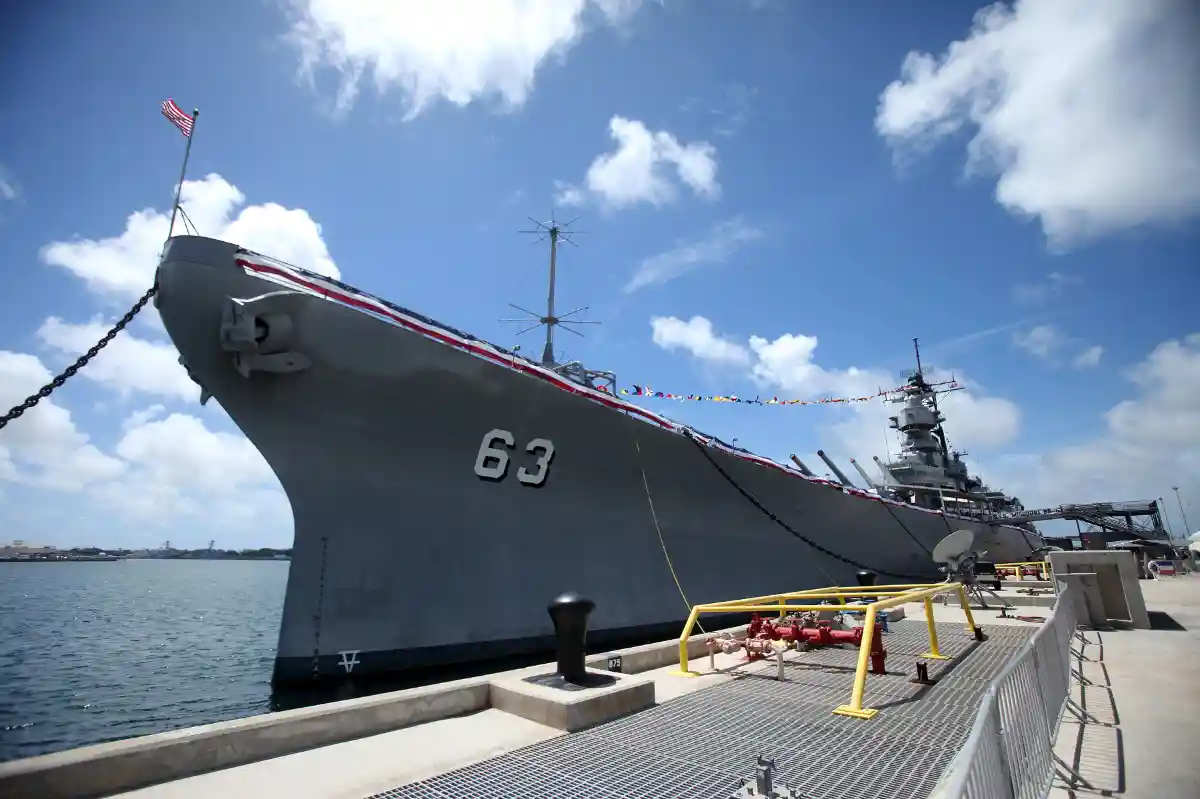
Since the late 19th century, the U.S. Navy’s approach to identifying its vessels has evolved from simple class‑and‑number labels like “Battleship 7” (B‑7) to a rigorous, two‑ to four‑letter system instituted in 1920 by Chief of Naval Operations Robert E. Coontz. Initially designed to bring order to an expanding fleet, this standardized nomenclature now reveals critical mission roles at a glance: CVN for nuclear‑powered carriers, LHD for helicopter docks, SSBN for ballistic‑missile submarines, and beyond. Ships can even change codes when refitted—most famously, the collier USS Langley (AC‑3) became the Navy’s first carrier, CV‑1, in 1922. Understanding these abbreviations unlocks a richer appreciation of how the Navy projects power, supports humanitarian relief, and adapts to new threats.
From the behemoth supercarriers that dominate international diplomacy to nimble mine‑hunters that secure harbor approaches, each designation carries a legacy of technological innovation and strategic purpose. Below, we explore 14 of the most critical hull codes—unpacking their origins, capabilities, and the cutting‑edge platforms they represent today.
Evolution of U.S. Navy Hull Designations
The Navy’s earliest identifiers sufficed when fleets were small, but by World War I, overlapping class names and numbers created confusion. In 1920, Coontz mandated two‑letter prefixes—occasionally three or four—paired with hull numbers. The letter “A” often denotes auxiliary roles, yet appears in assault, amphibious, and command ship codes. As fleet missions expanded—from strategic deterrence to littoral combat—the designation system has proven flexible, reallocating hull codes when vessels change roles or receive major upgrades.
CVN: Nuclear‑Powered Aircraft Carriers
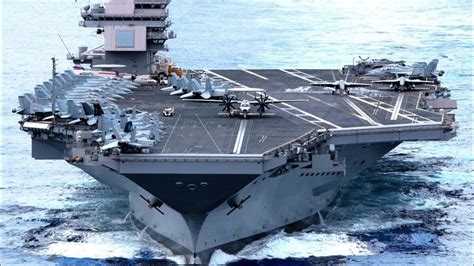
The CVN code epitomizes maritime dominance: “C” for carrier, “V” for heavier‑than‑air aviation, and “N” for nuclear power. These 100,000‑ton giants serve as mobile air bases capable of launching up to 90 fixed‑wing aircraft anywhere on the globe—providing both kinetic force and humanitarian relief, as during the 2004 Indian Ocean tsunami. The Ford‑class carriers feature dual‑reactor nuclear cores for virtually unlimited range, advanced electromagnetic launch systems (EMALS), and stealth‑enhanced flight decks.
Key Specifications:
- Displacement: 100,000 tons
- Aircraft capacity: Up to 90 fixed‑wing and rotary craft
- Propulsion: Two A1B nuclear reactors
- Flight deck: EMALS and advanced arresting gear
LHD: Wasp‑Class Landing Helicopter Docks
Designed to project Marine Expeditionary Units (MEUs) ashore, LHD ships combine well decks with full flight decks. Wasp‑class vessels displace 40,500 tons and transport 2,000 Marines, deploying amphibious vehicles and LCAC hovercraft through a floodable stern well. Their air wings emphasize helicopters and MV‑22 Ospreys, enabling swift troop insertion in contested littorals.
Key Specifications:
- Displacement: 40,500 tons
- MEU capacity: 2,000 Marines
- Well deck: Up to 3 LCACs
- Flight deck: Helicopters and MV‑22 Ospreys
LHA: America‑Class Amphibious Assault Ships
Also termed Landing Helicopter Assault, LHAs trace their lineage to the Iwo Jima‑class LPH. Modern America‑class ships (LHA(R)) displace 44,971 tons, stretch 844 ft, and carry 1,700 Marines along with F‑35B Lightning Joint Strike Fighters, AH‑1Z attack helicopters, and MV‑22 Ospreys. While visually resembling small carriers, their core mission is rapid amphibious assault, supporting Operational Maneuver From the Sea and Ship to Objective Maneuver doctrines.
LCC: Amphibious Command Ships
The LCC code defies easy acronym expansion but marks flagship command vessels like USS Blue Ridge and USS Mount Whitney. Commissioned in 1971, these 634‑ft, 18,874‑ton platforms serve as C4I hubs—boasting Kevlar armor, satellite communications domes, and space for 3,000 personnel. Capable of 20 kts, they coordinate fleet movements and amphibious task forces worldwide.
LPD, LSD, and ESB: The Amphibious Triad
- LPD (Landing Platform Dock): San Antonio‑class transports (684 × 105 ft) carry 700 Marines, two 60‑ton LCACs, 14 AAVs, and helicopters, featuring low radar signatures and shock‑hardened structures.
- LSD (Dock Landing Ship): Whidbey Island and Harper’s Ferry classes support four LCACs, 340 crew, 500 troops, CH‑53D helicopter operations, and advanced self‑defense (SSDS, RAM missiles, Phalanx CIWS).
- ESB (Expeditionary Sea Base): Converted Alaska‑class tankers (785 × 164 ft, 90,000 tons) provide mobile special ops and support, with mission decks, hangars, medical centers, and 9,500 nm endurance at 15 kts.
CG and DDG: Aegis‑Equipped Surface Combatants
The CG (Ticonderoga class) and DDG (Arleigh Burke class) hull codes denote multi‑mission warships centered on the Aegis Combat System. Cruisers (CG) act as group flagships, wielding Tomahawk cruise missiles (1,000‑mile range) and ballistic missile defense. Destroyers (DDG) are smaller but equally versatile, with 73 Arleigh Burkes delivered since 1991 and 26 more on order, each capable of independent operations or strike group integration.
FFG: The New Frigate Vanguard
Reprising the guided‑missile frigate role, the Constellation‑class FFG brings Aegis, Enterprise Air Surveillance Radar, and vertical launch systems to a 496‑ft, 7,291‑ton hull. Slated for 2029 delivery after design challenges, these escorts will bolster convoy defense and air‑surface warfare in high‑threat environments.
LCS: The Littoral Combat Experiment
Built for shallow‑water flexibility, LCS ships promised modular mission packages for anti‑submarine, mine‑countermeasure, and surface warfare. Mechanical faults, funding cuts for modules, and limited self‑defense have undercut their role, leading the Navy to sideline LCS in favor of proven platforms against Houthi threats off Yemen.
MCM and PC: Coastal Security Specialists
- MCM (Mine Countermeasure Ship): Fourteen Avenger‑class vessels (224 ft, 1,312 tons) equipped with sonar, magnetic/acoustic sweeps, cutters, and neutralizers guard against naval mines—soon to be replaced by unmanned surface vehicles.
- PC (Patrol Ship): Cyclone class PCs (385 tons) armed with 25 mm guns and grenade launchers were retired in 2023 and transferred to allies in Egypt, Bahrain, and the Philippines for littoral patrols and counter‑insurgency.
SSN, SSGN, SSBN: The Silent Service’s Nuclear Triad
Submarine codes begin with SS: attack submarines (SSN), cruise‑missile boats (SSGN), and ballistic‑missile carriers (SSBN). Ohio‑class SSGNs can unleash up to 154 Tomahawks and support Special Operations, while SSBNs form the sea‑borne leg of the nuclear triad. SSNs provide stealth reconnaissance, anti‑submarine warfare, and battle group support—ensuring undersea superiority.
By mastering these 14 hull codes, readers gain insight into the strategic tapestry of modern naval power—from disaster relief to deterrence, from amphibious assaults to deep‑sea dominance. Each abbreviation tells a story of technological innovation, evolving doctrine, and the Navy’s enduring mission to safeguard maritime freedom.