The global aviation industry is a relentlessly competitive and dynamic arena, constantly witnessing the emergence of new players aiming to carve out their niche. Among these ambitious entrants is New Pacific Airlines, an American carrier whose journey has been marked by bold visions, significant challenges, and strategic adaptations. Initially conceived with a groundbreaking model to connect North America and Asia via Alaska, the airline has navigated a complex path, evolving from its original low-cost, long-haul aspirations to a focused charter operator. This transformation underscores the volatile nature of the airline business and the resilience required to endure its pressures. The story of New Pacific Airlines is not just about an airline; it’s a compelling case study in entrepreneurial spirit, market responsiveness, and the pursuit of a unique place in the skies.
The Vision: An “Icelandair of the Pacific” Takes Flight
The foundational concept behind what would become New Pacific Airlines was intriguingly ambitious and drew comparisons to a well-established European success story. The airline, initially branded as Northern Pacific Airways, aimed to replicate the Icelandair business model, but tailored for the Pacific. The core idea was to offer competitive transpacific flights between various points in North America and key destinations in Asia, with a strategic stopover at Ted Stevens Anchorage International Airport (ANC) in Alaska. This model proposed two distinct advantages: firstly, providing a shorter, more direct polar route for some city pairings, and secondly, offering passengers the unique opportunity for an extended stopover in Alaska. This stopover program was envisioned as a significant draw, allowing travelers to explore the natural wonders and unique culture of “The Last Frontier” either as a brief interlude or a multi-day adventure before continuing to their final destination. This innovative approach sought to leverage Anchorage’s geographical position, transforming it from a mere transit point into an appealing interim destination, much like Reykjavik serves for Icelandair’s transatlantic operations. The allure of combining an Asian or North American trip with an Alaskan experience was a central pillar of the airline’s initial value proposition, aiming to attract leisure travelers and adventure seekers looking for more than just a direct flight.
From Concept to Reality: Early Steps and Branding as Northern Pacific Airways
The journey to bring this vision to life began in May 2021, when the airline was founded, initially operating under the legacy of Corvus Airlines and intertwined with Ravn Alaska, another entity under the parent company FLOAT Alaska LLC. The public-facing brand for this new international venture was Northern Pacific Airways. This name was chosen to evoke a sense of geographic connection and pioneering spirit, aligning with its proposed transpacific routes. The early phase was characterized by intensive planning, securing initial investments, and beginning the complex process of aircraft acquisition and regulatory approvals. The leadership, spearheaded by CEO & President Tom Hsieh, worked diligently to lay the groundwork for what they hoped would be a disruptive force in long-haul, low-cost travel. The airline’s branding, including a distinctive “N” logo, was developed to be modern and appealing, aiming to establish a fresh identity in a crowded market. This period was critical, as the airline began to build its operational capabilities and communicate its unique business model to potential customers and the wider aviation community. The comparison to Icelandair was frequently highlighted in early communications, helping to quickly convey the airline’s strategic intent and differentiate it from existing carriers operating direct transpacific routes.
Anchorage as the Keystone: The Strategic Stopover Hub
The entire operational strategy of the then-named Northern Pacific Airways hinged on the strategic utilization of Ted Stevens Anchorage International Airport (ANC). Anchorage’s geographical placement is uniquely advantageous for certain routes connecting the continental United States and East Asia, offering potentially shorter flight times compared to traditional routings through West Coast hubs. Beyond mere geography, the plan was to develop ANC into a vibrant stopover hub. This involved more than just facilitating quick connections; the airline aimed to actively promote Alaska as a destination in itself. Passengers would have the option to extend their layover for several days, providing a significant boost to Alaskan tourism. This “Alaska stopover” program was designed to be a key differentiator, offering a unique travel experience that combined intercontinental travel with the adventure of exploring Alaska’s glaciers, wildlife, and vast landscapes. The success of this model depended heavily on creating seamless travel packages, fostering partnerships with local tourism operators, and effectively marketing the appeal of an Alaskan interlude. The airline envisioned a passenger experience where the journey itself, including the stopover, became a memorable part of the trip, rather than just a means to an end. The development of infrastructure and services at ANC to support this influx of stopover passengers was also a crucial consideration in the airline’s long-term planning.

Building the Fleet: The Boeing 757-200 Takes Center Stage
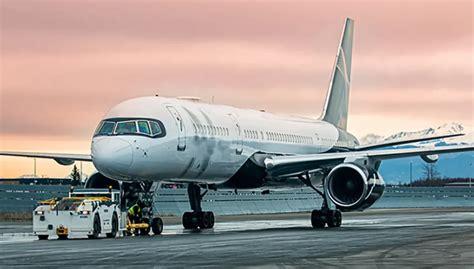
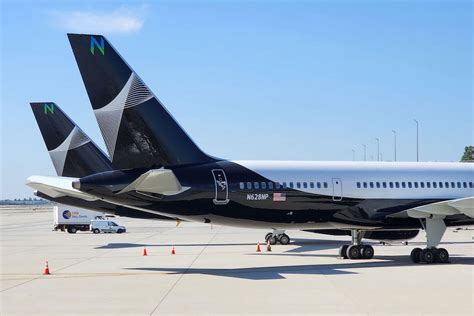
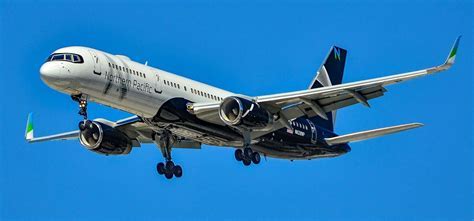
To execute its ambitious transpacific strategy, Northern Pacific Airways selected the Boeing 757-200 as its primary aircraft. This narrow-body jetliner was chosen for its range capabilities, which are well-suited for the proposed routes across the Pacific from Anchorage, and its operational economics. The airline unveiled its first Boeing 757-200 on January 18, 2022, an event that marked a tangible step towards commencing operations. These aircraft, many of which were formerly operated by major carriers like American Airlines, were to be retrofitted to meet Northern Pacific’s specific configuration, balancing passenger comfort with cost-efficiency. As of September 2022, the airline had acquired four Boeing 757-200s, with ambitious plans to expand its fleet to twelve aircraft by the time its full transpacific services were projected to launch. The fleet development plan was crucial, as the number and type of aircraft directly impacted route viability, service frequency, and overall passenger capacity. The Boeing 757-200, configured with both premium and economy seating (16 First Class, 159 Economy, totaling 175 seats), was seen as a versatile platform to serve a diverse range of passengers, from budget-conscious travelers to those seeking a more comfortable experience on their long-haul journeys. The distinctive livery, featuring the airline’s branding, aimed to make these aircraft easily recognizable as they prepared to connect continents.
Navigating Turbulence: Regulatory Hurdles and Geopolitical Realities
The path from concept to operational launch is rarely smooth for any new airline, and Northern Pacific Airways encountered its share of significant headwinds. One of the most substantial early challenges was the ongoing closure of Russian airspace to many international carriers, a consequence of geopolitical tensions. This directly impacted the viability and efficiency of polar routes between North America and Asia, which were central to the airline’s initial route planning. Flying longer, alternative routes would increase fuel consumption and flight times, thereby eroding the cost advantages the airline hoped to offer. Furthermore, securing timely route authorities and operational certifications from foreign regulatory bodies, particularly in Japan and South Korea – key target markets – proved to be a more protracted process than initially anticipated. These delays in obtaining necessary permissions from international authorities meant that the airline’s original timeline for launching its flagship transpacific services had to be continuously re-evaluated. These external factors, largely beyond the airline’s direct control, necessitated a pragmatic reassessment of its initial operational strategy and forced a pivot in its launch plans, focusing on routes that were more immediately feasible while awaiting broader international approvals.
A Name in Contention: The BNSF Trademark Lawsuit and Rebranding
Adding to the operational complexities, the airline faced a significant legal challenge regarding its chosen name. In October 2022, BNSF Railway, a major North American freight railroad operator, filed a trademark infringement lawsuit against Northern Pacific Airways. BNSF contended that the airline’s name infringed upon the historical “Northern Pacific” name, which belonged to the Northern Pacific Railroad, a prominent railway that operated from Minnesota to the Pacific Northwest and was a predecessor to Burlington Northern Railroad, itself a predecessor to BNSF. This legal battle cast a shadow over the airline’s branding efforts. On August 28, 2023, a preliminary injunction was issued, ordering the airline to cease using the Northern Pacific name. Faced with this ruling, the airline, rather than engaging in a potentially lengthy and costly appeal process, opted for a strategic rebranding. After soliciting suggestions from its employees, the name New Pacific Airlines was chosen. This new name was strategically selected to minimize disruption to existing branding assets. Crucially, it allowed the airline to retain its distinctive “N” logo, which had already been incorporated into aircraft interiors, such as on every seat, and its website domain (np.com). While the airline began to publicly use the New Pacific Airlines name, the formal regulatory approval for the name change took additional time, meaning that for a period, tickets and official documentation might still have reflected the old name, creating a transitional phase for its identity.

Inaugural Flights and Shifting Horizons: Early Operations and Route Adjustments
Despite the hurdles, New Pacific Airlines achieved a critical milestone on July 9, 2023, when it received full authorization from the Federal Aviation Administration (FAA) to commence commercial passenger flights. This was a pivotal moment, transforming the airline from a concept into an active commercial operator. The inaugural flight under the then-Northern Pacific banner took place shortly thereafter, on July 14, 2023. However, instead of the initially envisioned transpacific routes, this first flight connected Ontario International Airport (ONT) in Ontario, California, which serves as its operating base, to Harry Reid International Airport (LAS) in Las Vegas, Nevada. This domestic routing was a pragmatic decision, influenced by the aforementioned delays in securing Asian route authorities and the restrictions imposed by closed Russian airspace. The airline had originally announced ambitious plans to serve destinations like Tokyo, Osaka, and Seoul from Anchorage, alongside other major U.S. cities including Los Angeles, San Francisco, New York City, and Orlando. The initial operations between Ontario and Las Vegas represented a scaled-back launch, allowing the airline to begin revenue-generating services and gain operational experience while continuing to work towards its broader international goals. This period highlighted the airline’s adaptability in the face of evolving circumstances, prioritizing getting its aircraft and crews operational even if on different routes than first planned.

New Pacific Airlines Destinations: A Tale of Ambition and Adaptation
The destination map for New Pacific Airlines has been a fluid concept, reflecting its evolving strategy. The grand vision involved a network spanning the Pacific, connecting cities like Tokyo, Osaka, and Seoul in Asia with major U.S. metropolitan areas such as Los Angeles, San Francisco, New York City, and Orlando, all funneling through the Alaskan hub at Ted Stevens Anchorage International Airport. However, the realities of international aviation, including airspace restrictions and regulatory processes, led to a revised initial rollout. Operations commenced with a focus on the U.S. West Coast, specifically linking its Ontario, California base with Las Vegas, Nevada, starting July 14, 2023. Subsequently, the airline expanded its domestic network, albeit temporarily. Flights to Reno-Tahoe International Airport (RNO) in Nevada were introduced on November 16, 2023, and services to Nashville International Airport (BNA) in Tennessee began on November 17, 2023. These routes represented an attempt to utilize its fleet and build a presence while the transpacific ambitions remained on hold. However, these domestic routes proved to be short-lived. The Las Vegas service was terminated on January 1, 2024, followed by the Reno and Nashville routes, which ceased operations on March 23, 2024, and March 29, 2024, respectively. This period of experimentation with domestic routes ultimately paved the way for another significant strategic shift for the airline.
The Strategic Pivot: Embracing Charter Operations
In a significant strategic realignment, New Pacific Airlines announced in April 2024 that it would be ceasing all remaining scheduled passenger flights. Instead, the airline decided to pivot its business model to focus entirely on charter operations. This decision marked a departure from its initial low-cost carrier ambitions and its “Icelandair of the Pacific” model. The shift to charter services allows the airline to leverage its fleet of Boeing 757-200 aircraft in a different segment of the aviation market, one that can offer more predictable revenue streams and potentially lower overheads associated with maintaining a scheduled network, extensive marketing, and complex reservation systems. Charter operations cater to a variety of clients, including sports teams, corporate groups, tour operators, and government contracts. This model provides flexibility in terms of routes and schedules, dictated by client demand rather than a fixed timetable. While this move represents a significant change from its original highly publicized vision, it is a pragmatic adaptation to the prevailing market conditions and the challenges encountered in launching its ambitious scheduled transpacific services. The focus on charter operations allows New Pacific Airlines to continue utilizing its assets and expertise while potentially building a more stable financial foundation for future endeavors, which might, in time, include a re-exploration of scheduled services if market conditions become more favorable.
Leadership and Parentage: Tom Hsieh and FLOAT Alaska LLC
At the helm of New Pacific Airlines is Tom Hsieh, who serves as the CEO and President. His leadership has been instrumental in navigating the airline through its formative stages, from conceptualization and initial branding as Northern Pacific Airways to the rebranding and strategic pivot to charter operations. Hsieh has been the public face of the airline, articulating its vision and addressing the challenges it has faced. The parent company of New Pacific Airlines is FLOAT Alaska LLC (which stands for Fly Over All Terrain). This entity also oversees other aviation interests, notably Ravn Alaska. It’s important to note that while New Pacific Airlines (formerly Corvus Airlines) and Ravn Alaska are part of the same company structure under FLOAT Alaska LLC, Ravn Connect operates as a separate company, though it too is a subsidiary of FLOAT Alaska LLC. This corporate structure provides a broader aviation ecosystem within which New Pacific Airlines operates, potentially offering synergies in terms of resources, expertise, and operational support. The backing of FLOAT Alaska LLC has been crucial for the airline’s ability to acquire aircraft and navigate the complex financial and regulatory landscape of the aviation industry. The strategic decisions made by the leadership, including the recent shift to charter services, reflect an ongoing effort to find a sustainable and profitable path forward for the airline within the FLOAT Alaska portfolio.

Fleet Composition: A Closer Look at New Pacific’s Aircraft
The fleet of New Pacific Airlines is exclusively composed of Boeing 757-200 aircraft. As of October 2024, the airline reportedly operates four of these versatile narrow-body jets, with reports of two additional aircraft on order or pending induction. Each Boeing 757-200 in the New Pacific Airlines fleet is configured to carry a total of 175 passengers. This seating arrangement is divided into two classes: a First Class cabin with 16 seats and an Economy Class cabin with 159 seats. This configuration aims to cater to a mix of passengers, offering a premium experience for those willing to pay for it while maintaining a significant capacity for economy travelers. The Boeing 757-200 was initially selected for its range, making it suitable for the originally planned transpacific flights from Anchorage, and its performance characteristics, including its ability to operate from airports with shorter runways. Even with the shift to charter operations, the Boeing 757-200 remains a capable aircraft, well-suited for a variety of charter missions, including medium to long-haul flights. The airline’s initial plan to grow its fleet to twelve aircraft by the time of its transpacific launch indicates the scale of its original ambition. The current fleet size reflects the more consolidated operational focus. The maintenance and operational readiness of this fleet are paramount to the success of its charter business.
Interline Agreements: Expanding Reach with Hahn Air
To enhance its connectivity and global sales presence, particularly during its phase of exploring scheduled services, New Pacific Airlines established an interline agreement with Hahn Air. Hahn Air is a German scheduled and executive charter airline which also provides distribution services for other airlines. An interline agreement allows passengers to book itineraries that involve travel on multiple airlines with a single ticket. For New Pacific Airlines, partnering with Hahn Air provided access to Hahn Air’s extensive network of travel agencies worldwide through Global Distribution Systems (GDS). This meant that travel agents who might not have had a direct ticketing agreement with New Pacific Airlines could still issue tickets for its flights. Such agreements are common in the airline industry as they expand an airline’s sales reach and make it easier for passengers to connect between different carriers. While the shift to primarily charter operations may alter the immediate utility of such agreements, the existence of the Hahn Air partnership demonstrates the airline’s efforts to integrate itself into the broader global travel ecosystem. For charter operations, direct sales and relationships with brokers and large clients become more central, but existing GDS presence can still be beneficial for certain types of charter business or if scheduled services are revisited in the future.
The Journey Ahead: Challenges and Opportunities for New Pacific Airlines
The path forward for New Pacific Airlines is one of focused execution within the charter market. While the initial dream of becoming the “Icelandair of the Pacific” with a robust scheduled service network centered on Alaskan stopovers has been deferred, the current strategy presents its own set of opportunities and challenges. The charter market is competitive, requiring strong relationships with brokers and clients, operational reliability, and cost-effective service delivery. New Pacific Airlines must leverage the capabilities of its Boeing 757-200 fleet to secure consistent charter contracts. Opportunities may arise from various sectors, including ad-hoc charters, ACMI (Aircraft, Crew, Maintenance, and Insurance) leasing, or specialized passenger movements. The airline’s base in Ontario, California, provides good access to a large catchment area. However, challenges remain, including managing operational costs, particularly fuel, and navigating the cyclical nature of charter demand. The experience gained from its initial foray into scheduled services, including FAA certification and operational ramp-up, provides a valuable foundation. The leadership of Tom Hsieh and the backing of FLOAT Alaska LLC will continue to be critical as New Pacific Airlines seeks to establish itself as a reliable and successful charter operator. The aviation industry is ever-changing, and the ability to adapt, as New Pacific has demonstrated, will be key to its long-term viability and potential future growth, perhaps even revisiting its original transpacific ambitions should conditions align more favorably.
In conclusion, New Pacific Airlines represents a fascinating chapter in modern aviation entrepreneurship. Born from a bold and innovative concept to redefine transpacific travel via Alaska, its journey has been a testament to the formidable challenges inherent in the airline industry, from regulatory delays and geopolitical shifts to legal disputes. The rebranding from Northern Pacific Airways and the strategic pivot from scheduled low-cost services to a dedicated charter operation highlight a pragmatic approach to navigating these complexities. With its fleet of Boeing 757-200 aircraft and a determined leadership team, New Pacific Airlines is now charting a new course, aiming to build a sustainable business in the competitive charter market. Its story serves as a compelling reminder that in the world of aviation, adaptability and resilience are as crucial as the initial vision.