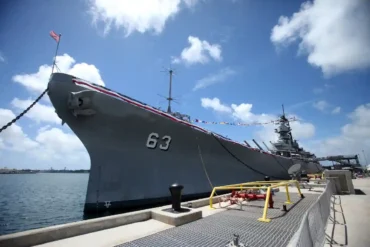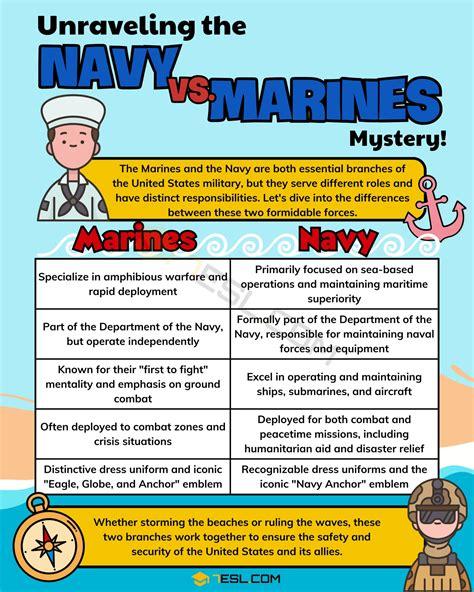
We examine the aviation strength of the United States Navy and the United States Marine Corps through the lens of capability, mission focus, and fleet composition. These two branches share platforms, pilots, and decks aboard U.S. carriers, yet each maintains a distinct aviation identity shaped by mission requirements. The Navy’s priorities center on sea control, carrier power projection, and global maritime surveillance, while Marine Corps aviation remains anchored to its core purpose: supporting Marines on the ground through responsive, flexible, expeditionary airpower.
The combined aviation strength of the Department of the Navy sits at roughly 4,000 aircraft, with the Navy operating the majority. The Marine Corps contributes a smaller but highly specialized fleet built for forward operations, austere environments, and ship-to-shore support missions that define expeditionary warfare. Their shared platforms—especially the F/A-18, F-35, and common training pipelines—create dense interoperability while still preserving independent doctrinal identities.
Navy Strike Fighters and the Push Toward Next-Generation Carrier Air Wings
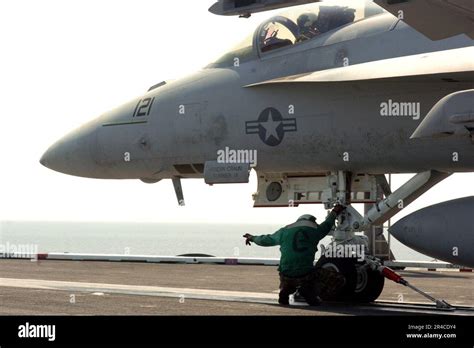
The Navy’s tactical air arm is anchored by the F/A-18E/F Super Hornet, the backbone of carrier aviation for the last two decades. Nearly 600 remain in active service, carrying out strike, fleet defense, and maritime interdiction missions from Nimitz- and Ford-class carriers. In parallel, the service continues integrating the F-35C Lightning II, its first stealthy, catapult-launched, carrier-suitable fighter. With just under 50 currently fielded and more than 200 planned, the F-35C enhances long-range strike, sensor fusion, and survivability across contested maritime regions.
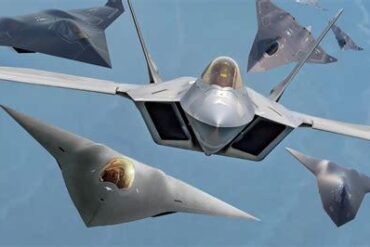
Looking into the 2040s, the Navy prepares for the F/A-XX, an advanced sixth-generation platform intended to expand range, integrate artificial intelligence, and serve as a digital “quarterback” for unmanned Collaborative Combat Aircraft. This future fighter is designed to operate within a system-of-systems construct, orchestrating swarms of autonomous wingmen to reshape carrier air operations.
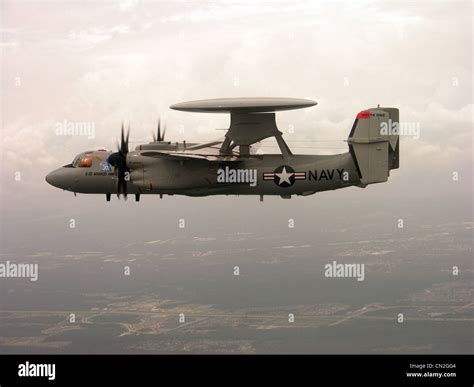
Complementing the striking arm are several specialized fixed-wing aircraft. The E-2D Advanced Hawkeye, with about 83 in service, provides airborne early warning, battle management, and command-and-control.
The P-8A Poseidon, numbering over 118 aircraft, acts as the Navy’s primary anti-submarine and maritime patrol platform. The E-6B Mercury, a critical strategic nuclear command-and-control aircraft, preserves the survivability of U.S. strategic forces with 16 units in service. Logistics needs are met by the C-40A Clipper, while persistent reconnaissance falls to the MQ-4C Triton UAV.
Marine Corps Fixed-Wing Power: Built for Expeditionary Warfare
Marine Corps aviation revolves around supporting Marines on the ground—rapidly, flexibly, and from nearly anywhere. Its 1,262 crewed aircraft include a robust tactical fighter community led by the F-35B STOVL variant, enabling operations from amphibious assault ships and improvised forward bases. Around 145 are currently active, with additional aircraft procured annually. The Marines also operate the F-35C for carrier deployments, creating full compatibility with Navy air wings.
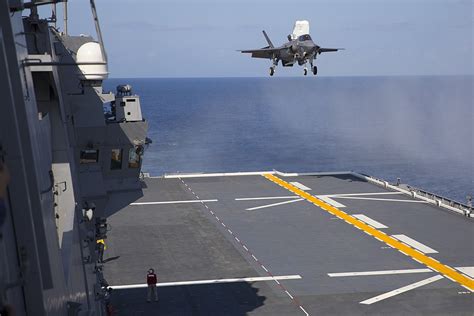
Legacy platforms remain in transition. Approximately 186 F/A-18 Hornets continue service, though replacement by F-35 variants accelerates yearly. The AV-8B Harrier II, a V/STOL attack jet iconic in Marine aviation, continues operating with about 87 active aircraft but will retire as more F-35Bs reach operational squadrons. Ultimately, the Marines plan for a total fleet of 420 F-35s.
Unmanned systems expand the Corps’ reconnaissance depth. The MQ-9 Reaper, with 10 currently fielded and 20 planned, strengthens persistent ISR and strike options for expeditionary forces.
Diverging Rotary-Wing Fleets for Diverging Missions
The helicopter inventories of the two branches differ sharply due to mission demands. The Navy employs the MH-60R/S Seahawk family—navalized descendants of the Black Hawk—tailored for anti-submarine warfare, anti-surface warfare, search and rescue, logistics, and special operations support. Equipped with dipping sonar, maritime radar, torpedoes, and precision weapons, the MH-60R dominates oceanic ASW missions. Meanwhile, the MH-60S serves as the Navy’s versatile “Swiss Army knife,” supporting vertical replenishment, medevac, and surface warfare.
The Navy is phasing out the MH-53E Sea Dragon, once central to airborne mine countermeasures, as newer systems take over its mission set. On carrier decks and destroyer helipads worldwide, the Seahawk remains the signature rotary asset.
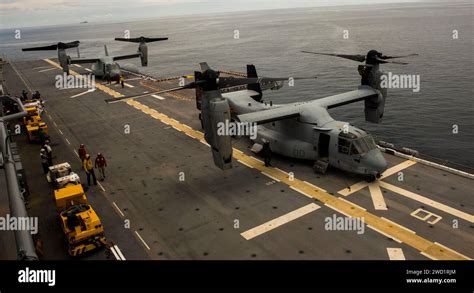
The Marine Corps fields a broader mix aligned with the Marine Air-Ground Task Force. The MV-22B Osprey, a tiltrotor aircraft capable of long-range, high-speed assault transport, remains a defining platform with 277 delivered and 360 total planned.
For heavy lift, the CH-53K King Stallion—capable of hauling 36,000 pounds—ushers in a new era of sustainment for amphibious operations. Light utility and command-and-control tasks fall to the UH-1Y Venom, while the AH-1Z Viper provides armed escort and close air support.
Two Doctrines Aligned by a Shared Mission
Naval aviation operates under one institutional umbrella with two branches entrusted to different primary missions. The Navy focuses on fleet defense, power projection, and maritime dominance through its Carrier Strike Groups. Its aircraft create layered surveillance and long-range strike reach across the world’s oceans.
Marine aviation, however, exists fundamentally to serve the Marine rifleman. Its aircraft work as part of the Marine Air-Ground Task Force, where air, ground, and logistics elements combine into a self-sustaining expeditionary unit. Whether providing close air support, assault transport, or logistics, Marine aircraft deliver effects directly into the ground commander’s battlespace.
Yet the two forces remain tightly linked. Marine fighter squadrons routinely deploy aboard Navy carriers. Navy aviation assets frequently enable Marine operations in joint task forces. Shared radars, datalinks like Link 16, cockpit architecture, and standardized naval aviator training produce unmatched interoperability across global theaters.
Shared Training and the Culture of Naval Aviation
All Navy and Marine Corps pilots earn the same coveted gold wings and train through the same naval flight school pipelines. Marine aviators initially attend The Basic School, where they train as ground combat leaders before learning to fly—creating cultural alignment with Marine ground forces.
Student aviators from both branches progress through primary, intermediate, and advanced flight training before reporting to Fleet Replacement Squadrons to master their specific aircraft. Upon joining operational units, aviators take on both cockpit and leadership responsibilities, maintaining a culture of mutual trust across the naval aviation enterprise.
Their shared heritage ensures seamless air integration aboard carriers, amphibious ships, and forward bases, binding both branches into a single maritime air arm with two distinct strengths.
Final Perspective on Naval Air Power Integration
The United States Navy and Marine Corps maintain two aviation forces that differ in size, purpose, and aircraft composition, yet operate together as unified instruments of maritime power. The Navy pushes deep into contested seas with carrier-based strike fighters and specialized surveillance aircraft, while the Marines bring agile, expeditionary airpower designed to support ground forces from ship or shore. Their shared training, platforms, and operational integration create one of the most cohesive dual-branch aviation forces in the world.
The future will see even deeper integration as the F-35 family, digital networking, advanced unmanned systems, and sixth-generation fighters reshape joint operations across land, sea, and air.