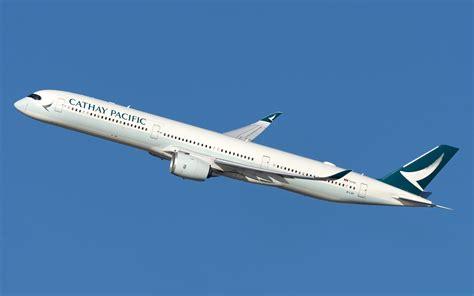
Cathay Pacific stands at the pinnacle of Asia’s aviation industry as the flag carrier of Hong Kong, boasting one of the most diversified and meticulously maintained fleets in the world. With a total of 179 aircraft in service as of August 2025, spanning narrow-body, wide-body, and freighter categories, the airline exemplifies operational precision, legacy, and forward-thinking innovation. Its ongoing expansion, scheduled aircraft upgrades, and strategic retirements solidify its position as a cornerstone in global aviation.
A Fleet Engineered for the Future
The strength of Cathay Pacific’s current operational fleet lies in its balanced integration of advanced Airbus and Boeing aircraft. The airline maintains a strategic mix of short-haul, medium-haul, and long-haul configurations to meet the varying demands of global travel while sustaining cost-efficiency, passenger comfort, and environmental considerations.
As of 2025, Cathay Pacific operates:
- 16 Airbus A321neo, with an additional 14 on order. Originally designated for Cathay Dragon, these are narrow-body jets designed for high-efficiency regional routes. Deliveries will continue until 2029.
- 43 Airbus A330-300, a cornerstone of its mid-to-long haul services. As the largest operator of this model, Cathay Pacific plans a refurbishment program beginning in 2026, while older airframes will be phased out and replaced by newer variants.
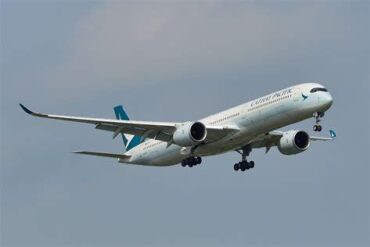
- 30 Airbus A350-900 and 18 A350-1000, forming the backbone of long-haul operations. These twinjets deliver fuel efficiency, lower noise, and superior passenger experience.
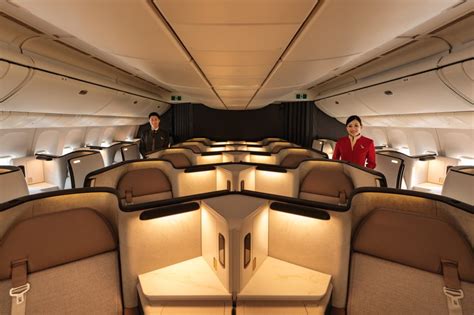
- 17 Boeing 777-300 and 35 777-300ER, with ER variants undergoing upgrades to include the premium Aria Suites and expanded Premium Economy sections. Some aircraft already feature these enhancements.
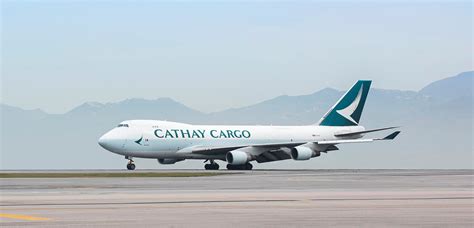
- 20 Boeing 747 freighters, split between 6 747-400ERF (soon to be retired) and 14 747-8F, supporting Cathay Cargo’s global logistics network.
Cathay Pacific’s future vision is clearly mapped through robust aircraft orders:
- 35 Boeing 777-9 (with 7 options), targeting delivery from 2027. As the next-generation flagship, this aircraft enhances range and capacity.
- 30 Airbus A330-900 (plus 30 options), with deliveries beginning in 2028, offering more efficient replacements for aging A330-300s.
- 6 Airbus A350F, launching Cathay’s shift to next-gen, eco-conscious cargo aircraft from 2027.
Special Liveries: Flying Stories in the Sky
Over the decades, Cathay Pacific’s aircraft liveries have evolved into cultural symbols, encapsulating historic milestones, city pride, and branding milestones. These liveries have not only added vibrancy to the skies but also strengthened brand identity and emotional connection with passengers.
One of the earliest commemorative liveries was the 1996 50th Anniversary Airbus A330-300 (VR-HYD), adorned with a stylized “50” decal on the tail. It marked five decades of excellence and, although transferred to Dragonair shortly after, set a precedent for symbolic liveries.
In 1997, the handover of Hong Kong was immortalized with the “Spirit of Hong Kong 97” livery on a Boeing 747-200 (VR-HIB). It featured the Chinese character “家” (home) in a bold brushstroke, a visual testament to the city’s transition. The tribute returned in 2000 with a 747-400 (B-HOX), displaying a young athlete striving against adversity and the slogan “Same Team. Same Dream.” This aircraft served until 2003.
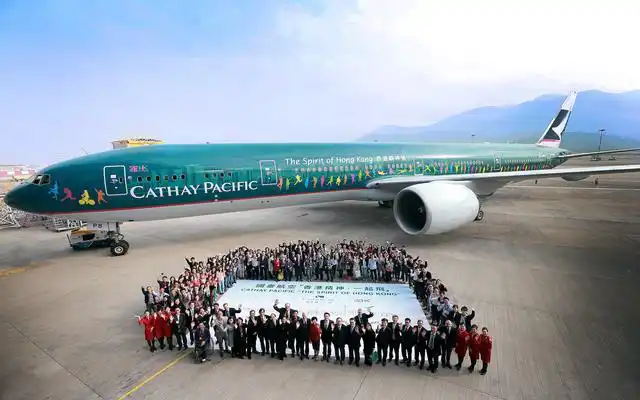
In 2013, the concept was reimagined on a Boeing 777-300ER (B-KPB) through a crowd-sourced contest. The design included silhouettes of 110 Hong Kong citizens, celebrating the community’s resilience. The livery bore the slogan “The Spirit of Hong Kong 香港精神號” before the aircraft’s lease expired in 2018.
Another notable example is the “Asia’s World City” livery, applied to 747-400 B-HOY in 2002, later extended to a 777-300ER (B-KPF) in 2008. These featured the Brand Hong Kong dragon logo and highlighted the city’s global connectivity. Both were retired by 2014.
Other unique commemorative aircraft included:
- A330-300 B-LAD (2006) for the airline’s 100th aircraft, named Progress Hong Kong.
- 747-8F B-LJA (2011) in Hong Kong Trader livery, celebrating the Cathay Pacific Cargo Terminal milestone.
The Oneworld Alliance also found representation on Cathay aircraft. From 2009 to 2020, several models, including the A340-300 (B-HXG), A330-300 (B-HLU), and a series of 777-300ERs, wore the distinctive Oneworld branding to reinforce global partnership visibility.
Cargo Excellence: Freighters Built for Global Trade
The freighter division under Cathay Cargo plays a vital role in global logistics, delivering to over 45 destinations worldwide. The fleet of 20 Boeing 747 freighters—6 747-400ERF and 14 747-8F—is being actively modernized with the planned introduction of the Airbus A350F.
The 747-400ERF, long admired for its payload capacity and transcontinental range, will be gradually retired beginning in 2027. Its successor, the A350F, promises lower fuel burn, greater efficiency, and compliance with future carbon regulations, reflecting the airline’s commitment to sustainability.
Legacy Aircraft: A Museum of Evolution in the Skies
Cathay Pacific’s evolution from a two-aircraft startup in 1946 to an international powerhouse is best reflected in its diverse historical fleet. The original Douglas DC-3s, Betsy (VR-HDB) and Niki, laid the foundation for the airline. Today, Betsy is permanently displayed at the Hong Kong Science Museum, while a replica of Niki is showcased at Cathay City.
During the jet age, Cathay became an early adopter of advanced aircraft. The Convair 880 was the airline’s first jet, introduced in 1962. Although one was tragically lost in 1972 (CX700Z), the fleet marked a turning point in speed and modernity.
In the 1970s, Cathay became the largest Lockheed L-1011 TriStar operator outside the U.S., with 19 aircraft. These versatile wide-bodies were replaced by A330-300s in 1996, marking the shift to Airbus dominance in mid-haul operations.
Over the years, the carrier also operated various Boeing 747 variants:
- 747-200B, 747-200F, and 747-300, serving from the late 1970s to the late 1990s.
- 747-400s, including passenger and converted freighter variants (BCF), remaining in service until 2019.
Recent fleet retirements included the A340 series, phased out by 2017, and the 777-200 in 2019, with the prototype B-HNL donated to the Pima Air & Space Museum in Arizona.
Strategic Vision: Balancing Growth, Sustainability, and Passenger Experience
Cathay Pacific’s approach to fleet management combines technological advancement with strategic phasing. The emphasis on high-efficiency twinjets like the A350 and 777 families showcases a commitment to long-haul competitiveness, while the integration of next-gen freighters ensures freight operations remain cost-effective and environmentally responsible.
The airline is also prioritizing cabin experience. The refitting of 777-300ERs with the luxurious Aria Suites and expanded Premium Economy sections addresses a growing demand for premium leisure and business travel. Meanwhile, A330 refurbishments and A350 deployment on high-traffic routes ensure modern comfort across classes.
The Oneworld Alliance presence within the fleet and the historical use of culturally resonant liveries underscore Cathay’s dual commitment to global integration and regional pride.
Conclusion: Cathay Pacific’s Aviation Mastery Takes Flight
Cathay Pacific’s fleet represents more than a collection of aircraft—it is an evolving narrative of aviation excellence, cultural pride, and global vision. Through strategic investments in modern aircraft, continuous refinement of in-flight experience, and bold storytelling through liveries, the airline maintains its legacy as a premium carrier rooted in Hong Kong but reaching across continents.
As new deliveries of the 777-9, A330-900, and A350F reshape its fleet composition, and retired legends like the TriStar, 747, and A340 enter the history books, Cathay Pacific is scripting the next chapter of long-haul leadership and environmental responsibility in the skies.