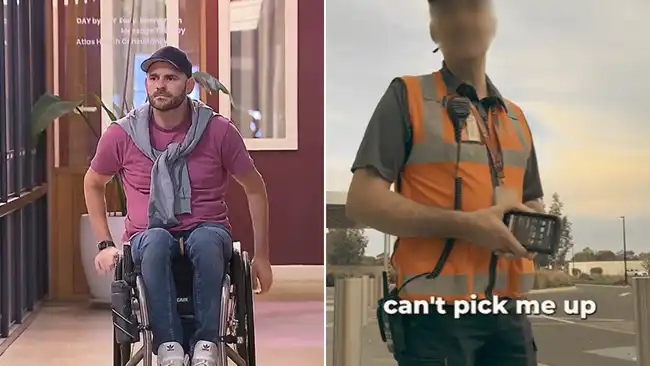
The latest controversy surrounding airport accessibility has erupted in Australia after a wheelchair user recorded a confrontation with an airport employee who allegedly threatened him with a AU$400 fine for waiting in a designated disability pick-up area. The incident, which took place at Adelaide Airport, has triggered widespread outrage online and reignited debate over how travelers with disabilities are treated in transport hubs around the world.
Shane Hryhorec, a 41-year-old disability advocate who has used a wheelchair since suffering a spinal injury in 2007, says he arrived at Adelaide Airport expecting a routine collection by his mother. Instead, what should have been a straightforward pick-up turned into a public dispute that has since been viewed millions of times across social media platforms.
The video quickly spread on Instagram and TikTok, drawing criticism from viewers who questioned why a clearly disabled passenger would be challenged for using an accessible zone specifically intended to support people with mobility needs.
Airport Accessibility Row Sparks Viral Backlash
According to reports, Hryhorec had flown in from Melbourne and made his way through standard arrival procedures before heading to the airport’s disability pick-up zone. His mother was due to collect him there, but before she could enter, she was reportedly denied access because she did not have a disability permit.
Hryhorec later described the interaction involving his mother as aggressive and distressing. Moments later, an airport worker allegedly informed him that he also could not remain in the zone and warned that a fine could be issued.
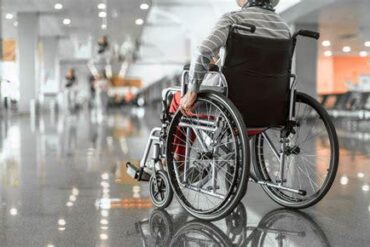
For many observers, that warning became the most shocking part of the encounter. Critics argued that common sense should have prevailed, especially given that Hryhorec was visibly using a wheelchair and accompanied by a service animal.
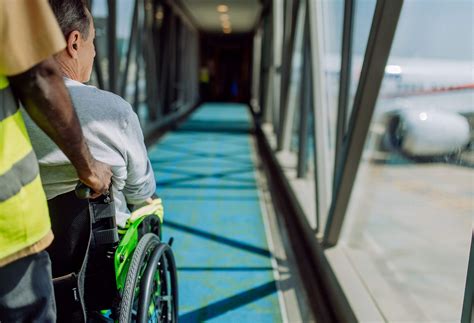
The viral response was immediate. Thousands of users condemned the handling of the situation, while disability advocates said the moment exposed how rigid enforcement policies can override genuine accessibility needs.
Why The Permit Rule Became So Controversial
Airport officials later confirmed that neither Hryhorec nor his mother would receive a fine. Adelaide Airport also stated that the traveler should have been allowed to use the zone on a discretionary basis.
That clarification, however, did little to calm criticism. Many people asked why the issue had escalated at all if staff had authority to exercise judgment in the first place.
Hryhorec acknowledged that no disability parking permit was present that day, but argued the circumstances were obvious. He noted that he was sitting in a wheelchair and traveling with a service animal, both of which clearly indicated that accessible assistance was required.
He also claimed the pick-up zone is rarely busy, suggesting that strict enforcement in such a low-demand area was unnecessary. In his view, accessible facilities should be designed around real user needs rather than narrow rule interpretation.
The debate highlights a larger challenge faced by airports worldwide: balancing traffic control, security, and curbside management while ensuring disabled passengers are not disadvantaged.
Standard Pick-Up Areas Often Fail Wheelchair Users
One of the strongest points raised after the incident concerns the usability of regular passenger collection zones. Hryhorec stated that the standard pick-up area can be chaotic, crowded, and difficult to navigate in a wheelchair.
Busy traffic lanes, rushed drivers, narrow kerbs, and a lack of smooth curb access can turn a routine collection into a stressful and potentially unsafe experience. For travelers with mobility impairments, these barriers are not minor inconveniences—they can determine whether travel is manageable at all.
Accessible zones exist precisely because conventional layouts often fail to meet those needs. When access to those zones becomes complicated, the system can break down entirely.
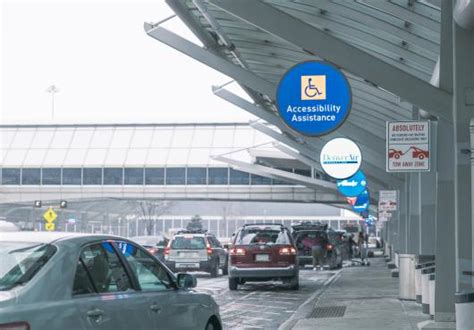
That is why the public reaction was so strong. Many viewers saw the case not as an isolated misunderstanding, but as an example of how disabled travelers are too often forced to justify their presence in spaces built for them.
A Wider Pattern In Global Air Travel
Hryhorec said he hopes the incident draws attention to a broader reality: poor treatment of disabled travelers is not limited to one airport or one country.
Recent cases elsewhere support that concern. In the United States, multiple airline accessibility disputes have made headlines, including allegations of passengers being stranded without assistance and wheelchairs being damaged during transport.
For wheelchair users, mobility equipment is not simply luggage. It is an essential extension of independence, employment, health, and daily life. Damage or denial of access can have consequences far beyond travel disruption.
Advocates have repeatedly called for stronger staff training, faster complaint resolution, and clearer accountability when accessibility failures occur.
Why Staff Training Matters More Than Policy Alone
Most airports already have accessibility policies on paper. The real difference is often made at ground level—during check-in, boarding, arrivals, and curbside collection.
Employees working in these environments make rapid decisions under pressure. Without proper training, staff may default to enforcement rather than assistance. That can create humiliating experiences for passengers who already face more obstacles than the average traveler.
Effective training should include disability awareness, communication skills, discretion in unusual situations, and an understanding that accessibility is not a special favor—it is a basic service obligation.
When handled well, these moments pass unnoticed. When handled badly, they become national headlines.
Adelaide Airport Under Pressure To Rebuild Trust
Although Adelaide Airport has moved to cancel any penalty and explain the incident, reputational damage has already been done. Social media users were particularly critical of claims that requests were made for the video to be removed, interpreting that as concern for image management rather than problem-solving.
For many travelers, trust is built through lived experience, not public statements. Disabled passengers want confidence that they will be treated with dignity, listened to, and accommodated without confrontation.
This incident serves as a warning to airports everywhere. Accessible infrastructure alone is not enough. Real accessibility depends on people, judgment, and respect.
When those elements fail, even a simple pick-up can become a symbol of something much bigger.