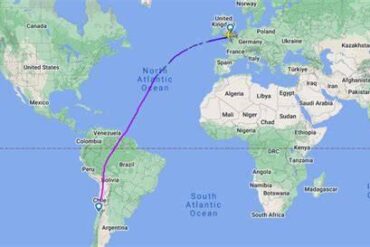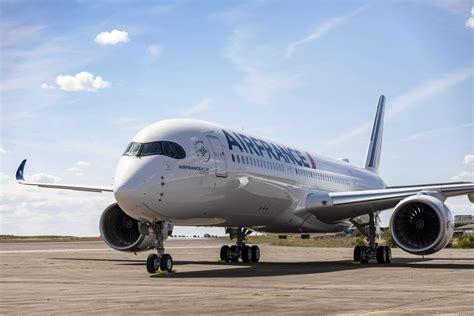
An Air France Airbus A350-900, operating flight AF411 from Buenos Aires to Paris Charles de Gaulle, was dramatically grounded after a smoke-like odor filled the cabin shortly after takeoff. The incident unfolded on the night of November 20, 2025, leaving hundreds of passengers delayed and triggering a swift emergency response from the flight crew.
Emergency in the Skies: Smoke Odor Halts Transatlantic Journey
Flight AF411 had a scheduled departure time of 10:40 PM from Buenos Aires Ezeiza International Airport (EZE). Although delayed slightly, it eventually became airborne at 11:16 PM, beginning its ascent for the long 12.5-hour journey to Paris. However, just 35 minutes after departure and having reached an altitude of only 17,000 feet, the crew declared a PAN-PAN — an aviation distress call used in urgent but non-life-threatening situations.
Passengers began reporting a “weird smell” in the cabin, followed by visible smoke believed to be emanating from the overhead lighting. The situation, while not classified as immediately life-threatening, was serious enough to warrant a return to the departure airport. The aircraft safely landed back at Runway 11 at Ezeiza without incident.
Air France’s Official Response and Passenger Aftermath
Air France confirmed the incident with the following statement:
“The crew of flight AF411, connecting Buenos Aires to Paris Charles de Gaulle on November 20th, operated by an Airbus A350, decided to return to its airport of origin after 37 minutes of flight, following the appearance of a heat smell in the cockpit and cabin. Ground crews took care of the passengers and offered them alternative flights as soon as possible. Air France regrets the inconvenience caused by this situation and reiterates that the safety of its customers and crews is its absolute priority.”
Passengers were quickly assisted by ground staff and rebooked on alternative flights. The affected aircraft remained grounded at Ezeiza for inspection and maintenance, effectively canceling the outbound service.
The Aircraft in Question: F-HTYT “Angers”
The Airbus A350-900 involved was registered as F-HTYT, bearing the name “Angers”, a nod to the city in western France. This aircraft was delivered to Air France in November 2022, just over three years old at the time of the incident. It is powered by two Rolls-Royce Trent XWB-84 engines and configured in a three-class layout:
- 34 Business Class seats
- 24 Premium Economy seats
- 266 Economy Class seats
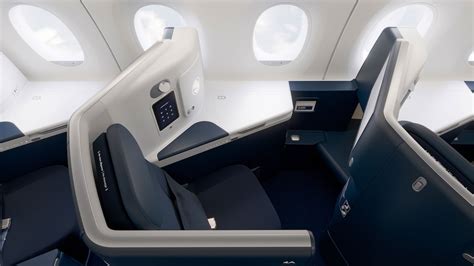
Air France operates a fleet of 39 Airbus A350s, with plans to expand this number significantly. These aircraft are slated to replace older models, including the Airbus A330-200 and the Boeing 777-200ER, and to gradually phase out aging 777-300ERs.
Not an Isolated Incident: Smoke Reports Increasing
This event marks the second such smoke-related incident involving an Air France A350 in less than a month. Earlier in November, another A350-900 operating a flight between Paris and Seoul had to make an emergency diversion to Munich due to fumes and a burning smell in the cockpit. That aircraft, registered F-HUVC, was grounded for inspection while a Boeing 777-300ER was dispatched to continue the journey.
Such incidents are not isolated to Air France. Reports of toxic fumes or smoke in aircraft cabins and cockpits have been on the rise across the aviation industry. While often resulting from electrical issues, overheated components, or cabin air contamination, they pose significant operational and reputational risks.
A Broader Look: Air France’s Expanding Operations
As one of Europe’s largest carriers, Air France operates from two major hubs: Paris Charles de Gaulle and Paris Orly. The airline’s extensive network includes domestic and global destinations, with focus cities in Lyon, Marseille, Nice, Nantes, and Toulouse. Air France is a flagship member of the Air France-KLM Group, which includes subsidiaries such as Transavia France, KLM Cityhopper, Air France Hop, and Air France Cargo.
The Group maintains minority stakes in several international carriers, including:
- Kenya Airways (8%)
- Air Côte d’Ivoire (20%)
- Scandinavian Airlines (20%)
- WestJet (2.3%)
- Air Mauritius, Royal Air Maroc, Gol, and others
Safety First, But Questions Remain
While Air France’s swift actions and prioritization of passenger safety are commendable, the recurrence of smoke-related incidents within weeks raises serious questions about fleet-wide technical integrity and operational oversight. Whether the issue lies in the aircraft systems, maintenance routines, or environmental factors remains to be seen.
The Airbus A350-900 is one of the most advanced wide-body jets in the sky today, known for its fuel efficiency, cabin comfort, and cutting-edge technology. However, even the most modern aircraft are not immune to malfunctions. In the coming days, maintenance reports and internal investigations will likely shed light on the root cause of this alarming event — and whether it is a one-off anomaly or part of a wider pattern requiring urgent industry attention.