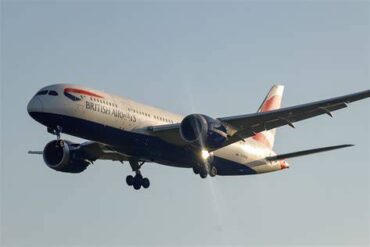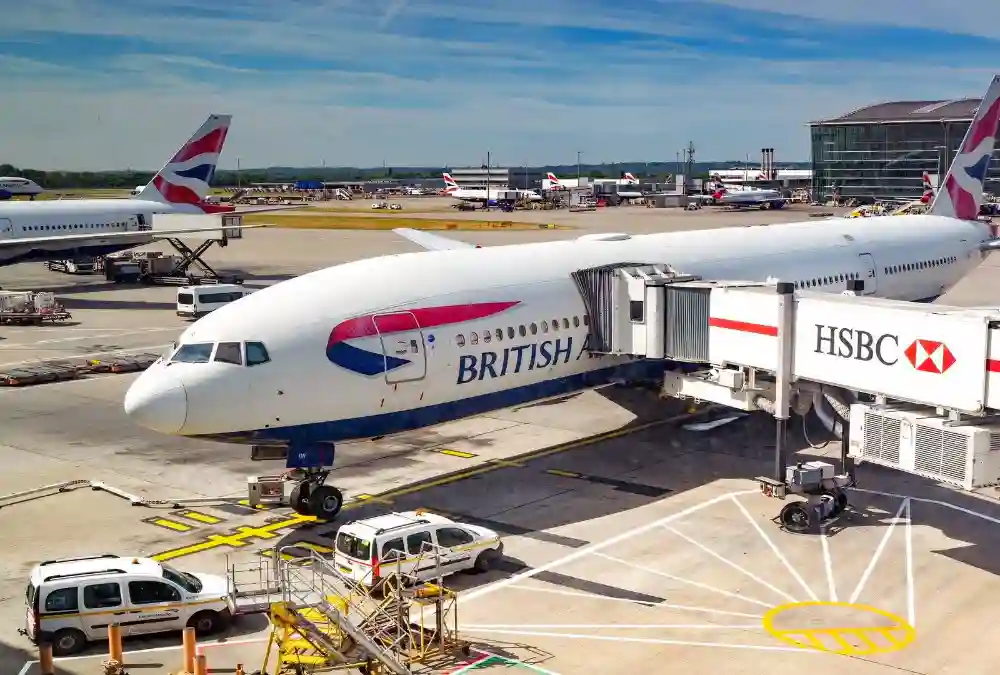
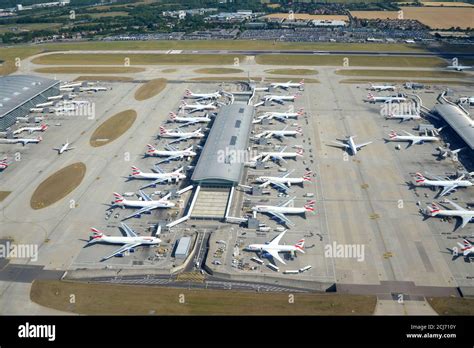
London Heathrow remains the beating heart of British Airways’ global network. For the remainder of 2026, the UK flag carrier plans an average of around 330 daily departures from Heathrow Airport (LHR), meaning roughly eight in every ten British Airways services operate from the airport. Yet beneath that enormous schedule lies a striking story of contraction: the airline has stopped serving 77 airports from Heathrow over the past decade.
The figure comes from schedule analysis using Cirium Diio data and covers airports where British Airways operated at least four departures. Airports that permanently closed, such as Berlin Tegel, are excluded, ensuring the total reflects deliberate network changes rather than destinations disappearing because the airport itself shut down. The result provides a revealing picture of how BA has reshaped its Heathrow operation since 2016.
The cuts do not necessarily mean British Airways has abandoned every city on the list. In many cases, the airline has shifted services from Heathrow to London Gatwick (LGW), particularly on leisure-oriented routes. Twenty-one destinations previously operated from Heathrow are scheduled to remain available through BA EuroFlyer from Gatwick between September 2026 and July 2027. That distinction is crucial because a Heathrow route disappearing can represent a change in airport strategy rather than a complete withdrawal from the market.
50 European Destinations Lost From Heathrow
Europe accounts for approximately 73% of British Airways’ Heathrow flights, so it is unsurprising that the largest share of discontinued routes is concentrated across the continent. Since 2016, BA has ended Heathrow services to 50 European destinations, including cities across France, Spain, Italy, Scandinavia, Eastern Europe and Turkey.
The timeline begins in 2017, when Bergen, Biarritz, Paris Orly and Stavanger disappeared from the Heathrow schedule. In 2018, Almeria, Asturias and Murcia followed. The pace increased in 2019, with Kyiv Boryspil, Montpellier, Nantes, St. Petersburg and Tallinn among the routes removed.
The pandemic years complicate the picture. Several destinations disappeared during 2020, 2021 and 2022, when international travel collapsed and airlines dramatically reduced schedules. Genoa, Antalya and Terceira, for example, had only eight departures in the relevant periods. Other cuts were more consequential, including Helsinki, which is now served from Heathrow by BA’s oneworld partner Finnair, rather than directly by British Airways.
From 2021 onward, the list included Alicante, Bari, Menorca, Bordeaux, Cagliari, Catania, Gran Canaria, Lanzarote, Malta, Moscow Domodedovo, Newquay, Pristina, Seville and Verona. Bastia and Porto followed in 2023, while Belgrade, Funchal, Kos, Pula and Turin disappeared in 2024.
The most recent European changes include Bilbao, Grenoble, Istanbul Sabiha Gökçen, Izmir, Kalamata and Lyon in 2025, followed by Cologne, Innsbruck, Riga and Stuttgart in 2026. Bilbao is a particularly unusual case because its 2025 Heathrow operation was only a temporary service connected with the Europa League Final.
Gatwick Has Become the Alternative
A significant number of Heathrow cuts make more sense when viewed alongside British Airways’ Gatwick strategy. BA EuroFlyer is scheduled to operate services to 21 destinations that are no longer served from Heathrow, including Alicante, Antalya, Bari, Bordeaux, Cagliari, Catania, Funchal, Gran Canaria, Grenoble, Innsbruck, Kalamata, Kos, Lanzarote, Lyon, Malta, Menorca, Montpellier, Porto, Seville, Turin and Verona.
This redistribution reflects an important distinction in British Airways’ network planning. Heathrow slots are among the most constrained and valuable in the world, making the airport particularly important for routes capable of generating strong yields and supporting premium demand. Leisure markets can therefore be moved to Gatwick while Heathrow capacity is concentrated on strategically stronger destinations.
BA CityFlyer provides another alternative, with winter services from London City Airport to Innsbruck. Consequently, the disappearance of a Heathrow flight does not always mean passengers have lost the ability to fly British Airways to that destination from London.
21 Africa, Asia and Middle East Routes Cut
British Airways has also removed 21 destinations across Africa, Asia and the Middle East from Heathrow since 2016. The list includes Algiers, Baku, Bangkok Suvarnabhumi, Beijing Capital, Beijing Daxing, Beirut, Chengdu, Durban, Islamabad, Jeddah, Kuwait, Lahore, Luanda, Mauritius, Muscat, Osaka Kansai, Seoul Incheon, Seychelles, Tehran Imam Khomeini and Tokyo Narita.
Several cases demonstrate the airline’s changing priorities. Algiers and Islamabad have been moved to Gatwick, while Bangkok has also shifted to Gatwick. The reference material notes that Bangkok was considered less attractive from Heathrow because of its comparatively lower yields. British Airways continues to serve Tokyo Haneda, despite ending its Heathrow-Tokyo Narita operation.
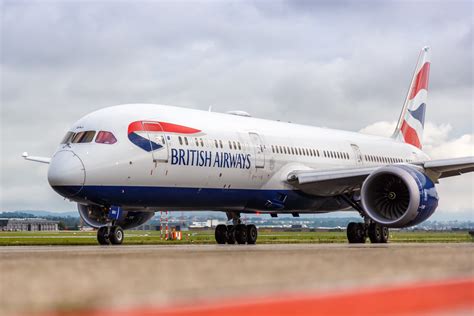
Durban offers one of the most interesting examples. BA introduced Heathrow-Durban services in 2018 and operated them until 2020, but the route faced structural challenges. Durban attracted substantially less London traffic than Johannesburg or Cape Town, with approximately 51,000 passengers recorded in the referenced year, while yields were also weaker.
The route’s operating pattern was unusual, too. British Airways normally seeks to maximize overnight flying on long-haul routes because premium passengers value sleeping onboard and airlines can use aircraft efficiently. Durban instead involved an aircraft remaining on the ground during the South African daytime before returning overnight to London. That scheduling model made the economics particularly difficult.
Six North American and Caribbean Destinations
The final group contains six destinations in North America and the Caribbean: Antigua, Calgary, Charleston, Orlando, San Jose in California and St. Lucia.
Again, several remain available through Gatwick. Antigua, Orlando and St. Lucia are examples of leisure destinations where Heathrow capacity has largely given way to Gatwick operations. Calgary disappeared from the Heathrow schedule in 2022, while Charleston ended in 2019 and San Jose followed in 2023.
Orlando is especially noteworthy because British Airways briefly restored Heathrow-MCO service in 2026 for several weeks during the UK school holidays. The airline had also operated the route from Heathrow during the pandemic period in 2021 and 2022. Nevertheless, the normal pattern remains London Gatwick to Orlando, unless British Airways decides to restore regular Heathrow service in 2027.
What the 77 Cuts Really Mean
The 77 discontinued Heathrow destinations tell a more complicated story than a simple list of route cancellations. British Airways remains deeply committed to Heathrow, but its network has become increasingly selective about how scarce Heathrow capacity is deployed.
The strongest evidence is the number of destinations transferred to Gatwick rather than abandoned entirely. At the same time, some routes disappeared because of pandemic disruption, changing economics, partner-airline coverage or exceptionally limited demand.
For passengers, the practical lesson is equally important: a British Airways Heathrow cut does not automatically mean a London-wide route cancellation. Gatwick and, in some cases, London City continue to preserve parts of the network.
For British Airways, however, the pattern is unmistakable. Heathrow remains the airline’s principal global hub, but the airport is being used for a carefully optimized portfolio of destinations. The removal of 77 airports since 2016 shows just how dramatically that portfolio has evolved—and why every Heathrow slot has become increasingly valuable.