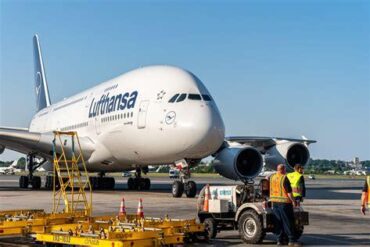
Lufthansa’s relationship with the Airbus A380 has entered a decisive new phase, marked by a sweeping withdrawal from 15 long-haul routes that once defined its superjumbo footprint. The German flag carrier, long associated with high-capacity global connectivity, is now refining its network with a sharper focus on efficiency, yield management, and evolving passenger demand patterns. This shift reflects broader industry trends while revealing how even the most iconic aircraft must adapt to changing economics.
For more than a decade, the A380 symbolized Lufthansa’s ability to move massive volumes of passengers between global hubs. Delivered in 2010, its first aircraft quickly became a flagship of long-haul operations. Today, eight A380s remain active, all operating exclusively from Munich, a notable departure from the airline’s earlier reliance on Frankfurt as its primary superjumbo hub. This geographic consolidation alone signals a strategic recalibration that goes beyond simple route adjustments.
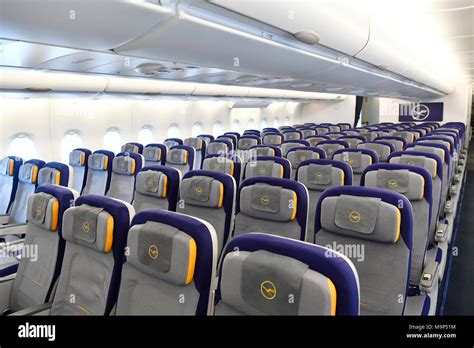
The aircraft itself remains formidable. With 509 seats across four cabins, including first class, business, premium economy, and economy, the A380 is still Lufthansa’s highest-capacity aircraft. Yet capacity alone no longer guarantees profitability, especially in markets where demand volatility and premium cabin expectations have shifted dramatically in recent years.
Why Lufthansa Is Phasing Out A380 Routes
The decision to remove the A380 from 15 routes is rooted in a combination of operational efficiency and market responsiveness. Large aircraft thrive on consistent, high-density demand, but post-pandemic travel patterns have proven less predictable. Lufthansa’s strategy now leans toward flexibility, deploying smaller, more advanced aircraft like the Airbus A350-900 to better match supply with demand.
This pivot is particularly evident in premium cabin strategy. Modern aircraft equipped with upgraded interiors offer a more competitive experience compared to older A380 configurations. Even with its size advantage, the A380 struggles to match the efficiency and product consistency of newer jets, especially when premium travelers increasingly prioritize privacy and modern cabin design.
Asian Routes No Longer Served by the A380
Lufthansa has withdrawn the A380 from several major Asian destinations that once relied heavily on the superjumbo. These routes include key aviation markets such as Singapore, Beijing Capital, Shanghai, Hong Kong, Tokyo Narita, and Seoul Incheon. Each of these routes previously saw thousands of A380 departures, reflecting strong historical demand.
The removal from Asia highlights a fundamental shift in network dynamics. While these cities remain strategically important, the airline now favors aircraft that offer better frequency and adaptability. Rather than concentrating passengers into a single massive departure, Lufthansa can distribute capacity across multiple flights, improving connectivity and revenue optimization.
This approach also aligns with the growing importance of point-to-point travel and diversified hub strategies. By reducing reliance on ultra-large aircraft, Lufthansa gains the agility to respond quickly to fluctuations in regional demand.
North American Network Sees Major Cuts
The airline’s A380 retreat is equally pronounced across the Atlantic. Routes to Miami, Houston, and New York JFK have all seen the superjumbo phased out. Among these, New York stands out as the most recent change, with A380 service continuing until late 2025 before being replaced.
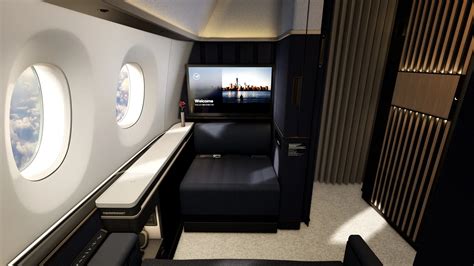
The switch to the A350-900 on the Munich–JFK route illustrates the airline’s new priorities. While the A380 once delivered unmatched capacity, the A350 provides a more refined product with significantly fewer seats. This reduction—nearly halving available capacity—helps Lufthansa maintain stronger load factors and improve overall yields in a market where demand has softened.
Premium seating has also been reduced proportionally, reflecting a recalibration of business travel demand. Instead of maximizing volume, Lufthansa is now optimizing profitability per seat, a subtle but critical distinction in today’s aviation landscape.
The End of A380 Service to Africa
Johannesburg represents another notable chapter in Lufthansa’s A380 history. Once served by the superjumbo from Frankfurt, the route played a key role in connecting Europe with Southern Africa. It also supported partnerships with regional carriers, feeding traffic into broader networks across the continent.
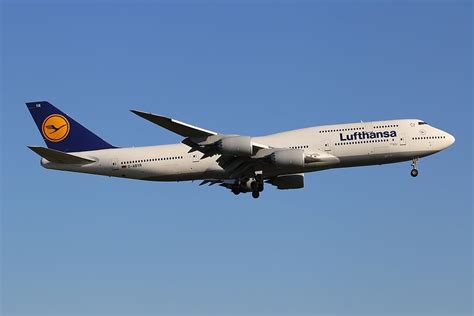
Today, the A380 is no longer part of that equation. Lufthansa now operates the route using the Boeing 747-8i and supplements it with A350 service from Munich. This combination offers a more balanced capacity profile while maintaining connectivity for both local and transfer passengers.
The data underscores the route’s continued importance. Tens of thousands of passengers still travel between Frankfurt and Johannesburg annually, many connecting onward within Africa. However, the shift away from the A380 demonstrates that even high-demand routes benefit from more flexible aircraft deployment.
A Strategic Evolution, Not a Retreat
Lufthansa’s decision to scale back A380 operations is not a retreat from long-haul travel but a calculated evolution. The airline continues to operate the aircraft on select routes where its capacity can be fully utilized. At the same time, it is embracing a more diversified fleet strategy that prioritizes efficiency, passenger experience, and adaptability.
This transformation reflects a broader industry reality: size alone is no longer the defining factor in long-haul success. Airlines must balance capacity with precision, ensuring that every seat contributes to profitability. In this context, Lufthansa’s A380 network reduction is less about abandoning an icon and more about redefining how it fits into a modern, data-driven aviation strategy.
As the airline moves forward, the A380 will remain a visible—if more selective—part of its operations, serving routes where demand still justifies its scale. But the future clearly belongs to aircraft that combine efficiency with flexibility, reshaping not just Lufthansa’s network, but the global aviation landscape itself.