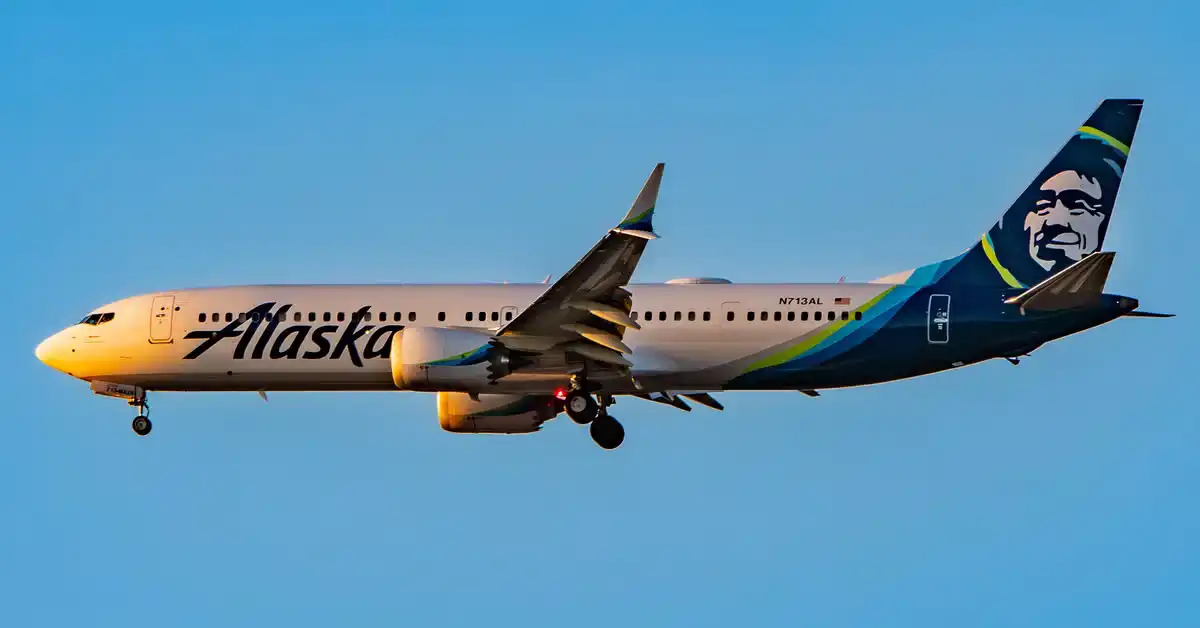
Alaska Airlines is reshaping its international network after cutting nine routes across Mexico, the Bahamas, and Canada, marking one of the carrier’s most notable schedule adjustments since its expansion under the Alaska Air Group. The changes arrive as the airline strengthens its national footprint following the integration of Hawaiian Airlines and pushes aggressively into new strategic markets, including Europe and Southern California growth hubs.
The Seattle-based carrier has rapidly climbed into position as the fifth-largest airline in the United States by flight volume. Alaska now accounts for roughly 6% of all US airline services, a sharp increase from the previous year as the company absorbs more capacity and expands its reach through fleet growth and network realignment. Yet while Alaska is adding long-haul ambitions and reinforcing profitable corridors, several international leisure routes failed to deliver the passenger demand necessary to survive.
Industry scheduling data comparing Alaska Airlines’ international operations between January 2025 and May 2026 against the currently planned schedule for June 2026 through March 2027 reveals a sweeping reduction involving nine discontinued routes. Many of the affected markets struggled with weak load factors, seasonal inconsistency, or intense competition from larger carriers.
The network cuts particularly hit secondary leisure destinations from cities where Alaska had attempted to stimulate demand with seasonal flying.

Los Angeles Loses Three Alaska International Routes
Los Angeles International Airport became one of the biggest casualties in Alaska Airlines’ latest network revision. The carrier has officially removed nonstop service from LAX to Monterrey, Kelowna, and Nassau.
Flights between Los Angeles and Monterrey operated only between February and October 2025 before disappearing from future schedules. The Kelowna route survived slightly longer, operating seasonally from December 2024 through March 2026. Meanwhile, Nassau service lasted from December 2023 until August 2025 before Alaska abandoned the market entirely.
The route cuts reveal how difficult it has become for airlines to sustain thin international leisure markets from highly competitive airports like LAX. Department of Transportation data showed Alaska filled only between 66.2% and 74.1% of seats on these services, significantly below the airline’s broader international average.
Kelowna represented an especially challenging market. Before Alaska entered the route, nonstop service between Los Angeles and Kelowna had already vanished after United Airlines exited the corridor in 2014. WestJet briefly attempted service afterward, but the market continued struggling to support sustained demand.
Nassau presented a different challenge altogether. At more than 2,190 nautical miles each way, the Bahamas service ranked among Alaska’s longest international flights from California. Operating a Boeing 737 on such a lengthy leisure-heavy route required consistently high passenger loads and strong yields. Neither materialized. JetBlue had previously attempted the same market and withdrew before Alaska eventually followed.

Kansas City and St. Louis Routes Fail to Gain Traction
Alaska Airlines also pulled back sharply from Midwest leisure flying after eliminating three Mexico routes connected to Kansas City and St. Louis.
The airline ended Kansas City to Cancun service after operating it between January 2025 and March 2026. Kansas City to Puerto Vallarta lasted only from January through April 2025. Service linking St. Louis with Puerto Vallarta survived slightly longer but will also disappear after March 2026.
These cuts reflect some of the weakest passenger performance across Alaska’s international network. Federal data showed the flights achieved load factors ranging from only 55.2% to 64.4%, numbers that are extremely difficult to sustain financially in commercial aviation.
Low load factors become especially damaging on leisure routes where airlines often depend on discounted fares to stimulate demand. Even when flights appear busy during holidays, inconsistent year-round traffic can severely hurt profitability.
Kansas City to Cancun will not disappear entirely from the market, however. American Airlines, Delta Air Lines, and Southwest Airlines continue maintaining seasonal or recurring operations on the route, giving travelers alternative nonstop options despite Alaska’s withdrawal.
The Puerto Vallarta cuts may prove more significant for Midwest travelers. Booking data showed Kansas City generated approximately 26,000 round-trip passengers annually to the Mexican resort city, indicating meaningful consumer demand still exists despite Alaska’s failed attempt to capture it profitably.

Seattle and Fresno Also See International Service Reductions
Three additional international routes have vanished from Alaska’s map as the airline narrows its focus toward stronger-performing markets.
Service between Fresno and Guadalajara operated briefly between December 2024 and February 2025 before ending. San Francisco to Mazatlan survived longer, operating from December 2021 through April 2025 before removal from future schedules.
Perhaps the most notable cancellation involves Seattle-Tacoma International Airport and Nassau. Alaska launched the Bahamas service with hopes of opening a unique long-haul leisure market from the Pacific Northwest, but demand ultimately failed to support the operation.
The route never established strong momentum. Department of Transportation figures showed Alaska filled just 57.8% of available seats on the Seattle-Nassau flights, making it one of the weakest-performing international services in the airline’s network.
Despite its poor performance, the route held operational significance. At 2,506 nautical miles each way, Nassau ranked as Alaska’s third-longest international Boeing 737 route from Seattle. Only flights to Keflavik and Liberia covered greater distances.
The Nassau experiment also highlighted Alaska Airlines’ broader strategy of testing underserved long-haul leisure destinations from Seattle. Some routes succeed and become permanent additions. Others quietly disappear when demand fails to meet expectations.

Alaska Airlines Continues Expanding Despite Route Cuts
Although the nine international cuts appear dramatic, they represent only one part of Alaska Airlines’ much larger transformation strategy.
The airline continues expanding aggressively in several core markets, especially San Diego, while also preparing for broader long-haul growth opportunities following its integration with Hawaiian Airlines. Alaska recently unveiled new routes elsewhere in its network and is preparing to launch its first European services, signaling that international expansion remains a priority despite the latest reductions.
What the airline appears increasingly focused on is precision rather than sheer route volume. Markets with weak seasonal demand, poor yields, or intense competitive overlap are being removed quickly while Alaska reallocates aircraft toward routes with stronger revenue potential.
That disciplined strategy may ultimately strengthen Alaska’s position as it competes against the largest US airlines. While travelers in affected cities lose nonstop international options, the carrier is clearly prioritizing sustainable growth over maintaining underperforming prestige routes.