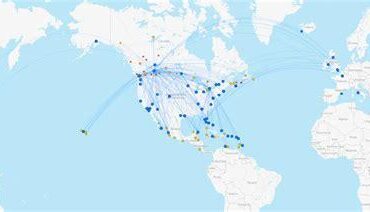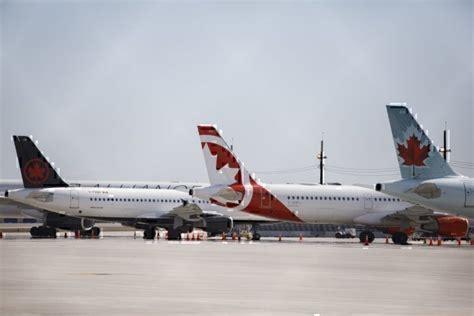
Air Canada is reshaping its international network for 2026 with the suspension or cancellation of 13 routes across North America, the Caribbean, and Africa, marking one of the airline’s most notable schedule adjustments in recent years. The carrier remains Canada’s dominant international airline, accounting for roughly 37% of all international departures from the country between April and September 2026, yet the latest changes reveal a company recalibrating its priorities amid geopolitical instability, fluctuating fuel costs, and shifting travel demand.
Despite the route cuts, Air Canada’s broader international operation is still expanding. According to Cirium Diio schedule data, the airline’s overall international capacity is expected to rise by approximately 1% year-over-year. That modest growth is heavily concentrated in Europe, where Air Canada is boosting frequencies and deploying new-generation aircraft such as the Airbus A321XLR to improve efficiency on thinner long-haul markets.
The adjustments also reflect a weakening transborder market between Canada and the United States. Fewer Canadians are traveling southbound, partly influenced by the current political climate and softer discretionary demand. While Air Canada’s US network is not collapsing, growth has effectively stalled, forcing the airline to become increasingly selective about which cross-border routes remain financially viable.
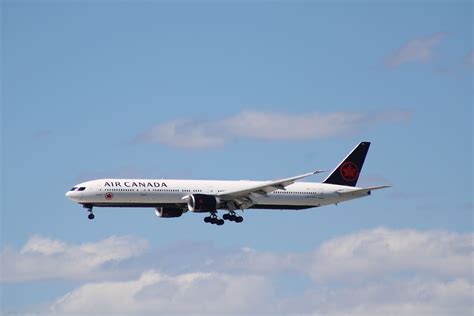
Air Canada’s International Network Remains Massive Despite Route Reductions
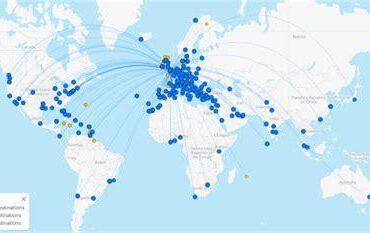
Even with 13 international routes disappearing from the summer schedule, Air Canada still operates one of the largest global networks in the Western Hemisphere. The airline continues to maintain an enormous presence across Europe, Asia, the Caribbean, and the United States, while its Star Alliance partnerships provide additional global connectivity through major hubs including Toronto Pearson, Montréal–Trudeau, and Vancouver International Airport.
The airline’s strategy for 2026 appears less focused on aggressive expansion and more centered on profitability, fleet optimization, and fuel efficiency. Routes with weak passenger loads, limited premium demand, or high operational costs are being trimmed, while stronger long-haul European markets are receiving additional attention.
Industry analysts view this as a practical response to a volatile operating environment. Rising fuel prices, persistent supply chain disruptions, aircraft delivery delays, and geopolitical instability have all increased pressure on airlines worldwide. Air Canada’s latest network decisions illustrate how even large flag carriers are being forced to prioritize margins over market presence.
Seven Air Canada Routes Have Been Permanently Dropped
Seven of the affected routes are no longer scheduled to return at all, signaling a complete withdrawal from those markets rather than a temporary seasonal pause.
Among the earliest casualties were Ottawa–Tampa, Ottawa–Tulum, and Québec City–Tulum. All three routes ended in April 2025 and were operated using Air Canada Rouge Airbus A319 aircraft. The Tulum services were part of a broader industry push into Mexico’s newest international tourism gateway, but demand appears to have fallen short of expectations.
The most significant cancellation, however, is undoubtedly Montréal–Algiers.
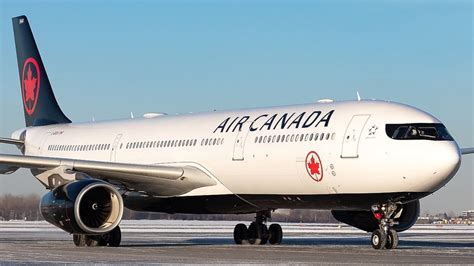
Montréal to Algiers Cancellation Ends a Unique Long-Haul Link
Air Canada’s Montréal–Algiers service represented an important Francophone and diaspora connection between Canada and North Africa. The route primarily catered to Algerian communities in Québec and visiting friends-and-relatives traffic rather than high-yield corporate travelers.
Although the airline had initially planned to restore the route in summer 2026 with four weekly Airbus A330-300 flights, those plans have now been abandoned entirely. The cancellation leaves Algeria’s national carrier, Air Algérie, as the sole operator on the route.
The economics behind the decision were challenging long before the final cut. The service was reportedly among Air Canada’s weakest-performing long-haul operations from Montréal. Escalating fuel costs linked to instability in the Middle East, particularly the effects of the Iran conflict on global energy markets, likely accelerated the decision.
For Air Canada, maintaining a fuel-intensive long-haul route with limited premium demand became increasingly difficult to justify. For passengers, the change reduces competition and narrows travel options between Canada and Algeria.
Bermuda and Seattle Services Quietly Disappear
Another notable withdrawal is the cancellation of Montréal–Bermuda. Operated seasonally with Air Canada Rouge Airbus A319 aircraft, the route existed only between June and October and offered a very limited schedule of just 18 round trips.
The route’s timing was closely tied to the arrival of BermudAir, which entered the Montréal market during the same period. Rather than sustaining prolonged competition on a niche leisure route, Air Canada appears to have stepped back after testing the market for a single season.
Meanwhile, Montréal–Seattle has also vanished from the network. The route utilized the Airbus A220-300 and linked two important technology and aerospace centers, yet demand levels seemingly failed to justify continued service.
Vancouver to Tampa Became Air Canada’s Weakest US Route
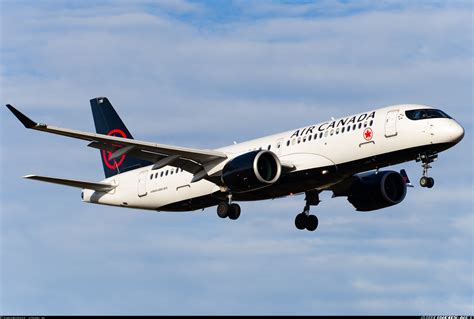
Perhaps the most dramatic example of underperformance was Vancouver–Tampa. The route operated seasonally between June and November but delivered extremely poor passenger loads. Average seat occupancy reportedly reached only 54%, making it Air Canada’s emptiest US route.
The service was initially introduced after WestJet entered the same market, suggesting a defensive competitive response rather than a purely demand-driven expansion. Before that, the route had never been served nonstop.
Long transborder flights are particularly vulnerable when demand softens because they combine high operating costs with intense seasonal fluctuations. Tampa may have looked attractive on paper as a growing Florida leisure destination, but actual traveler demand never reached sustainable levels.
The route’s cancellation highlights a broader trend emerging across North America: airlines are becoming far less willing to tolerate weak-performing leisure routes simply to maintain market visibility.
Six Cuba Routes Will Return for Winter 2026
Unlike the seven permanently canceled routes, six suspended services are expected to return during the winter season beginning October 27, 2026.
These include:
- Montréal to Cayo Coco
- Montréal to Varadero
- Toronto to Cayo Coco
- Toronto to Holguín
- Toronto to Santa Clara
- Toronto to Varadero
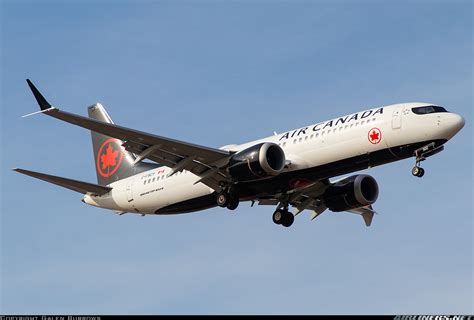
The temporary suspension is tied directly to Cuba’s worsening jet fuel shortage, which has disrupted airline operations throughout the Caribbean. The fuel crisis itself has been exacerbated by broader geopolitical tensions and supply constraints linked to the conflict involving Iran.
Air Canada and Air Canada Rouge had continued serving Cuba consistently through early 2026, but deteriorating fuel availability forced the airline to pause operations. Several other Canadian carriers have made similar decisions, underscoring the severity of the issue.
The Cuban network remains strategically important for Air Canada because of strong winter leisure demand from Canadian travelers escaping colder climates. Once fuel supplies stabilize, the airline expects those routes to resume as planned.
Air Canada’s 2026 Strategy Signals a More Disciplined Future
The latest network overhaul demonstrates that Air Canada is entering a more disciplined phase of post-pandemic growth. Rather than chasing expansion for its own sake, the airline is increasingly concentrating resources on markets capable of delivering stronger returns and operational stability.
Europe is emerging as the clear winner in that strategy. Meanwhile, weaker US leisure routes, marginal seasonal destinations, and fuel-sensitive long-haul services are facing growing scrutiny.
For travelers, the changes serve as another reminder that airline networks remain highly fluid in 2026. Routes that appear promising one year can disappear the next if demand, economics, or geopolitical realities shift too sharply.