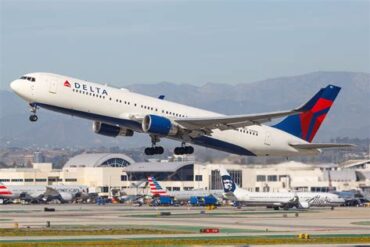
Delta Air Lines entered 2025 with remarkable momentum in the long-haul market. According to data from the US Department of Transportation, the carrier transported 16.1 million long-haul passengers during 2025, marking the strongest year in its history for intercontinental traffic. That figure represented a 5% increase over its previous record in 2024, solidifying Delta’s position as one of the dominant long-haul operators in North America. Nearly one in seven long-haul passengers traveling to or from the United States flew on Delta aircraft, demonstrating the airline’s enormous footprint across transatlantic, transpacific, and South American markets.
Yet even in years of record growth, airline networks remain fluid. Routes open and close constantly as airlines evaluate demand, profitability, fleet allocation, and partnerships. While Delta prepares to introduce several ambitious new intercontinental services—including the unusual Atlanta–Riyadh route scheduled for 2026—the airline has simultaneously removed a number of underperforming or strategically redundant routes.
Over the past year, six long-haul routes disappeared from Delta’s network, reflecting shifting market conditions, competitive pressure, and evolving joint-venture strategies.
Delta’s Expanding Yet Selective Global Network
Delta’s global strategy revolves around carefully balancing organic expansion with powerful airline partnerships. Through its membership in the SkyTeam alliance and equity stakes in carriers such as Virgin Atlantic and LATAM Airlines, the company often coordinates schedules rather than competing directly with partners.
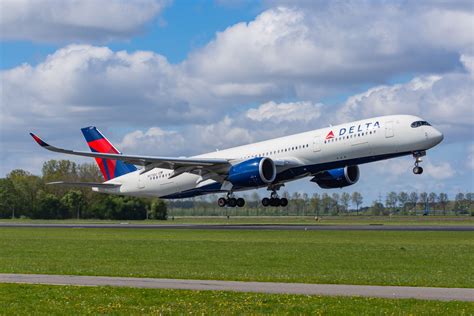
This approach allows Delta to maintain a vast global reach without necessarily operating every route itself. Instead, certain city pairs are periodically transferred between partners depending on capacity needs and market performance. The recent network adjustments illustrate how Delta prioritizes efficiency and profitability even during periods of overall growth.
Two of the route cancellations occurred early in 2025, both ending in March after relatively short operational periods.
Orlando–London Heathrow: An Unusual Transatlantic Experiment Ends
One of the most unusual long-haul routes Delta attempted in recent years connected Orlando International Airport (MCO) with London Heathrow (LHR). The service launched in October 2024, primarily intended to complement Delta’s deep partnership with Virgin Atlantic, which operates an extensive transatlantic network.
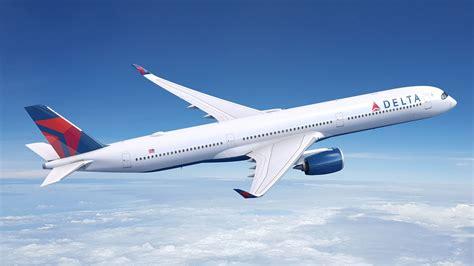
Despite the strategic logic, the route struggled almost immediately. Flights operated four times weekly using the Airbus A330-900, with departures from Orlando typically scheduled around or after midnight. That late departure time, combined with the seasonal tourism nature of Orlando’s travel demand, made the route difficult to sustain.
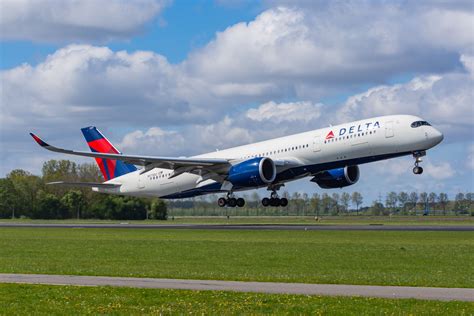
Passenger loads revealed the challenge clearly. The service achieved an average load factor of just 63.4%, while the first three months of 2025 saw an even weaker 60.1% seat occupancy. For long-haul operations involving widebody aircraft, such figures rarely support profitable operations.
As a result, Delta discontinued the route in March 2025, quietly ending one of the more experimental transatlantic services attempted by a major US airline.
Boston–São Paulo: Temporary Coverage for LATAM
Another route ending in March 2025 was Boston Logan International Airport (BOS) to São Paulo Guarulhos (GRU). Unlike Orlando–London, this service was never meant to be permanent.
Delta introduced the route in January 2025, effectively acting as a temporary replacement for LATAM Airlines, one of its key South American partners. LATAM had operated the route since 2018, but temporarily stepped away due to fleet adjustments and scheduling changes.
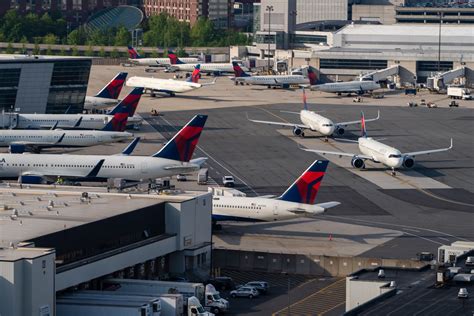
Delta operated the route three times per week with the Airbus A330-300, carrying 15,378 passengers during the brief operational period. The service achieved a respectable 80.4% load factor, but it still lagged behind LATAM’s previous performance. During the same January–March window in 2024, LATAM transported 20,060 passengers while filling 86.7% of seats, despite using larger aircraft.
Delta’s final Boston departure occurred on March 27, 2025, after which LATAM resumed the route on March 31, restoring the original partnership structure.
Los Angeles–Papeete: Tourism Route Faces Competitive Pressure
Another intriguing long-haul experiment connected Los Angeles International Airport (LAX) with Papeete, Tahiti (PPT) in French Polynesia. The route launched in December 2022 as a seasonal leisure service targeting American tourists seeking South Pacific destinations.
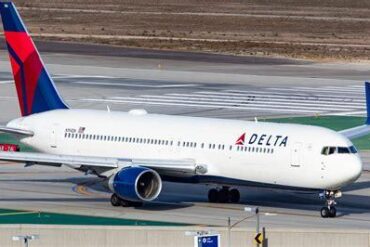
Delta scheduled the route three times per week using Boeing 767-300ER aircraft, covering approximately 3,558 nautical miles (6,589 kilometers) each way.
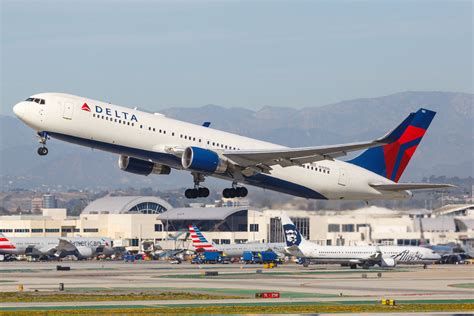
Despite the attractive destination, the service faced heavy competition. Air France and Air Tahiti Nui already operated flights between Los Angeles and Papeete, while additional capacity came from United Airlines and French bee through nearby San Francisco International Airport.
Delta transported 58,454 passengers on the route, but the average seat factor reached only 67.4%, far below the levels typically required for sustainable widebody operations. Booking data revealed that around 40% of passengers were connecting travelers from other US cities, indicating that local demand alone was insufficient.
Consequently, Delta ended the route in June 2025, leaving the market largely to its competitors.
New York–London Gatwick: Heathrow Consolidation
In September 2025, Delta discontinued flights between New York JFK and London Gatwick (LGW). Gatwick is the second-busiest airport in the United Kingdom, yet airlines increasingly concentrate transatlantic services at London Heathrow, where business demand and connectivity are significantly stronger.
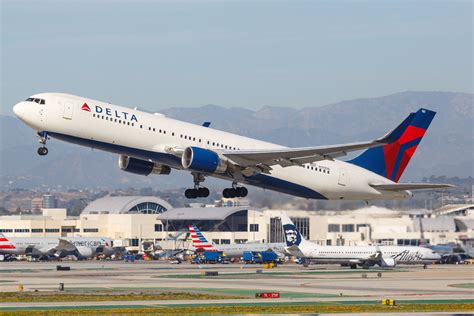
Delta’s decision mirrored broader industry trends. JetBlue Airways and British Airways had already exited the same airport pair, opting instead to consolidate operations at Heathrow. Concentrating flights there allows airlines to capture premium corporate traffic and integrate more efficiently with alliance partners.
For Delta and Virgin Atlantic, the move strengthened their joint venture hub structure at Heathrow while simplifying scheduling and aircraft allocation.
New York–Geneva: Short-Lived Return to Switzerland
Another transatlantic route that disappeared in October 2025 was New York JFK to Geneva (GVA). The route marked Delta’s return to the Swiss city after a multi-decade absence, having been relaunched in 2023.
While Geneva attracts diplomatic and financial travel, the market remains relatively small compared with other European destinations. Maintaining consistent year-round demand proved challenging, particularly outside peak winter tourism periods when travelers head to nearby Alpine ski resorts.
After roughly two years of operation, Delta removed the route as part of its broader network recalibration.
New York–Brussels: A Historic Route Concludes
The final long-haul cut occurred in January 2026, when Delta ended its long-standing service between New York JFK and Brussels (BRU). For many years the route operated daily, serving diplomatic, business, and leisure travelers between the United States and Belgium.
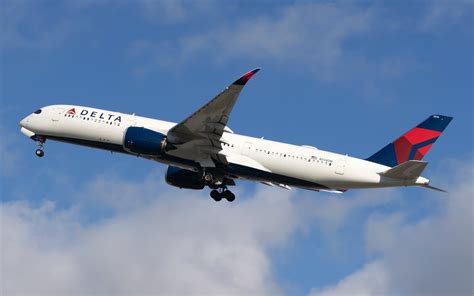
However, the airline gradually scaled back the service during 2025. Frequency dropped from daily flights in 2024 to four weekly departures in 2025, reducing available seat capacity by 49.4%.
Passenger traffic declined even more sharply. The route carried 258,660 passengers in 2024, but only 178,592 in 2025, representing a 51.9% drop. The reduced schedule made the service less competitive, which contributed to falling demand.
Even during peak summer travel periods, load factors never exceeded 83.1%, indicating weakening performance compared with earlier years.
Delta’s final departure from JFK occurred on January 5, 2026, leaving Brussels Airlines as the primary operator on the route. The Belgian carrier is expected to benefit significantly from Delta’s withdrawal, as it has increased available seats by only 2.5% this year while inheriting much of the market demand.
Strategic Network Adjustments Continue
Although six long-haul routes have disappeared from Delta’s network since early 2025, the changes should not be interpreted as a contraction. Instead, they highlight the airline’s ongoing effort to refine its global network, redirect aircraft to stronger markets, and coordinate more closely with partners.
With record passenger numbers, expanding partnerships, and upcoming routes like Atlanta–Riyadh, Delta continues to reshape its long-haul strategy for a rapidly evolving aviation landscape. The removal of underperforming routes ensures that resources remain focused on the destinations where demand—and profitability—remain strongest.