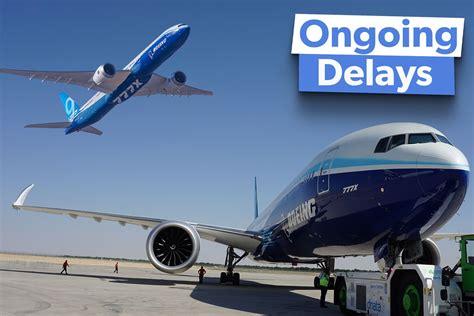
In an aviation industry increasingly defined by supply chain disruptions and delayed aircraft deliveries, Etihad Airways stands out as the Gulf carrier least concerned about the prolonged delays surrounding Boeing’s highly anticipated 777X program. While competitors across the Middle East face mounting operational and financial pressure as certification setbacks continue to push deliveries further into the future, Abu Dhabi’s flag carrier has quietly insulated itself from the crisis through disciplined fleet planning, diversified procurement, and a radically transformed business model.
Rather than building its future around the assumption that manufacturers will deliver aircraft precisely on schedule, Etihad has spent years constructing a strategy designed to withstand uncertainty. The result is a carrier that can watch Boeing’s ongoing struggles unfold with remarkable calm.
A Deliberately Distant Delivery Timeline Shields Etihad From Immediate Risk
The most important reason behind Etihad’s confidence is remarkably straightforward: the airline simply does not need the Boeing 777X anytime soon.
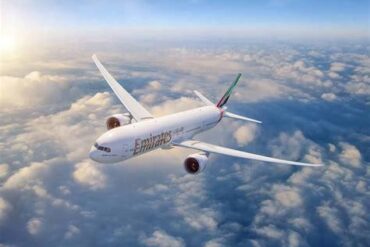
Unlike regional competitors that planned substantial portions of their future growth around early deliveries of Boeing’s next-generation flagship, Etihad intentionally pushed its first scheduled 777X deliveries far into the next decade. Under the leadership of Chief Executive Officer Antonoaldo Neves, the airline structured its order book so that its first 777X aircraft is not expected to arrive until 2031.
This back-loaded timeline fundamentally changes the equation.
For airlines that expected to begin receiving the aircraft years earlier, every additional certification delay creates cascading operational consequences. Aging fleets must remain in service longer, expensive maintenance programs become unavoidable, and network expansion plans are disrupted.
Etihad faces none of these challenges.
Because the airline’s immediate growth ambitions rely on aircraft already in production and fully certified, Boeing’s certification struggles have become little more than a distant industry headline rather than an existential operational concern.
The strategy perfectly complements Etihad’s ambitious Journey 2030 transformation initiative, which aims to steadily expand the airline without exposing it to excessive manufacturing risk.
Instead of waiting for unbuilt aircraft, the carrier plans to add approximately 20 aircraft annually over the next five years using proven platforms already rolling off production lines.
That distinction may prove decisive.
By avoiding dependence on a single delayed aircraft program, Etihad preserves both flexibility and financial stability.
After all, an airline cannot operate future promises.
It can only operate aircraft physically available today.
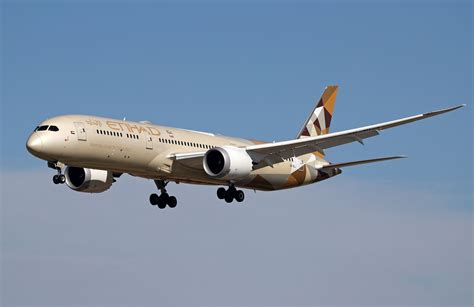
Boeing’s 777X Delays Have Exposed Weaknesses in the Traditional Gulf Airline Model
For decades, Gulf aviation growth followed a familiar blueprint.
Major airlines accumulated enormous widebody order books, using sheer scale to dominate global connecting traffic through centralized mega-hubs. The strategy depended heavily on manufacturers delivering hundreds of aircraft on time.
When those deliveries stopped arriving as planned, vulnerabilities quickly emerged.
The prolonged delays affecting the Boeing 777X have disrupted fleet replacement strategies throughout the region. Airlines that intended to retire older aircraft have instead been forced to keep aging jets in service for years longer than anticipated.
This has created significant additional costs.
Extensive cabin refurbishments, heavy maintenance checks, lease extensions, and operational inefficiencies now consume hundreds of millions of dollars across the industry.
For carriers whose growth models were built around uninterrupted deliveries, the consequences are severe.
Etihad, however, abandoned this high-risk philosophy years ago.
Following years of substantial financial losses during the previous decade, the airline underwent a painful but transformative restructuring. Rather than pursuing growth at any cost, management shifted focus toward sustainable profitability, disciplined expansion, and operational resilience.
The lessons learned during that difficult period continue to shape Etihad’s decision-making today.
Aircraft are no longer viewed as symbols of prestige or instruments of market domination.
Instead, they are treated as flexible business assets deployed only when commercially justified.
This mindset significantly reduces exposure to manufacturer disruptions because growth is no longer dependent on massive speculative orders.
Fleet Diversification Has Become Etihad’s Strategic Insurance Policy
Perhaps the most significant differentiator separating Etihad from many of its regional peers is its commitment to fleet diversification.
Rather than becoming overly reliant on a single manufacturer, Etihad has deliberately spread risk across multiple aircraft programs and supply chains.
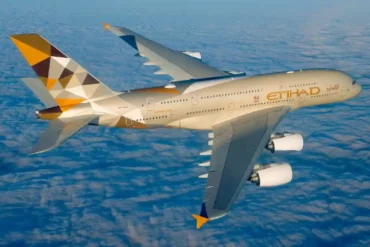
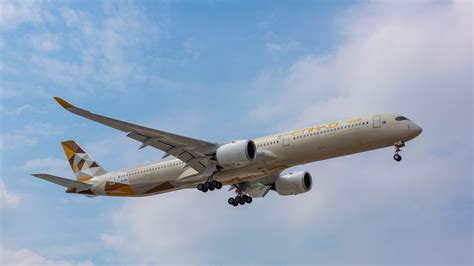
The airline recently reinforced this strategy by securing 32 Airbus widebody aircraft, including both Airbus A350-1000s and Airbus A330-900neos through a combination of direct purchases and leasing arrangements.
This diversified approach delivers immediate advantages.
Should one production line experience delays, the airline can continue expanding through alternative channels.
Network growth does not suddenly halt because a single certification process encounters setbacks.
Diversification also enables Etihad to tailor capacity more precisely to market demand.
Instead of deploying oversized aircraft across every route, the airline can select the most efficient aircraft for each individual market, maximizing profitability while maintaining premium service standards.
The flexibility extends beyond aircraft acquisition.
It influences scheduling, route planning, fleet utilization, and long-term capital expenditure.
In an era characterized by persistent industrial uncertainty, diversification has effectively become Etihad’s insurance policy against disruption.
Existing Aircraft Continue Delivering Strong Financial Performance
Another reason Etihad remains unconcerned about Boeing’s delays is that its current fleet continues to perform exceptionally well.
The airline closed the previous fiscal year with a post-tax profit of approximately $698 million, while passenger traffic surged by 21% to 22.4 million travelers.
Even more impressive was the carrier’s ability to sustain a 90% load factor across its network.
Such figures indicate a fleet closely aligned with market demand.
There is no immediate shortage of capacity requiring emergency solutions.
Because Etihad’s network and fleet remain balanced, the airline avoids many costly responses currently affecting competitors.
Other carriers increasingly rely on expensive short-term wet leases, prolonged aircraft life extensions, and emergency maintenance programs to bridge capacity gaps created by delayed deliveries.
Those measures inevitably erode profitability.
Etihad largely avoids these expenses because its active fleet already supports planned growth trajectories.
Financial discipline therefore reinforces operational resilience.
The airline is not forced into reactive decisions because it planned conservatively from the outset.
Massive Cabin Investments Reduce Dependence on New Deliveries
Rather than waiting indefinitely for factory-fresh aircraft, Etihad has chosen to invest heavily in the aircraft already under its control.
The carrier plans to spend between $800 million and $1 billion on an extensive fleet refurbishment initiative designed to modernize approximately 50 widebody aircraft.
The program primarily targets Boeing 777-300ERs and older 787 Dreamliners.
Despite operating one of the Middle East’s youngest fleets, with an average aircraft age slightly above eight years, management believes consistency throughout the customer experience is essential.
This investment strategy produces several advantages simultaneously.
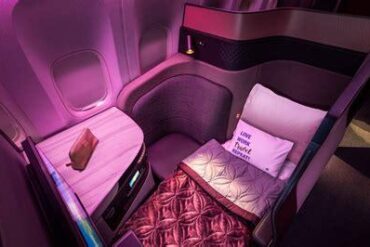
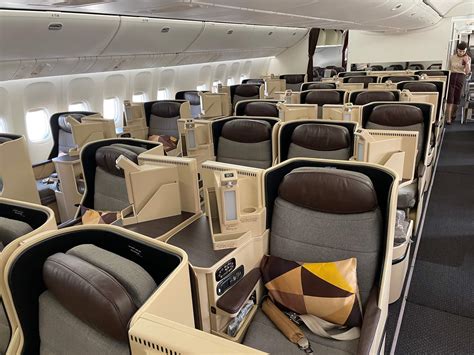
Passengers receive upgraded cabins featuring new interiors, advanced inflight entertainment systems, enhanced connectivity, and refreshed premium products.
Operationally, the airline extends the useful life of existing aircraft while reducing pressure for immediate fleet replacement.
Most importantly, refurbished aircraft can deliver a passenger experience comparable to brand-new jets.
Consequently, the absence of the 777X does not create a meaningful product gap.
Customers continue receiving a premium experience, while network planners gain valuable flexibility.
The refurbishment program is expected to conclude around 2030, conveniently positioning the airline to seamlessly integrate the 777X once deliveries eventually commence.
The Airbus A321LR Is Quietly Reshaping Etihad’s Expansion Strategy
One of the most fascinating elements of Etihad’s evolving strategy is the growing importance of the Airbus A321LR.
Historically, Gulf carriers relied overwhelmingly on large widebody aircraft to funnel passengers through their hubs.
Etihad is increasingly moving away from that one-size-fits-all model.
The airline expects to introduce 30 Airbus A321LR aircraft, which will become central to serving medium-haul and thinner long-haul markets.
These aircraft provide remarkable flexibility.
Capable of flying routes up to approximately 4,600 miles, the A321LR enables Etihad to operate destinations that would be economically challenging using larger twin-aisle aircraft.
Secondary leisure markets, regional business centers, and lower-density international routes become financially viable.
Importantly, Etihad has configured these aircraft with a genuine premium focus.
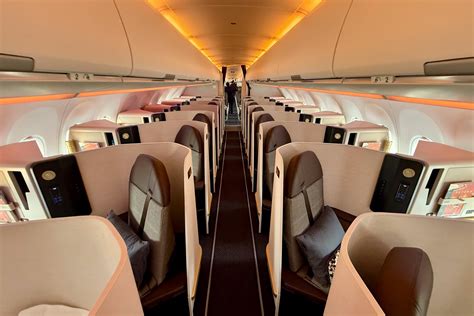
Rather than maximizing seat density, the airline selected a three-class layout featuring First, Business, and Economy Class.
This configuration allows Etihad to preserve its premium brand positioning while improving route economics.
The strategic implications are substantial.
A321LR operations free larger Boeing 787s and Airbus A350s for high-demand long-haul routes, maximizing overall fleet efficiency.
If market demand softens, Etihad can substitute smaller aircraft without sacrificing premium offerings or network presence.
That flexibility represents a powerful competitive advantage in today’s unpredictable aviation environment.
Financial Transformation Has Created Genuine Long-Term Resilience
Ultimately, Etihad’s composure regarding Boeing’s 777X delays reflects something much deeper than fleet planning.
It reflects a fundamentally transformed airline.
Years ago, Etihad was widely viewed as an aggressive super-connector pursuing expansion at extraordinary financial cost.
Today, it operates according to entirely different principles.
Under Antonoaldo Neves, the airline has embraced profitability, efficiency, and disciplined growth.
External challenges remain significant. Rising fuel prices, regional geopolitical tensions, and airspace disruptions continue to affect global aviation. Fuel alone now accounts for roughly 30% of Etihad’s total cost base, creating substantial pressure across the business.
Yet the airline continues advancing its long-term strategy.
Journey 2030 envisions expanding the network to 125 destinations while growing the fleet to approximately 160 aircraft.
Crucially, this expansion is designed around flexibility rather than dependence.
Multiple aircraft types, diversified procurement channels, upgraded existing assets, and conservative delivery assumptions collectively ensure that no single manufacturer can derail the airline’s ambitions.
The broader lesson emerging from Etihad’s approach is clear.
True resilience in aviation is not built through enormous order books or optimistic projections.
It is built through adaptability, financial discipline, and maximizing the value of aircraft already in service.
While much of the industry anxiously awaits Boeing’s next move, Etihad has positioned itself so that the timing scarcely matters.
That may prove to be one of the smartest strategic decisions any Gulf airline has made in the modern era.