The airline industry is one of the most capital-intensive and competitive businesses in the world. Behind every major carrier’s global network, aircraft orders, loyalty programs, and premium travel strategies are executives responsible for billions of dollars in decisions. At the top of these organizations are airline CEOs whose compensation packages can reach tens of millions of dollars annually.
Airline CEO pay is often a controversial subject because carriers operate in industries where employees, passengers, and investors all have competing expectations. While airlines face pressure from labor costs, fuel prices, and economic uncertainty, executives leading the world’s largest carriers continue to receive substantial compensation packages tied to company performance, stock value, and long-term strategic goals.
The highest-paid airline CEOs are generally those managing the largest publicly traded airlines, particularly in the United States. Their earnings are not limited to traditional salaries. Instead, most executive compensation comes from stock awards and performance-based incentives designed to align leadership decisions with shareholder returns.
How Airline CEO Compensation Packages Are Structured
Unlike many traditional jobs where annual income is primarily based on salary, airline CEO compensation is built around several different components. A chief executive’s reported earnings usually include a base salary, annual bonuses, non-equity incentive payments, stock awards, retirement benefits, and other executive perks.
For the largest airline companies, the base salary is often only a small portion of total compensation. Stock awards frequently represent the majority of the package because boards want executives to focus on long-term company growth and shareholder value.
This structure explains why airline CEOs can see major changes in their reported income from year to year. A strong stock performance or successful financial turnaround can significantly increase executive compensation, while weaker results can reduce the value of stock-based awards.
Among the world’s largest airlines, the highest-paid leaders are primarily found at major US carriers, where airline valuations and executive compensation structures tend to be significantly larger than many international competitors.
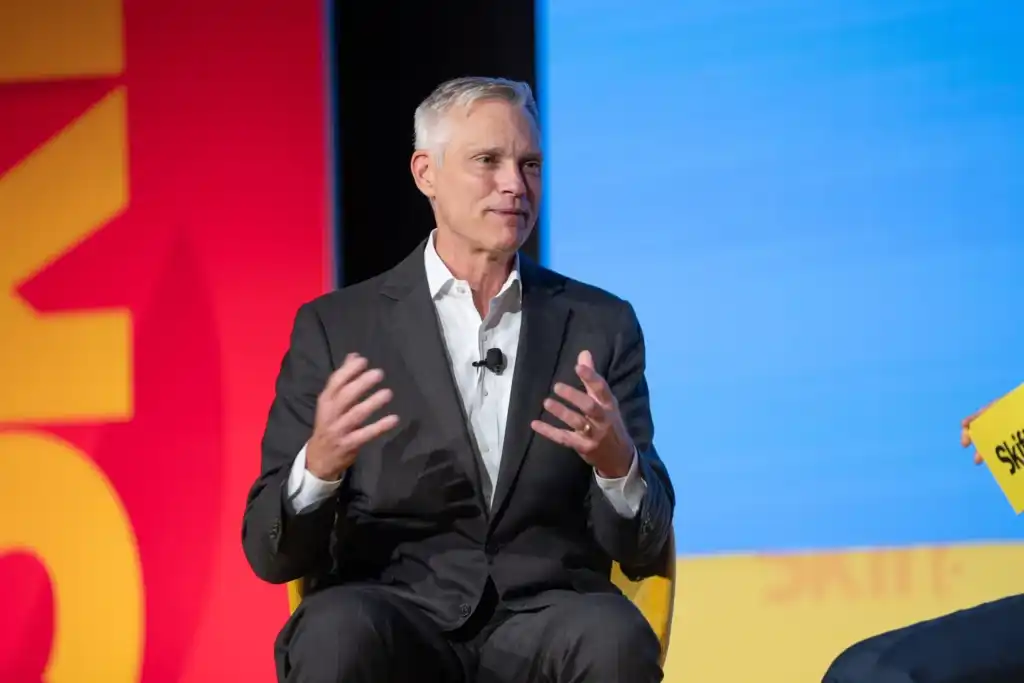
Scott Kirby: United Airlines CEO Earns More Than $32 Million Annually
CEO Scott Kirby has become one of the most influential airline executives of the modern era. After joining United as president in 2016, Kirby became chief executive officer in 2020 during one of the most difficult periods in aviation history.
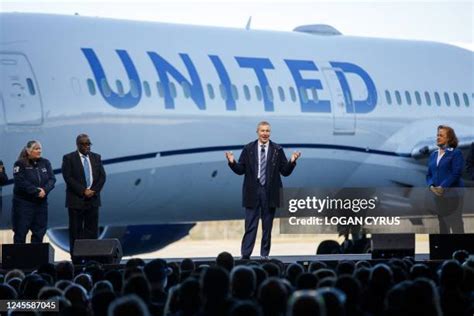
Taking over during the COVID-19 pandemic, Kirby guided United through a period of unprecedented disruption. Unlike some competitors that significantly reduced capacity, United maintained much of its fleet and positioned itself for rapid recovery when travel demand returned.
In 2025, Kirby received total compensation of approximately $32.3 million, making him the highest-paid airline CEO among major publicly disclosed airline executives. His package included a $1.2 million base salary, approximately $8 million in non-equity incentive compensation, and around $22.6 million in stock awards.
The majority of Kirby’s compensation came from equity rather than direct salary, reflecting United’s strong stock performance and improved financial results. Under his leadership, United expanded its mainline fleet beyond 1,100 aircraft and focused heavily on premium travel, international growth, and technology investments.
United has also strengthened its position through products such as improved business-class offerings, expanded long-haul routes, and next-generation connectivity initiatives. The airline reported billions in adjusted profits while gaining market share in areas where it had historically struggled.
Ed Bastian: Delta Air Lines CEO Earns Nearly $20 Million
CEO Ed Bastian is one of the longest-serving airline leaders in the United States. His career with Delta began in 1998, and after holding several senior positions, he became chief executive officer in 2016.

Bastian has played a central role in maintaining Delta’s reputation as one of the world’s strongest premium airlines. His leadership strategy has focused on improving customer experience, strengthening loyalty programs, and increasing revenue from premium cabins.
In 2025, Bastian earned total compensation of approximately $19.2 million. His package included a $1.08 million base salary, approximately $5.85 million in incentive compensation, and about $11.9 million in stock awards, along with additional compensation worth roughly $379,000.
Although his compensation declined compared with previous years, Delta remained one of the most profitable airlines globally. The company recorded billions of dollars in profits and continued expanding its premium-focused business model.
Unlike some competitors that have aggressively transformed their strategies, Bastian has largely continued Delta’s existing approach of offering a high-quality travel experience. This strategy has helped Delta maintain strong brand loyalty and compete successfully against United and American Airlines.
Bob Jordan: Southwest Airlines CEO Receives $16.6 Million Package
CEO Bob Jordan became the airline’s chief executive in 2022 after decades with the company. He joined Southwest in 1998 and eventually became executive vice president before succeeding longtime CEO Gary Kelly.
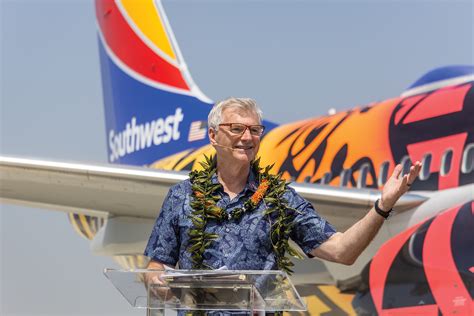
Jordan’s compensation reached approximately $16.6 million in 2025, placing him among the highest-paid airline executives worldwide. His earnings consisted of about $845,000 in base salary, $2 million in incentive compensation, approximately $13 million in stock awards, and additional compensation of around $637,000.
His rise in compensation reflects Southwest’s changing business environment. Under pressure from investors, including Elliott Investment Management, Southwest began making major changes to its traditional low-cost model.
The airline introduced several significant adjustments, including assigned seating, additional premium seating options, and discussions about expanding international operations. These changes represented one of the biggest strategic shifts in Southwest’s history.
While some passengers criticized the transformation, the changes helped improve Southwest’s financial performance and positioned the company for a new era of competition.
Robert Isom: American Airlines CEO Earns Nearly $14 Million
CEO Robert Isom has spent much of his career in the airline industry, including leadership roles at US Airways and America West before joining American Airlines.
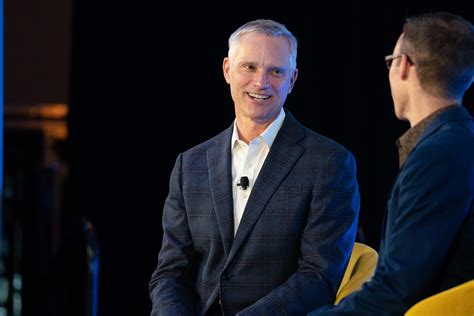
Isom became American Airlines CEO in 2022 after succeeding Doug Parker. His 2025 compensation totaled approximately $13.9 million, consisting primarily of a $1.3 million salary and around $12.49 million in stock awards.
His compensation was significantly lower than previous years when American Airlines delivered stronger market results. In 2023, Isom earned approximately $31.4 million, while his 2024 compensation reached about $15.6 million.
American Airlines has faced challenges as the airline industry increasingly favors premium-focused carriers with strong international networks. Compared with United and Delta, American has struggled to achieve similar profitability levels.
The airline has been working to improve its premium offerings, strengthen its widebody fleet strategy, and attract higher-value customers. However, investors continue to evaluate whether these efforts will close the gap with its major competitors.
Ben Smith: Air France-KLM CEO Represents Europe’s Highest Paid Airline Leaders
CEO Ben Smith represents one of the highest-paid airline executives outside the United States. Smith became CEO of Air France-KLM in 2018 after previously working at Air Canada.
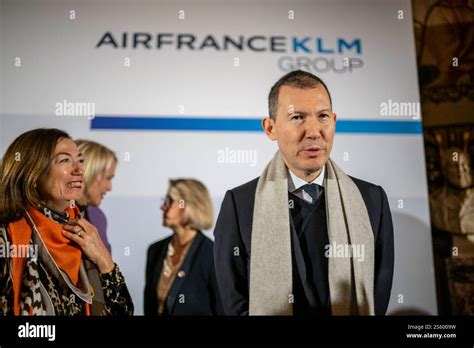
In 2025, Smith received total compensation of approximately €5.11 million, equivalent to around $5.8 million. His package included about €1 million in salary, with the remaining amount coming from performance bonuses and stock-related compensation.
Smith has focused on moving Air France-KLM’s brands further into the premium market. Under his leadership, Air France has expanded luxury offerings such as its La Première first-class experience, while KLM has continued improving its premium cabin products.
Air France-KLM reported more than €1.7 billion in profits in 2025 and continued strengthening its position among Europe’s largest airline groups. However, executive compensation disclosure varies internationally, meaning some global airline CEOs may earn more than publicly available figures suggest.
The Highest Paid Airline CEOs Reflect the Changing Aviation Industry
The compensation of the world’s highest-paid airline CEOs highlights the financial scale and complexity of modern aviation. Running a major airline involves managing thousands of employees, hundreds of aircraft, international regulations, fuel costs, and constantly changing customer expectations.
The highest-paid executives are not simply rewarded for maintaining operations. Their compensation is closely connected to profitability, stock performance, strategic expansion, and the ability to position airlines for future growth.
In 2025, Scott Kirby’s compensation at United Airlines placed him at the top among publicly disclosed airline CEOs, followed by Ed Bastian of Delta, Bob Jordan of Southwest, Robert Isom of American Airlines, and Ben Smith of Air France-KLM.
As airlines continue investing in premium travel, digital technology, sustainability, and global networks, CEO compensation will likely remain a major topic of discussion. These executives earn extraordinary amounts because they are responsible for some of the largest transportation businesses in the world, where every strategic decision can influence billions of dollars in revenue and investment.