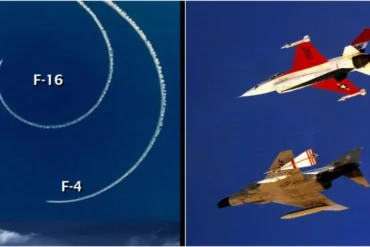
The F-16 Fighting Falcon is renowned for its exceptional agility, made possible by a combination of advanced aerodynamics and flight control systems. One of the most crucial components enabling this high level of performance is its horizontal stabilizer, also known as a stabilator. Unlike conventional aircraft stabilizers, the F-16’s all-moving stabilator provides superior pitch control and flight stability.
All-Moving Stabilator Design
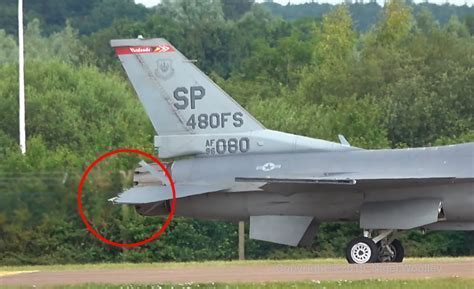
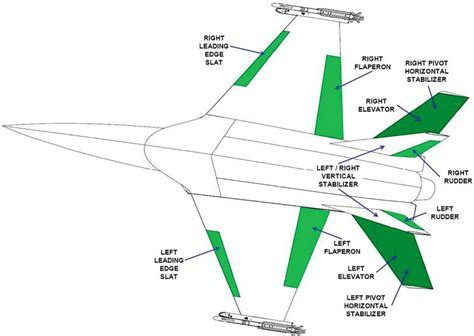
The horizontal stabilizer of the F-16 is an all-moving surface, meaning it does not have a separate elevator. This fully articulating stabilator enhances the aircraft’s ability to make rapid adjustments in pitch, essential for high-angle-of-attack maneuvers such as:
- Tight turns during aerial combat
- Rapid climbs and descents
- Controlled flight at supersonic speeds
This design is integral to the relaxed static stability of the F-16, a deliberate instability that improves responsiveness. With the center of gravity slightly ahead of the aerodynamic center, the stabilator counterbalances this instability. The fly-by-wire system ensures that the aircraft remains controllable despite its inherent instability, allowing pilots to execute precise, high-G maneuvers.
Anhedral Configuration: Improving Stability and Control
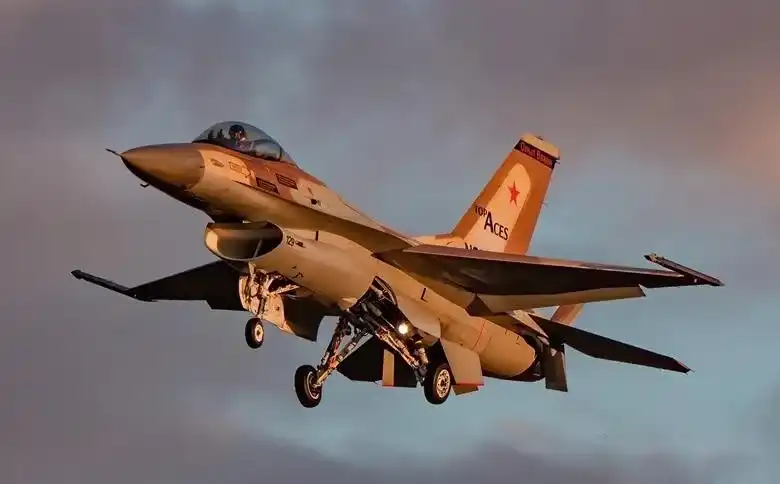
Unlike many aircraft with dihedral horizontal stabilizers, the F-16’s stabilator is positioned with an anhedral (downward) angle. This design choice plays a crucial role in maintaining flight stability and control authority by:
- Reducing wing wake interference: The downward angle prevents the stabilator from being affected by turbulent airflow coming off the wings, ensuring consistent aerodynamic control.
- Minimizing ground effect during takeoff and landing: The stabilator’s lower positioning helps stabilize the aircraft at low altitudes, reducing lift fluctuations caused by ground proximity.
Aerodynamic Integration and Flight Efficiency
The horizontal stabilizer is a key part of the blended wing-body design, which reduces aerodynamic drag and enhances overall performance. The stabilator’s positioning also complements the ventral fins, located beneath the fuselage, which assist in maintaining directional stability during aggressive maneuvers.
Key Aerodynamic Benefits:
- Reduced drag due to seamless integration with the fuselage
- Lower radar cross-section, contributing to improved stealth characteristics
- Enhanced pitch authority, allowing for quicker transitions between flight regimes
Enhanced Maneuverability for Combat Superiority
The F-16’s stabilator is instrumental in achieving the aircraft’s legendary agility. By dynamically adjusting the pitch, the stabilator enables the aircraft to execute rapid transitions, supporting advanced air combat maneuvers such as:
- Cobra maneuver: Temporarily increasing the angle of attack to outmaneuver an opponent
- High-G turns: Sustaining 9G turns without loss of control
- Quick dives and climbs: Enabling fast repositioning in dogfights
The stabilator’s anhedral design also contributes to roll stability, ensuring that the wings maintain near-neutral dihedral, which reduces drag and improves overall flight efficiency.
Material Composition and Structural Strength
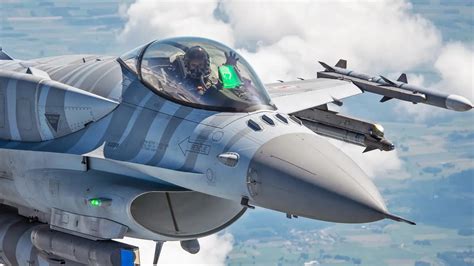
To maintain an optimal balance between weight and durability, the F-16’s horizontal stabilator is constructed from high-strength materials, including:
- Aluminum alloys: Providing structural rigidity while remaining lightweight
- Graphite-epoxy composite skins: Reducing weight without compromising strength
- Titanium components: Ensuring resistance to high stress and corrosion
This combination of materials enhances the stabilator’s fatigue resistance and longevity, ensuring that the F-16 remains effective across extended service lifespans.
Conclusion
The F-16’s horizontal stabilator is a masterpiece of aeronautical engineering, combining anhedral geometry, all-moving surfaces, and advanced composite materials to create an unparalleled flight control system. By improving maneuverability, stability, and control authority, the stabilator plays a fundamental role in maintaining the F-16’s dominance in modern air combat.
Frequently Asked Questions (FAQ)
1. How does the F-16’s all-moving stabilator improve performance?
The all-moving stabilator eliminates the need for a separate elevator, allowing for instantaneous pitch adjustments. This enhances maneuverability, enabling the aircraft to perform tight turns, quick climbs, and high-G combat maneuvers with greater precision.
2. Why does the F-16 have an anhedral stabilator instead of a dihedral one?
The anhedral configuration helps prevent interference from wing wake and reduces destabilizing ground effects. This enhances stability at low altitudes and ensures better control authority during critical maneuvers.
3. What materials are used in the F-16’s horizontal stabilizer?
The stabilator is made from lightweight aluminum alloys, graphite-epoxy composites, and titanium components, ensuring durability, strength, and reduced weight for optimal performance.