When JetBlue Airways launched its first transatlantic flights in 2021, the airline entered one of the most competitive markets in commercial aviation with a strategy unlike any major US carrier before it. Instead of following the traditional model of operating large widebody aircraft such as the Boeing 787, Boeing 777, Airbus A330, or Airbus A350, JetBlue built its entire European expansion around a new generation of long-range single-aisle Airbus aircraft.
The move represented a major shift in how airlines could approach international flying. For decades, transatlantic routes were dominated by aircraft capable of carrying hundreds of passengers across the Atlantic, with airlines relying on large capacity and extensive hub networks to make long-haul operations profitable. JetBlue took a different path by using the Airbus A321LR and later the Airbus A321XLR, aircraft designed to deliver long-range capability while maintaining the lower operating costs and flexibility of a narrowbody fleet.
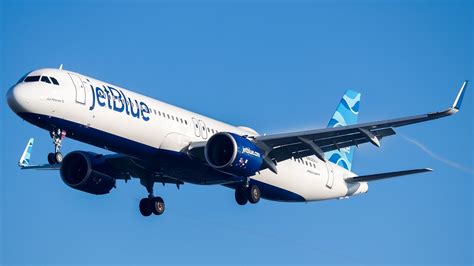
Rather than simply adding international routes to an existing widebody operation, JetBlue created a transatlantic business model specifically designed around the capabilities of these aircraft. The strategy allowed the airline to enter major European markets, compete for premium passengers, and operate routes that might not have justified larger aircraft. It also demonstrated how advances in aviation technology were changing the economics of international air travel.
A Completely Different Approach to Transatlantic Flying
For much of modern aviation history, crossing the Atlantic Ocean required aircraft with large passenger capacities and significant fuel reserves. Airlines built international networks around aircraft like the Boeing 767, Boeing 777, Boeing 787 Dreamliner, Airbus A330, and Airbus A350, which offered the range and capacity necessary for profitable long-distance operations.
Major US airlines developed their European networks through large hubs, concentrating passengers from multiple domestic destinations before sending widebody aircraft overseas. This model created efficiency through scale, but it also required airlines to maintain expensive fleets and fill hundreds of seats on each departure.
JetBlue entered the market with a completely different philosophy. The airline had never operated a widebody aircraft and saw no reason to introduce an entirely new fleet category simply to begin flying internationally. Instead, it recognized that improvements in aircraft design had changed what was possible for single-aisle jets.
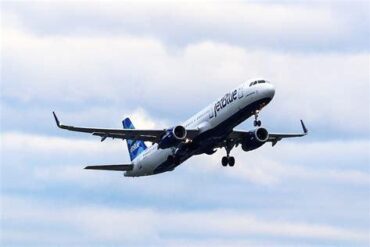
The Airbus A321LR provided JetBlue with a way to connect major US cities with Europe while avoiding the costs associated with traditional long-haul aircraft. The airline could operate smaller aircraft, adjust capacity more precisely, and pursue routes where demand was strong but not necessarily large enough to support a 250-seat or 300-seat aircraft.
This approach also matched JetBlue’s existing operational structure. The airline already operated a large fleet of Airbus A320-family aircraft, meaning the transition to the A321LR required fewer changes in pilot training, maintenance procedures, and operational planning. Instead of creating a separate international division built around unfamiliar aircraft, JetBlue expanded globally using technology already connected to its domestic fleet.
The Airbus A321LR Opened New Possibilities for Long-Haul Narrowbody Operations
The Airbus A321LR transformed expectations for what a single-aisle aircraft could accomplish. Based on the successful A321neo platform, the aircraft combines improved fuel efficiency, additional fuel capacity, and aerodynamic improvements to achieve a range of approximately 4,000 nautical miles (7,408 kilometers).
That capability placed many important city pairs between the United States and Europe within practical reach. Routes that previously required larger aircraft could now be operated with a smaller, more efficient airplane.
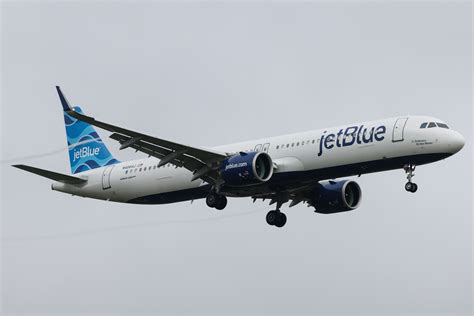
JetBlue used this advantage when launching service between New York John F. Kennedy International Airport (JFK) and London Heathrow Airport (LHR). The airline later expanded its European network from additional US gateways, including Boston Logan International Airport, proving that passengers were willing to choose a smaller aircraft when the overall travel experience was competitive.
The economics of the A321LR were central to this strategy. A smaller aircraft means lower fuel consumption, reduced airport costs, and fewer seats that need to be filled on every flight. Instead of depending on extremely high passenger volumes, JetBlue could focus on attracting valuable customers through premium service while maintaining attractive fares in economy cabins.
This created an opportunity to compete against established international airlines that had controlled transatlantic markets for decades. JetBlue did not attempt to match competitors through fleet size. Instead, it focused on efficiency, flexibility, and passenger experience.
JetBlue Made Premium Service the Foundation of Its International Strategy
Although the A321LR carries fewer passengers than traditional long-haul aircraft, JetBlue designed its transatlantic operation around generating strong revenue from premium travelers.
The airline introduced its Mint business class product as the centerpiece of its European expansion. Mint had already gained recognition on domestic premium routes, and JetBlue adapted the concept for international operations with features designed to compete against established business-class products.
The transatlantic Mint cabin includes fully lie-flat seats, enhanced dining, premium service, and on selected aircraft configurations, private suite-style seating with doors. These features allowed JetBlue to position itself as a serious competitor in the premium international market.
The narrowbody aircraft actually supported this strategy because premium passengers represented a larger share of the aircraft’s overall revenue potential. With fewer total seats available, every high-value customer had a greater financial impact on flight performance.
Instead of relying only on filling economy seats, JetBlue could focus on creating a balanced business model that combined competitive fares with a premium product. This approach helped the airline differentiate itself in a market where many passengers traditionally chose carriers based on alliance membership, network size, or frequent flyer programs.
JetBlue’s broader Airbus fleet strategy also supported this international expansion. The airline operates hundreds of Airbus narrowbody aircraft, including A220, A320, A321, and A321neo variants, while continuing to expand its A321LR and future A321XLR fleet.
The Airbus A321XLR Will Expand JetBlue’s Long-Range Ambitions
While the A321LR allowed JetBlue to establish its transatlantic presence, the arrival of the Airbus A321XLR could further reshape the airline’s international opportunities.
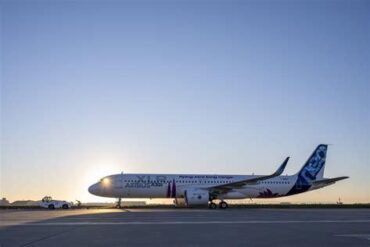
The A321XLR represents the next evolution of Airbus’ long-range narrowbody family. It offers additional fuel capacity and greater range compared with the A321LR, allowing airlines to consider routes that previously required widebody aircraft.
For JetBlue, the aircraft provides the possibility of expanding its European network without changing its fundamental business model. The airline can explore additional destinations while maintaining the same operational advantages that made the A321LR attractive.
The A321XLR also preserves important fleet commonality benefits. Pilots familiar with the Airbus A320 family can transition more easily between aircraft variants, maintenance teams can continue using similar procedures, and spare-parts management becomes simpler compared with operating an entirely separate widebody fleet.
These advantages are increasingly important as airlines face rising fuel prices, labor costs, and competitive pressure. Aircraft flexibility has become a major factor in determining whether new routes can succeed.
Avoiding Widebody Aircraft Changed JetBlue’s International Economics
JetBlue’s decision to build its transatlantic operation without widebody aircraft separates it from almost every major US airline serving Europe.
Carriers such as United Airlines, Delta Air Lines, and American Airlines rely heavily on widebody aircraft because their international networks are built around large-scale operations. These aircraft remain essential for high-demand routes, but they also require significant investment and consistent passenger demand.
JetBlue’s narrowbody approach reduces the financial risk of international expansion. Smaller aircraft allow the airline to match capacity with demand more accurately, especially on routes where passenger numbers fluctuate throughout the year.
Seasonality is one of the biggest challenges in transatlantic aviation. Summer travel demand can be extremely strong, while winter months often bring weaker passenger volumes. Operating a smaller aircraft gives JetBlue more flexibility to maintain service without carrying excessive unused capacity.
This advantage is particularly valuable for secondary European markets that may not generate enough demand for traditional widebody operations. The A321LR and A321XLR allow airlines to create what the industry calls “long and thin” routes, connecting cities that previously lacked nonstop service.
JetBlue currently serves several European destinations from its US East Coast bases, including:
- London Heathrow and London Gatwick in the United Kingdom
- Edinburgh in Scotland
- Dublin in Ireland
- Amsterdam in the Netherlands
- Barcelona and Madrid in Spain
- Paris Charles de Gaulle in France
Many of these routes benefit from the flexibility of narrowbody long-haul operations.
JetBlue’s Strategy Reflects a Major Change Across Commercial Aviation
JetBlue’s transatlantic experiment highlights a broader transformation taking place throughout the airline industry. Advances in aircraft technology are allowing airlines to rethink traditional assumptions about international travel.
Previous generations of single-aisle aircraft lacked the range, efficiency, and passenger comfort required for long-distance flights. As a result, international aviation developed around widebody aircraft. The Airbus A321LR and A321XLR have changed that equation by combining long-range capability with lower operating costs.
Several airlines around the world have adopted long-range narrowbody aircraft for specific international routes. However, JetBlue remains unique among US carriers because its entire scheduled transatlantic operation was designed around this concept from the beginning.
Every part of the airline’s European strategy, from fleet selection and route planning to premium cabin design, was built around maximizing the strengths of Airbus’ long-range A321 family.
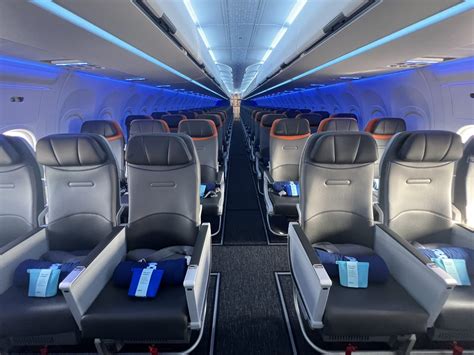
The airline’s approach shows that aircraft selection is no longer simply an operational decision. It can define an entire business strategy. Instead of adapting a traditional international model to new aircraft, JetBlue created a network specifically designed for the capabilities of modern single-aisle jets.
As the Airbus A321XLR enters wider service, JetBlue’s experiment could become a blueprint for future international expansion. The era when only large widebody aircraft could dominate long-haul flying is changing, and JetBlue has positioned itself at the center of that transformation.