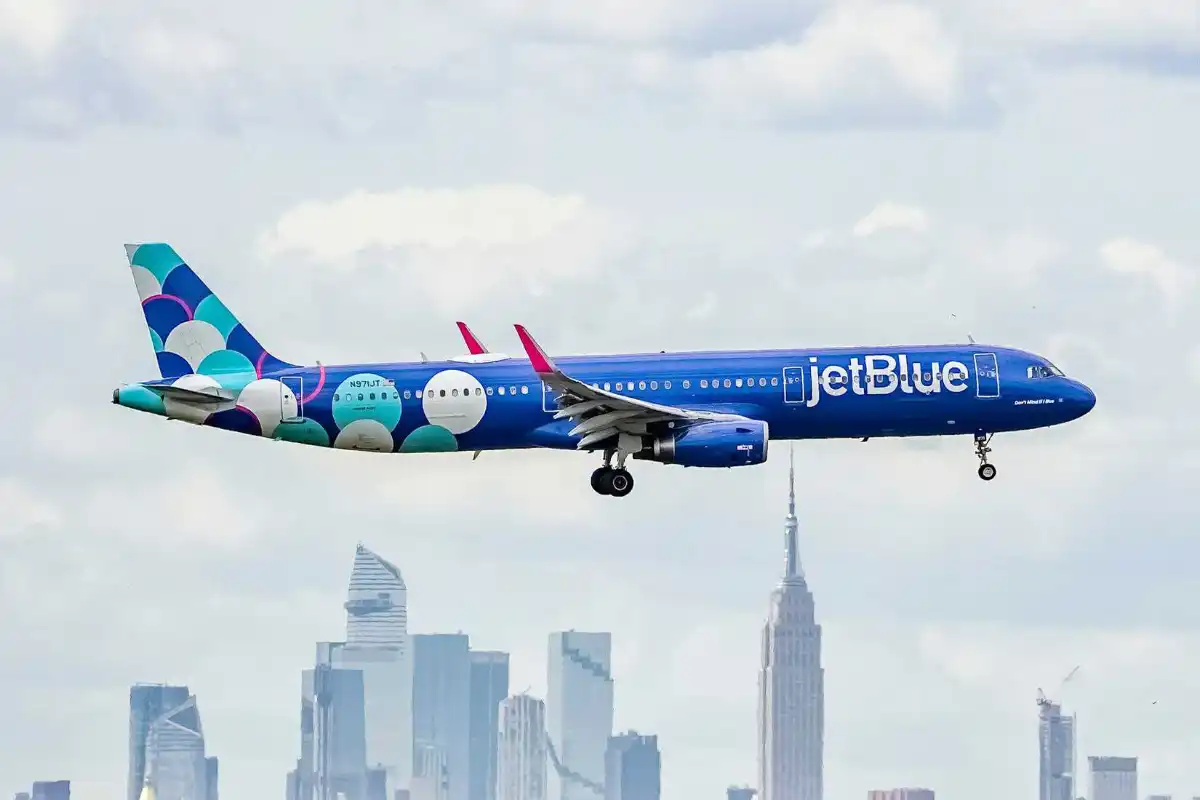
Commercial aviation safety came under renewed scrutiny after a JetBlue Airbus A321 crew reported a possible midair collision with a drone while descending toward New York John F. Kennedy International Airport (JFK). Although the aircraft landed safely without injuries and a subsequent inspection revealed no evidence of damage, the incident has prompted an investigation by the Federal Aviation Administration (FAA) into what could have been a highly dangerous encounter in one of the busiest arrival corridors in the United States.
The event once again highlights the growing challenge posed by unauthorized drones operating near airports. While modern airliners are engineered to withstand bird strikes, drones introduce an entirely different category of hazard due to their rigid construction, electric motors, cameras, and lithium-ion batteries. Even when an apparent collision leaves no visible damage, every report is treated seriously because of the potential consequences during the critical landing phase.
The aircraft involved was operating JetBlue Flight 948, an overnight service from Harry Reid International Airport (LAS) in Las Vegas to JFK. The crew reported the suspected impact while descending through approximately 3,000 feet, an altitude where unauthorized drone activity is both illegal and particularly concerning for aviation authorities.
JetBlue Flight 948 Completes Safe Landing After Suspected Drone Strike
The incident unfolded shortly before landing on Monday morning as JetBlue Flight 948 approached New York after departing Las Vegas several hours earlier. According to air traffic control communications, the pilots informed controllers that they believed the aircraft had collided with a drone while executing a turn during the final stages of the approach.
The flight crew reportedly stated that the object appeared to strike the aircraft above the cockpit, suggesting an impact somewhere around the forward fuselage. Despite the alarming report, the pilots did not declare an emergency, indicating that all aircraft systems continued operating normally and no immediate safety concerns required priority handling.
The Airbus A321 continued its approach without interruption and landed safely at JFK. Passengers disembarked normally, and no injuries were reported among travelers or crew members. Following standard airline safety procedures, JetBlue immediately removed the aircraft from scheduled service so maintenance engineers could perform a comprehensive inspection.
After completing the examination, JetBlue confirmed that inspectors found no structural damage, impact marks, or physical evidence indicating that the aircraft had actually collided with a drone or any other object. While this outcome was reassuring, it did not automatically rule out the pilots’ observations, leaving investigators with important questions still to answer.
FAA Investigation Focuses on What Actually Happened
The FAA has opened an investigation into the reported encounter to determine whether a drone was present in the aircraft’s flight path and whether an actual collision occurred.
Such investigations typically involve reviewing multiple sources of information, including radar data, air traffic control recordings, maintenance inspection reports, pilot statements, and any available drone activity records in the surrounding area.
One of the biggest challenges investigators face is that physical evidence may be limited. If no debris, impact marks, or damaged components are discovered during inspection, determining exactly what the pilots observed becomes significantly more difficult.
Nevertheless, the crew’s report remains important because commercial airline pilots are trained observers with extensive experience identifying unusual events during flight. Even when an incident cannot immediately be confirmed, authorities treat every suspected drone encounter near an airport as a potentially serious safety matter.
Why Drones Present Different Risks Than Bird Strikes
Many people naturally compare drone strikes with bird strikes, but aviation engineers emphasize that the two hazards are fundamentally different.
Birds consist primarily of soft biological tissue, and commercial aircraft are designed and certified with bird-strike resistance in mind. Windshields, engines, and leading edges undergo extensive testing against bird impacts before entering airline service.
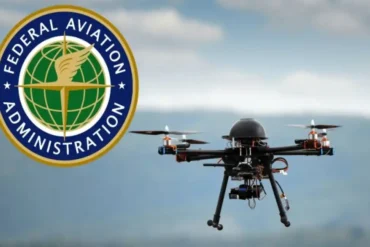
Consumer drones, however, contain numerous rigid components, including:
- Electric motors
- Metal frames
- Lithium-ion batteries
- Circuit boards
- Camera systems
- Carbon-fiber or reinforced plastic structures
These hard components can transfer impact energy differently than birds, potentially causing more concentrated damage to aircraft structures.
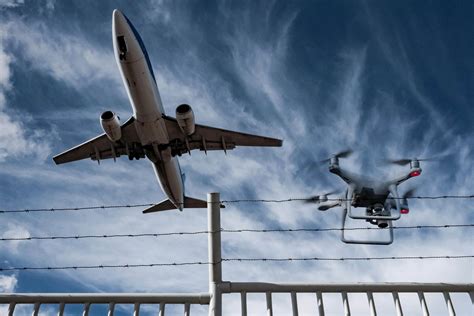
Depending on the point of impact, a drone could threaten cockpit windows, engine fan blades, wing leading edges, navigation sensors, antennas, or flight control surfaces. The presence of lithium-ion batteries also introduces a potential fire or thermal event risk that does not normally exist during bird strikes.
Landing and Takeoff Are the Most Vulnerable Phases of Flight
Commercial aviation has achieved remarkable safety levels partly because pilots have procedures for handling virtually every emergency imaginable. However, landing and takeoff remain the most demanding portions of any flight.
During approach, aircraft operate at relatively low altitude, reduced speed, and increased configuration complexity. Landing gear and high-lift devices are deployed while pilots continuously monitor altitude, speed, navigation, weather, runway alignment, and communications with air traffic control.
At approximately 3,000 feet, there is significantly less time available to diagnose unexpected events compared with cruise altitude. Even a relatively minor distraction can increase cockpit workload during these critical minutes before touchdown.
This explains why aviation regulators remain particularly concerned about unauthorized drones appearing along established arrival and departure corridors surrounding major airports.
FAA Rules Strictly Limit Drone Operations Near Airports
The FAA generally limits recreational drone flights to below 400 feet above ground level unless specific operational approvals have been granted.
Flying within controlled airspace surrounding airports usually requires prior FAA authorization and coordination with air traffic management systems. These regulations exist specifically to prevent drones from entering the flight paths used by commercial aircraft.
Despite these rules, the FAA continues receiving more than one hundred reports each month involving drone sightings near airports or aircraft operations.
Not every sighting represents an immediate danger, and not every report involves illegal activity. However, each incident contributes to increasing concern that even a single irresponsible drone operator could create a serious aviation emergency.
Recent Global Events Have Expanded Drone Security Concerns
The rapid evolution of drone technology has transformed how aviation security experts evaluate potential threats.
In recent years, inexpensive commercial drones have demonstrated remarkable effectiveness in military conflicts across Ukraine and the Middle East, showing how relatively small unmanned aircraft can carry surveillance equipment or explosive payloads while remaining difficult to detect.
Although there is no evidence suggesting malicious intent in the JetBlue incident, aviation authorities recognize that the widespread availability of increasingly capable drones creates new security considerations for airports worldwide.
A drone operating unexpectedly inside a commercial arrival corridor raises questions extending beyond accidental recreational flying. It also reinforces the importance of detecting and preventing unauthorized unmanned aircraft near critical aviation infrastructure.
Previous Drone Strike Reports Have Often Proven Difficult to Confirm
One reason investigators remain cautious is that several previous reports initially believed to involve drone collisions were ultimately determined to have different explanations.
Earlier this year, a United Airlines flight approaching San Diego International Airport reported what pilots believed might have been a drone strike. After inspection, investigators found no evidence of impact, and subsequent analysis indicated the drone had actually passed approximately 1,000 feet below the aircraft rather than colliding with it.
These cases demonstrate why pilot observations, while highly valuable, must be supported whenever possible by physical evidence and technical investigation.
The absence of visible damage aboard the JetBlue Airbus A321 similarly leaves open multiple possibilities. The crew may have encountered a drone that narrowly missed the aircraft, another airborne object, or an event that created the unmistakable sensation of an impact without producing measurable damage.
Confirmed Drone Collisions With Aircraft Remain Extremely Rare
Although reports of drone sightings continue increasing, confirmed drone collisions involving manned aircraft remain exceptionally uncommon in the United States.
Most documented cases have involved helicopters, which typically operate at lower altitudes where recreational drones are more frequently present.
Among the best-known confirmed incidents are collisions involving a U.S. Army UH-60 Black Hawk, multiple Airbus AS350 helicopters, and a Robinson R44, all of which sustained varying levels of damage after confirmed or probable drone impacts.
If investigators ultimately determine that JetBlue Flight 948 actually collided with a drone, it could represent one of the first confirmed drone strikes involving a U.S. commercial airline airliner, making the case historically significant for aviation safety.
What the Investigation Could Mean for Future Aviation Safety
Regardless of the investigation’s final findings, the incident underscores the growing importance of drone detection, airspace monitoring, and public awareness surrounding airport operations.
Modern commercial aircraft continue to demonstrate exceptional resilience, as shown by the safe landing of JetBlue Flight 948 and the absence of injuries or confirmed damage. Nevertheless, aviation authorities cannot rely solely on aircraft strength when addressing emerging threats.
As consumer drones become more affordable, more capable, and increasingly widespread, regulators, airlines, airports, and manufacturers will likely continue investing in technologies capable of identifying unauthorized drones before they enter protected airspace.
The FAA’s investigation will determine whether JetBlue’s Airbus A321 actually struck a drone or whether another explanation better fits the available evidence. Until those findings are complete, the incident serves as another reminder that protecting the skies now requires vigilance against hazards that barely existed a decade ago.