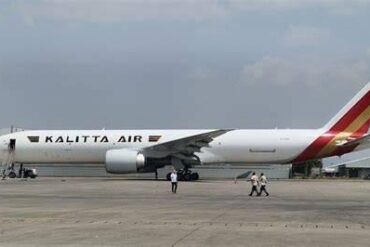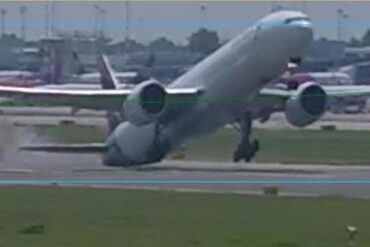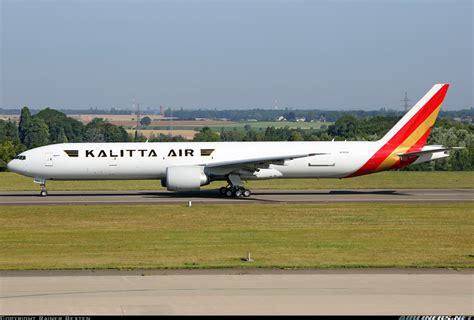
A dramatic aviation incident unfolded at Cincinnati/Northern Kentucky International Airport (CVG) after a Kalitta Air Boeing 777-300 freighter experienced a tail strike during a landing attempt, sending sparks across the runway surface. The aircraft, operating as K4 264, was conducting a cargo flight from Brussels when the incident occurred during a go-around maneuver. Despite the frightening visuals captured by observers, the aircraft successfully landed shortly afterward, and no injuries were reported among the crew.
The incident has drawn attention because of the size of the aircraft involved and the operational importance of Cincinnati as a major cargo hub. The Boeing 777-300 converted freighter, registered as N778CK, was removed from service following the event while maintenance teams and investigators assess the extent of any structural damage.
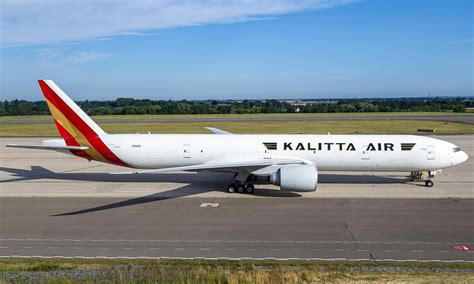
Kalitta Air Boeing 777-300 Tail Strike Incident At Cincinnati Airport
The aircraft arrived at Cincinnati after completing a long-haul transatlantic cargo service from Brussels Airport (BRU). Flight tracking data showed that the aircraft departed Brussels on Sunday, July 19, at approximately 5:47 PM and completed an eight-hour and 32-minute flight across the Atlantic before reaching the United States.
During the attempted landing at CVG, the aircraft’s rear fuselage contacted the runway surface, producing visible sparks. The pilots responded by initiating a go-around, a standard aviation procedure in which an aircraft abandons its landing attempt and climbs away for another approach.
According to initial information shared by the Federal Aviation Administration (FAA), the aircraft later returned and landed safely. Kalitta Air confirmed that the aircraft had been taken out of operational service as a precaution and would undergo further inspection before being moved to the airline’s maintenance base in Michigan.
The company’s Chief Operating Officer, Heath Nicholl, stated that the event remains under review and that no additional details were available while the investigation continues.
Kalitta Air B-777 tailstrike during a go-around at Cincinnati Northern Kentucky International Airport
by
u/Brilliant_Night7643 in
airplanes
Aircraft N778CK: A Boeing 777-300 With A Long Aviation History
The aircraft involved in the Cincinnati incident is a Boeing 777-36N(ER)SF, registered as N778CK, with manufacturer serial number (MSN) 32789. The aircraft is approximately 21 years old and first entered service in 2005.
Originally delivered to Emirates in March 2005 under registration A6-EBB, the aircraft began its career as a passenger-configured Boeing 777-300ER. It completed its first test flight on March 9, 2005, and was powered by two powerful General Electric GE90-115B engines, among the largest and most capable commercial aircraft engines ever developed.
After years of passenger service, the aircraft underwent a passenger-to-freighter conversion program conducted by Israel Aerospace Industries (IAI). The conversion transformed the widebody aircraft into a dedicated cargo platform capable of supporting long-range freight operations.
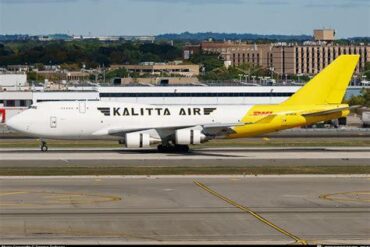
Kalitta Air later acquired the aircraft as part of its fleet modernization strategy. The airline has been expanding its Boeing 777 freighter fleet while gradually replacing older Boeing 747-400 freighters, which have become increasingly expensive to operate and maintain.
Why Tail Strikes Happen During Aircraft Landings
A tail strike occurs when the lower rear section of an aircraft contacts the runway during takeoff or landing. Although modern aircraft are designed with protections such as tail skids and reinforced structures, a significant impact can still require detailed inspections before an aircraft returns to service.
During landing, tail strikes are commonly associated with excessive nose-up rotation, incorrect landing technique, challenging weather conditions, or an unstable approach. Large aircraft like the Boeing 777-300ER require precise control because of their long fuselage and substantial size.
In this case, the aircraft was conducting a landing attempt at Cincinnati when the tail contacted the runway. The crew’s decision to perform a go-around allowed them to regain a safe flight configuration before attempting another landing.
Following any suspected tail strike, maintenance teams typically examine the affected area for possible damage, including deformation of the rear fuselage structure, damage to protective components, and potential effects on the aircraft’s pressurization integrity.
Kalitta Air Aircraft Removed From Service For Inspection
Following the incident, N778CK was scheduled to be transferred to Oscoda–Wurtsmith Airport (OSC) in Michigan, where Kalitta Air operates its heavy maintenance facilities. The aircraft will remain grounded until inspections and any necessary repairs are completed.
For cargo airlines, aircraft availability is critical because widebody freighters support global supply chains, including express shipments, industrial components, and time-sensitive goods. A temporary aircraft withdrawal can affect operational planning, especially during periods of high freight demand.
However, removing the aircraft from service immediately after a tail strike demonstrates standard aviation safety practices. Airlines routinely ground aircraft involved in incidents until engineering teams confirm that the aircraft meets all required safety standards.
The Cincinnati event highlights the importance of pilot decision-making, aircraft inspection procedures, and maintenance oversight in modern commercial aviation. While the sparks from the Boeing 777-300 created a dramatic scene, the safe landing and absence of injuries demonstrate how aviation procedures are designed to manage unexpected situations.
As the investigation continues, Kalitta Air and aviation authorities will determine the exact cause of the tail strike and the repairs required before N778CK returns to global cargo operations.