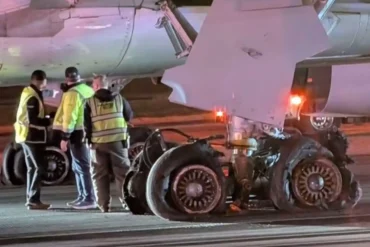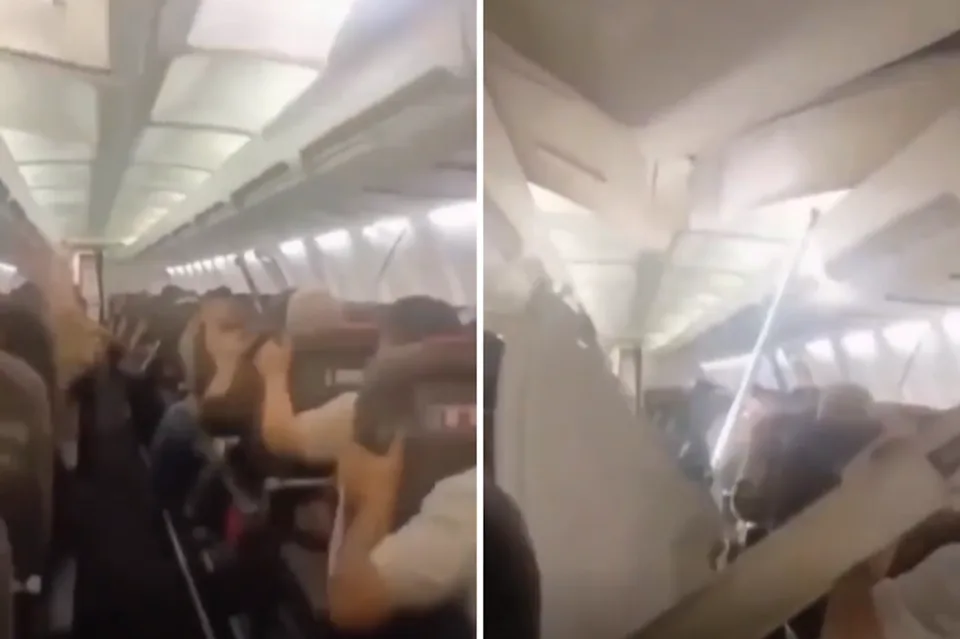
A Sepehran Airlines Boeing 737 suffered a serious mechanical problem during a domestic flight in Iran on September 15, forcing the crew to return to Mashhad after the aircraft reportedly lost a tire during departure. Dramatic passenger video captured the aircraft shaking violently during the emergency landing, while part of the cabin ceiling broke loose and fell onto passengers. Despite the frightening scenes, no injuries have been reported, and everyone onboard was safely evacuated after the aircraft stopped.
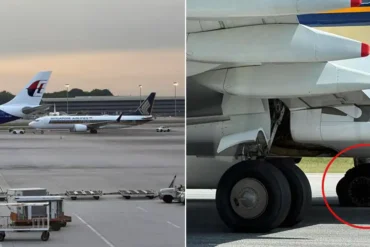
The flight was operating from Mashhad Hashemi Nejad International Airport (MHD) to Kermanshah International Airport (KSH), a routine domestic service that quickly turned into an emergency. Details surrounding the tire failure remain subject to investigation, and the reported timing of the failure has not yet been independently confirmed. According to reporting cited by the Indian Express, the tire is believed to have burst during takeoff, prompting the captain to declare an emergency and turn the aircraft back toward Mashhad.
Passengers’ footage shows just how severe the landing appeared from inside the cabin. As the Boeing 737 touched down, the aircraft shook intensely, accompanied by screams and shouting from passengers. During the violent movement, sections of the overhead cabin ceiling came loose and dropped into the passenger area. The incident created a chaotic scene, although the aircraft eventually came to a complete stop and passengers and crew were able to leave safely.
Boeing 737 Tire Failure Forces Emergency Return to Mashhad
The exact sequence of the mechanical failure remains unclear, but the reported tire loss created an immediate concern during the flight. A damaged or missing landing-gear tire can complicate an aircraft’s return to the airport because the crew must carefully manage touchdown, braking, steering, and the aircraft’s weight distribution. Returning to the departure airport also allowed the crew to use a familiar runway and emergency resources.
Mashhad Airport temporarily closed the affected runway after the aircraft landed so that officials could assess the runway and determine whether debris or other damage remained. The runway was subsequently reopened several hours later. Iran’s Civil Aviation Organization is expected to investigate the incident, including the condition of the landing gear, the tire failure, the aircraft’s maintenance history, and the circumstances surrounding the cabin damage.
The falling ceiling panel appears to have been a secondary consequence of the aircraft’s severe vibration rather than the primary mechanical failure. Cabin ceiling panels are lightweight interior components, and intense vibration can potentially loosen fasteners or mounting points. Once detached, a panel can fall into the cabin even though it is not itself part of the aircraft’s primary structure.
Sepehran Airlines Operates an Aging Boeing 737 Fleet
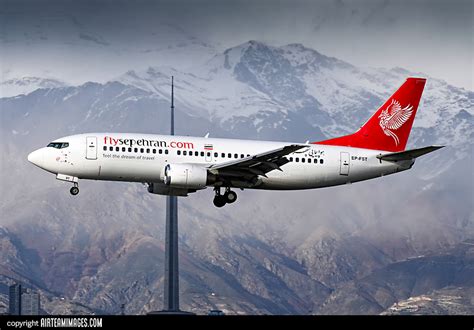
The incident has also drawn attention to the age of Sepehran Airlines’ fleet. Based in Mashhad, the Iranian carrier was established in 2016 and operates domestic services alongside international flights to destinations in and around the Gulf region. Fleet data cited in the reference material show 13 aircraft associated with the airline, serving 21 destinations.
Its active fleet is dominated by older Boeing 737-300 and 737-500 aircraft. The 737-300 aircraft have an average age of about 31 years, while the 737-500 fleet averages approximately 33.8 years. The carrier also has a Fairchild Dornier Do328-300 listed as inactive. Aircraft age alone does not establish an aircraft’s safety condition, because airworthiness depends on inspection, maintenance, repairs, component replacement, and regulatory oversight.
However, maintaining older aircraft can become increasingly complicated when replacement components and technical support are difficult to obtain. Iranian airlines have faced significant restrictions associated with international sanctions, creating additional challenges in sourcing aircraft parts and maintaining older Western-built fleets.
Second Serious Sepehran Airlines Incident in Weeks
The September 15 event follows another serious incident involving Sepehran Airlines at Mashhad on August 25. A Boeing 737-500 operating from Tehran to Mashhad with 127 passengers reportedly veered from runway 13L and stopped on runway 13R after its nose landing gear collapsed. Everyone onboard was reported safe, and Iran’s Civil Aviation Organization opened an investigation.
The proximity of the two incidents makes the latest event particularly notable, although the available information does not establish a common technical cause between them. Each occurrence requires its own examination of aircraft condition, maintenance records, operational circumstances, and crew actions.
Sepehran Airlines has not recorded a fatal accident, according to the reference material. Nevertheless, the recent mechanical events place renewed attention on the carrier’s older aircraft and the practical challenges involved in keeping aging airframes in service.
Investigation Will Determine What Happened
For the September 15 incident, investigators will need to establish whether the tire failure occurred during takeoff, identify why it happened, and determine whether any additional landing-gear components were damaged. They will also examine the aircraft’s movements after the reported failure and the forces experienced during the emergency landing.
The collapsed cabin ceiling will likely be examined separately to determine whether vibration, impact, structural movement, or a combination of factors caused the panels to detach. Passenger video may provide useful evidence, but investigators will ultimately rely on aircraft inspections, maintenance documentation, operational data, and other technical evidence.
For the passengers aboard the Sepehran Airlines Boeing 737, the frightening experience ended without reported injuries. The aircraft’s safe return and evacuation prevented a mechanical emergency from becoming a more serious accident, while the investigation will now focus on explaining the tire failure and determining why the landing produced such severe movement inside the cabin.