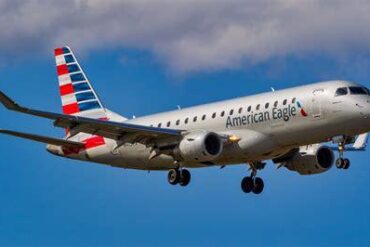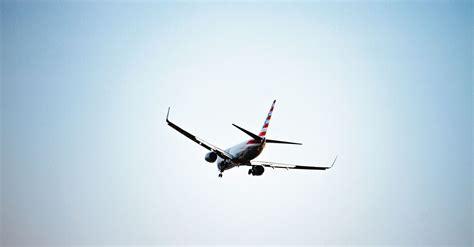
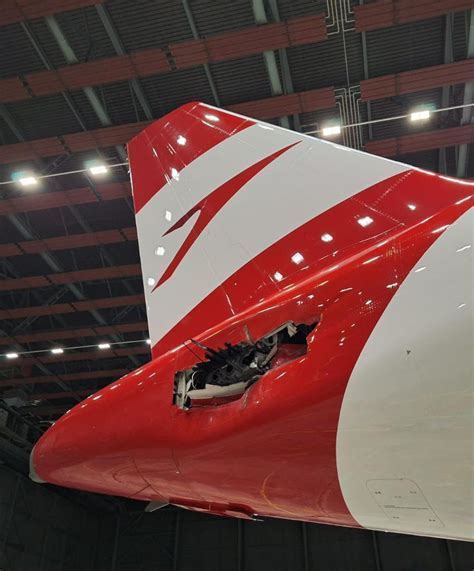
On the evening of June 27, 2025, a routine flight out of Denver International Airport (DEN) was abruptly halted before departure when an American Airlines Airbus A321, designated as Flight AAL790D, was involved in a ground collision with a catering tug vehicle operated by LSG Sky Chefs. The accident inflicted visible damage on the aircraft’s tail section, prompting an immediate halt to operations and triggering a chain of logistical challenges. The aircraft, which had earlier landed ahead of schedule from a prior route, was being prepared for departure to Tulsa International Airport (TUL) when the incident occurred.
Ground Collision Disrupts Scheduled Operations
According to initial reports, the aircraft was parked at the gate when the catering tug vehicle inadvertently struck the rear of the Airbus A321. Fortunately, the aircraft was unoccupied at the time of the incident—no passengers or crew were onboard during the impact. Despite this, the physical damage necessitated the plane be towed to a maintenance hangar for inspection and repairs.
The incident disrupted American Airlines’ schedule, causing a delay that extended into subsequent hours as mechanics initiated standard post-collision diagnostic protocols. Flight AAL790D, which had been slotted for evening departure, remained grounded pending repair assessments. This particular accident underscores a recurring issue in commercial aviation—ground handling errors, which though rare, carry significant operational and financial consequences.
The Vulnerability of Ground Support Operations
The aviation industry depends heavily on a seamless choreography of airside support operations. Catering services, baggage handling, refueling, and aircraft towing all demand meticulous synchronization to avoid collisions and equipment failures. Despite comprehensive ground safety protocols, accidents like the one at DEN continue to happen, often due to human error or lapses in communication between support teams.
Airbus A321s, like many narrowbody aircraft, have critical structural elements located at their rear and wing extremities. These include the empennage, elevators, and rudder assemblies, which are highly sensitive to external impact. In this instance, the catering tug struck an area vital to aerodynamic stability, thereby warranting a complete non-destructive evaluation (NDE) to assess the integrity of the airframe.
Inspection, Testing, and Structural Repair
After the collision, the aircraft was subjected to a suite of non-destructive testing techniques, including ultrasonic scans and eddy current inspections, to detect hidden damage. These procedures are standard whenever there is impact involving the fuselage skin or internal support ribs. If any structural compromise is found, even superficial, the aircraft must be cleared through strict airworthiness directives before being returned to service.
The process is labor-intensive, often involving teams of licensed aircraft mechanics, quality assurance inspectors, and OEM engineers. Depending on the severity of the damage, the aircraft could be out of service for days or even weeks, particularly if replacement components are required.
American Airlines and Republic Airways Issue Response
American Airlines promptly issued a statement acknowledging the incident and apologizing for the inconvenience caused to passengers. The airline offered rebooking options and accommodations to affected travelers bound for Tulsa. The aircraft involved, while painted in American Airlines livery, is operated by Republic Airways, a major regional affiliate under the American Eagle brand.
Republic Airways manages a fleet of more than 240 aircraft, including Embraer E175s and various Boeing models. Though it is known for adhering to stringent FAA safety regulations, this event highlights how even reputable carriers can suffer from procedural breakdowns when it comes to third-party support contractors.
Both American Airlines and Republic Airways have confirmed that a full internal investigation is underway to determine how the catering vehicle came into contact with the aircraft and what measures must be adopted to prevent a recurrence.
Ground Incidents and Their Hidden Cost
While airborne incidents naturally receive greater media attention, ground-based accidents can be equally disruptive and far more expensive than often assumed. The cost of repairing aircraft skin, performing diagnostic scans, grounding aircraft, and rebooking passengers can stretch into hundreds of thousands of dollars per incident. More critically, they jeopardize public confidence and put a strain on already tight airline schedules.
Ground handling operations are particularly vulnerable in high-traffic airports like DEN, where tight turnaround times increase the risk of equipment miscoordination. Despite rigorous training programs, the dynamic nature of airport logistics means even minor lapses can result in significant safety events.
Broader Implications for Airport Safety Protocols
This accident adds to a growing list of ground service-related collisions reported across U.S. airports in recent years. Many aviation safety experts argue that airlines and airport authorities must invest in automation, digital tracking systems, and real-time telemetry for ground vehicles. Such enhancements would allow for proactive collision avoidance and clearer delineation of vehicle movement zones.
Denver International Airport, one of the busiest in the nation, handles more than 70 million passengers annually. Its complex network of terminals, service roads, and support equipment necessitates faultless coordination. Even so, when operating under time pressure or suboptimal staffing, safety checks can be neglected.
Authorities from the Federal Aviation Administration (FAA) are reportedly monitoring the situation and may issue new advisories or mandates following the incident. Past cases have resulted in updated procedures for vehicle clearance, night-time operations, and ramp congestion protocols.
Airline Recovery and Maintenance Strategy
The grounded Airbus A321 will remain under the supervision of airframe maintenance specialists until it meets all required safety and structural integrity checks. American Airlines, through its extensive maintenance repair and overhaul (MRO) network, is well-positioned to manage the repair process efficiently.
Once cleared, the aircraft will undergo a test flight before re-entering passenger service. In the interim, American Airlines is likely to reposition another aircraft or adjust fleet scheduling to accommodate the Tulsa route, minimizing disruption to its operational capacity.
Passenger Experience and Rebooking Efforts
American Airlines has taken steps to communicate with affected passengers and offer full customer service support, including digital rebooking options, compensation for missed connections, and vouchers for food and lodging. In a climate where air travel disruptions have become more frequent post-pandemic, responsiveness and transparency are key to retaining passenger trust.
Travelers impacted by the grounded flight have been accommodated on alternative routes, though some faced extended delays due to limited regional aircraft availability. American Airlines’ internal customer care division has prioritized these passengers for rerouting through hubs such as Dallas/Fort Worth and Chicago O’Hare.
Conclusion: A Reminder of What’s at Stake on the Ground
Though it may seem routine, airside operations are fraught with complexity. The incident at Denver International Airport serves as a clear reminder of the hidden vulnerabilities that exist beyond the cockpit. A single moment of inattention by a ground crew member can lead to aircraft damage, service delays, passenger inconvenience, and significant financial costs.
As air travel demand continues to rebound, airlines and airport authorities must treat ground safety with the same seriousness they reserve for airborne operations. From advanced vehicle automation to reinforced training, the path to safer ramps and aprons will require investment and cultural change. For American Airlines and Republic Airways, this event is not just a disruption—it’s an opportunity to recommit to excellence in safety and operations at every level of the passenger journey.