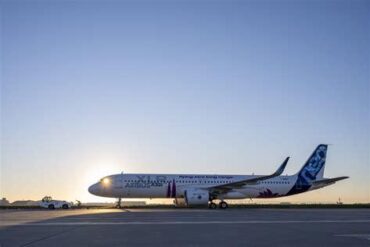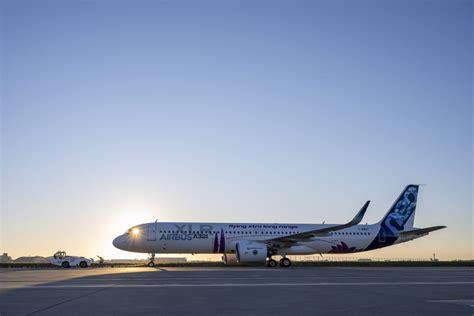
Air Canada’s long-awaited introduction of the Airbus A321XLR was expected to transform the carrier’s transatlantic network. Instead, a nearly two-year delivery delay has forced Canada’s flag carrier to rethink not only when the aircraft enters service, but also where it should fly. What initially appeared to be a temporary fleet planning headache has evolved into a much deeper lesson about the realities of long-haul narrowbody operations.
The airline’s revised deployment strategy reveals something significant about the future of the A321XLR. While the aircraft remains one of the most revolutionary commercial airliners introduced in decades, Air Canada is discovering that success depends less on the aircraft’s headline specifications and more on careful mission selection. The carrier’s pivot away from leisure-focused routes such as Palma de Mallorca and toward business-oriented markets like Toulouse demonstrates that the A321XLR is not simply a smaller widebody replacement. Rather, it is a highly specialized network tool that demands disciplined deployment.
For Air Canada, the delays may ultimately prove beneficial by forcing executives to reassess the airline’s long-haul strategy before fully committing to ambitious expansion plans.
The Airbus A321XLR was designed to solve one of aviation’s most persistent challenges: serving long, thin international markets profitably. Traditional widebody aircraft such as the Boeing 787 or Airbus A330 often provide too much capacity for secondary European destinations, creating significant financial risk when demand fluctuates seasonally.
By contrast, the A321XLR offers airlines an opportunity to open nonstop routes with substantially lower operating costs while still providing intercontinental range. For Air Canada, whose network stretches across North America and Europe, the aircraft promised a new era of connectivity.
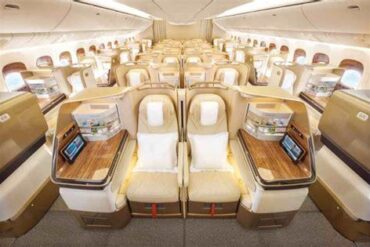
The airline placed orders for 30 Airbus A321XLRs, combining both leased and purchased aircraft. Equipped with a premium-heavy configuration featuring 14 lie-flat Signature Class seats and 168 Economy seats, the aircraft appeared perfectly tailored for routes that could not consistently fill larger twin-aisle jets.
However, supply-chain disruptions across the aerospace industry dramatically altered those plans.
According to Air Canada Chief Operations Officer Mark Nasr, ongoing manufacturing and supply-chain issues pushed deliveries back by almost two years. Although delays have affected airlines globally, Air Canada’s revised network strategy suggests that the carrier’s thinking about the aircraft has evolved well beyond merely adjusting schedules.
After all, delivery delays alone cannot explain why originally announced routes have been reassigned to entirely different aircraft types.
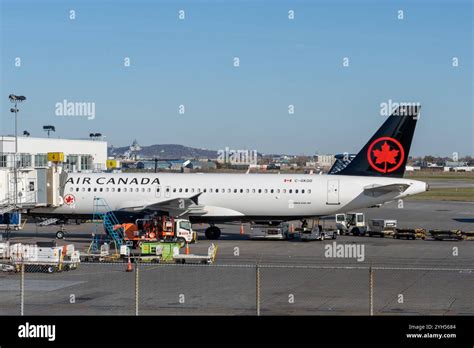
Air Canada’s Original A321XLR Vision Was Far More Ambitious
When Air Canada first outlined its A321XLR strategy, the airline envisioned using the aircraft to unlock entirely new transatlantic opportunities. One of the most prominent examples was service to Palma de Mallorca, a destination heavily associated with leisure travel and summer tourism.
The route symbolized everything airline executives hoped the XLR would achieve: the ability to connect Canadian travelers directly with secondary European destinations without incurring the financial risk of deploying widebody aircraft.
Additional markets, including Edinburgh and Dublin, were also expected to become cornerstones of the new fleet’s expansion strategy.
Yet as deliveries slipped and network planners reassessed operational realities, significant changes emerged.
Palma de Mallorca, once marketed as the showcase route for Air Canada’s new narrowbody flagship, has now been reassigned to the Boeing 787-8. Rather than launching ambitious seasonal services with the XLR, Air Canada instead chose a more measured deployment approach centered around Toulouse-Blagnac Airport.
This shift is revealing because it highlights an important industry realization: the A321XLR delivers exceptional value only when matched with the right market characteristics.
Network planners increasingly recognize that route distance alone is insufficient when evaluating XLR opportunities. Variables including seasonality, premium demand, airport infrastructure, payload limitations, and year-round traffic flows have become equally important considerations.
The revised strategy suggests that Air Canada now views the XLR less as a universal transatlantic aircraft and more as a precision instrument requiring exact mission alignment.
The Difference Between Advertised Range And Commercial Reality
The A321XLR’s published range of approximately 4,700 nautical miles generated enormous enthusiasm throughout the airline industry. On paper, this capability dramatically expands the possibilities for long-haul narrowbody flying.
Yet airline network planning has always been more complicated than published specifications.
An aircraft’s theoretical maximum range rarely translates directly into profitable real-world operations. Airlines must account for an extensive array of operational constraints that significantly affect usable commercial range.
Among the most critical factors are:
- Passenger and baggage weight.
- Prevailing seasonal winds.
- Alternate airport fuel requirements.
- Reserve fuel regulations.
- Airport runway limitations.
- Cargo demand.
- Temperature and environmental conditions.
- Air traffic restrictions.
A route that appears comfortably within the aircraft’s range envelope may become commercially challenging once these operational realities are considered.
For example, strong winter headwinds on westbound Atlantic crossings can substantially increase fuel consumption. Similarly, departures from hot-weather airports reduce aircraft performance, potentially forcing airlines to limit passenger numbers, baggage loads, or cargo capacity.
Air Canada Chief Commercial Officer Mark Galardo specifically highlighted concerns related to runway performance, temperature, and airport obstacles.
Such considerations may sound highly technical, but they directly influence profitability.
If an aircraft frequently departs with blocked seats, reduced baggage allowances, or limited cargo capacity, the economics underpinning the route can deteriorate rapidly.
Consequently, Air Canada’s revised A321XLR deployment reflects a growing appreciation for the distinction between maximum advertised capability and sustainable year-round operations.
Why Toulouse Emerged As Air Canada’s Ideal A321XLR Route
The emergence of Montreal-Toulouse as Air Canada’s flagship A321XLR route offers perhaps the clearest illustration of what constitutes an ideal XLR mission.
Unlike Palma de Mallorca, Toulouse possesses several structural advantages that strengthen the route’s long-term viability.
First and foremost, Toulouse maintains exceptionally strong links with Canada through the global aerospace industry. As the headquarters of Airbus, the city generates substantial business travel demand associated with engineering, manufacturing, supply chains, and corporate partnerships.
Additionally, the route benefits from significant cultural and linguistic ties between Quebec and France. Montreal’s francophone population naturally supports travel demand to French destinations, creating a stable foundation extending beyond tourism alone.
The route also serves multiple demand segments simultaneously.
Business travelers, visiting friends and relatives, premium leisure passengers, aerospace professionals, and connecting traffic collectively provide a more balanced revenue profile than purely leisure-oriented markets.
Importantly, Montreal-Toulouse is not a new concept.
Air Canada originally announced the route in 2019, envisioning service connecting two major aerospace centers. The COVID-19 pandemic delayed implementation, and when flights eventually commenced in 2023, the airline utilized the larger Airbus A330-300.
Performance proved mixed.
Although the route established a loyal customer base, demand levels did not consistently justify daily widebody operations. Air Canada reportedly struggled to fill approximately 1,400 weekly seats, causing year-round expansion plans to be postponed.
The A321XLR fundamentally changes those economics.
With significantly fewer seats and lower trip costs, the aircraft allows Air Canada to maintain frequent service while reducing financial exposure. Rather than operating occasional larger aircraft with inconsistent load factors, the airline can now offer daily nonstop flights better aligned with actual demand.
In many respects, Toulouse represents the perfect XLR case study.
The route is strategically important, commercially proven, premium-oriented, and too small for sustained widebody deployment.
That combination sits squarely within the aircraft’s sweet spot.
Why Leisure Markets Present Greater Challenges For The A321XLR
At first glance, leisure-heavy destinations might appear ideal for long-range narrowbody aircraft. Demand often surges seasonally, and passenger volumes can be substantial during peak periods.
However, leisure markets introduce several complications.
Passengers traveling on holiday typically generate lower yields than business travelers. They also tend to travel with heavier baggage, increasing payload requirements without proportionally increasing revenue.
Seasonality further complicates fleet utilization.
Routes such as Montreal-Palma experience strong summer demand but weaker off-season performance. Airlines must therefore identify alternative uses for aircraft during winter months to maintain efficient utilization.
Moreover, many leisure destinations are located at airports featuring operational constraints.
High temperatures, short runways, or terrain-related limitations can significantly affect aircraft performance. These factors become increasingly important as airlines approach the operational limits of long-range narrowbody aircraft.
Consequently, Air Canada’s decision to operate Palma using a less frequent Boeing 787 schedule may represent a more commercially sustainable solution.
Widebody aircraft provide greater cargo capacity, larger premium cabins, and additional operational flexibility during peak travel periods.
The decision illustrates that route economics cannot be determined solely by distance.
Instead, airlines must evaluate the complete commercial environment surrounding each market.
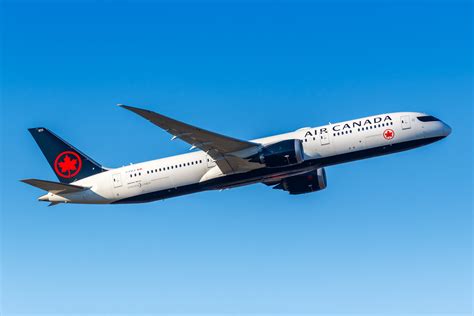
The Airbus A321XLR Is Not A Small Boeing 787
One of the most important lessons emerging from early A321XLR deployments is that the aircraft should not be viewed as a direct substitute for widebody jets.
Despite its impressive range, the XLR remains fundamentally a single-aisle aircraft.
This distinction carries several implications.
Compared with aircraft such as the Boeing 787 or Airbus A330, the XLR offers:
- Less belly cargo capacity.
- Fewer premium seats.
- Lower total passenger capacity.
- Reduced operational margins on extreme missions.
- Smaller disruption recovery options.
Its principal advantage lies in lower trip costs, not unlimited flexibility.
The aircraft performs exceptionally well when demand aligns closely with capacity. Yet if market conditions change unexpectedly, airlines possess fewer options for absorbing disruptions or generating supplementary revenue through cargo.
Fleet size presents another challenge.
During initial entry into service, airlines often operate very small XLR subfleets. Any maintenance issues or technical disruptions can therefore have disproportionate effects on schedule reliability.
Widebody fleets generally provide greater redundancy.
Air Canada’s cautious rollout reflects recognition of these realities.
Rather than immediately pushing the aircraft toward maximum-range missions, the airline appears committed to gradually building operational experience while focusing on markets comfortably within the aircraft’s capabilities.
Other Airlines Are Reaching Similar Conclusions
Air Canada is hardly alone in refining its approach to the A321XLR.
Across the industry, early operators are increasingly treating the aircraft as a specialized network asset rather than a universal long-haul solution.
Aer Lingus provides perhaps the most instructive example.
The Irish airline plans to deploy the aircraft on routes such as Minneapolis-St. Paul and Raleigh-Durham, markets offering strong year-round demand yet insufficient traffic to support larger widebody aircraft consistently.
At the same time, Aer Lingus continues utilizing the A321LR on shorter Atlantic sectors while reserving widebody aircraft for larger destinations including Chicago.
Similarly, United Airlines intends to configure its XLR fleet as a premium-focused replacement for aging Boeing 757 operations.
The strategy emphasizes high-yield markets where premium revenue offsets limited capacity.
American Airlines has also adopted a conservative approach, selecting New York-JFK to Edinburgh as one of its first international XLR services rather than pursuing extreme-range showcase routes.
Even low-cost operators have encountered challenges.
Wizz Air significantly revised its long-haul ambitions following strategic changes affecting its Abu Dhabi operations, highlighting the difficulties associated with ultra-long narrowbody low-cost flying.
Collectively, these examples reinforce a consistent industry message.
The A321XLR is extraordinarily capable, but mission selection remains paramount.
The Characteristics Of An Ideal Airbus A321XLR Route
Evidence from Air Canada and other operators increasingly points toward a clear profile for successful XLR deployment.
The ideal route generally exhibits several characteristics simultaneously.
It should be too small to justify year-round widebody service yet sufficiently important to merit nonstop connectivity. The market should generate a balanced mix of premium, business, leisure, and visiting-friends-and-relatives traffic.
Airport infrastructure should support unrestricted operations, avoiding severe runway or performance limitations.
Seasonality should remain manageable, allowing airlines either to operate year-round or redeploy aircraft efficiently during weaker periods.
Equally important, the route should sit comfortably within the aircraft’s practical operating envelope rather than pushing consistently toward maximum range.
Strong hub connectivity also enhances performance by supplementing local demand with connecting traffic.
Routes linking Montreal with cities such as Toulouse, Copenhagen, Berlin, Nantes, and Porto appear particularly well aligned with these criteria.
By contrast, highly speculative leisure markets, cargo-dependent sectors, and destinations operating near the aircraft’s practical limits introduce substantially greater risk.
The distinction highlights an essential truth.
The A321XLR is not simply an extended-range version of existing narrowbody aircraft. Instead, it occupies a highly specialized niche bridging the gap between conventional narrowbody operations and traditional long-haul widebody flying.
Air Canada’s Delay May Ultimately Strengthen Its Network
Paradoxically, Airbus’ prolonged delivery delays may ultimately improve Air Canada’s long-term transatlantic strategy.
The additional time has forced executives to scrutinize route economics more rigorously, reassess network priorities, and refine deployment plans before significant fleet expansion occurs.
Rather than pursuing headline-grabbing routes designed primarily to showcase aircraft capability, Air Canada now appears focused on markets offering sustainable profitability.
Toulouse exemplifies this philosophy.
The route may lack the glamour associated with Mediterranean leisure destinations, yet it perfectly illustrates the disciplined network development philosophy likely to define successful A321XLR operations worldwide.
Ultimately, Air Canada’s experience demonstrates that the future of long-haul narrowbody flying will not be determined by maximum range figures alone.
Success will depend on identifying markets where demand, economics, airport performance, seasonality, and operational resilience align.
The Airbus A321XLR remains one of the most significant commercial aircraft introduced in modern aviation. But Air Canada’s evolving strategy underscores a critical lesson for airlines everywhere: the aircraft is brilliant, transformative, and potentially game-changing—provided the mission is chosen with exceptional care.