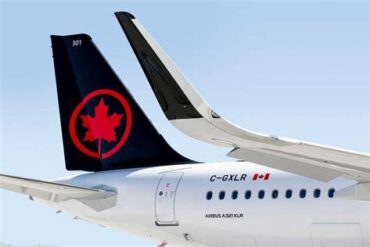
Air Canada is on the verge of a strategic fleet transformation as it prepares to introduce the Airbus A321XLR into scheduled service. This aircraft is not just another addition to the airline’s narrowbody lineup; it represents a decisive shift in how the Canadian flag carrier approaches long-haul markets, risk management, and network growth. With nine routes already revealed, the A321XLR is poised to redefine Air Canada’s transatlantic playbook from Montreal and beyond.
The timing is significant. Long-haul narrowbodies have matured from experimental tools into core network assets, offering airlines a way to serve thinner markets with lower trip costs and reduced financial exposure. Air Canada’s embrace of the A321XLR signals confidence that this aircraft can balance economics, passenger comfort, and operational flexibility across a diverse range of routes.
As the summer schedule unfolds, Montreal becomes the focal point of this transformation. From domestic trunk routes to secondary European cities, the A321XLR will touch nearly every strategic lever Air Canada can pull, from seasonal optimization to market stimulation.
A New Title for a New Chapter: Air Canada’s A321XLR Network Takes Shape
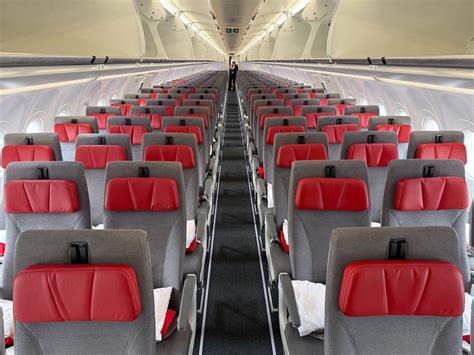
The Airbus A321XLR is designed for long, thin routes that struggle to sustain widebody capacity year-round. With extended range, improved fuel efficiency, and a cabin tailored for long-haul comfort, the aircraft allows Air Canada to enter or expand markets that were previously marginal or highly seasonal. The airline’s known A321XLR routes reflect this philosophy with remarkable clarity.
By deploying the aircraft across a mix of domestic, transatlantic, and leisure-heavy markets, Air Canada is effectively testing the full spectrum of the XLR’s capabilities. This is not a tentative trial; it is a network-wide statement of intent.
Why the A321XLR Changes the Risk Equation for Air Canada
From an economic perspective, the A321XLR offers lower trip costs than widebodies, even if its seat-mile costs are higher. The crucial advantage lies in break-even thresholds. Fewer seats mean fewer passengers are required to achieve profitability, making the aircraft far less risky on new or developing routes.
This matters most in markets with strong seasonality or uncertain demand profiles. Routes that once required cautious, short seasonal windows can now operate longer, sometimes year-round, without flooding the market with excess capacity. In other cases, widebodies can be replaced during quieter months, improving yields and load factors while maintaining a consistent presence.
Payload limitations can emerge in peak summer conditions, particularly on longer sectors, but Air Canada’s route selection suggests careful planning to mitigate these constraints.
The Nine Routes Defining Air Canada’s A321XLR Debut
The first wave of A321XLR services is heavily centered on Montreal, reinforcing the airport’s role as a transatlantic launchpad. The initial routes include:
Montreal to Calgary marks the earliest deployment, showcasing the aircraft on a high-frequency domestic route before it transitions to longer sectors. Transatlantic services follow rapidly, with Montreal–Dublin, Montreal–Toulouse, and Montreal–Edinburgh all featuring early-season A321XLR operations. Each of these routes demonstrates a different use case, from temporary substitution to full replacement of larger aircraft.
Seasonal leisure and secondary European markets are where the A321XLR truly shines. Montreal–Porto replaces an Airbus A330-300, while new routes to Palma de Mallorca, Berlin, and Nantes underscore Air Canada’s willingness to experiment with previously underserved city pairs. Even Montreal–Vancouver joins the list as a high-density, long domestic sector that benefits from the XLR’s efficiency.
Montreal–Edinburgh: A Case Study in Narrowbody Transatlantic Success
The Montreal–Edinburgh route illustrates why the A321XLR is such a powerful tool. At 2,634 nautical miles, the sector sits squarely in the sweet spot for long-range narrowbodies. After launching last year with a Boeing 737 MAX 8, Air Canada returns earlier in the season and briefly upgauges to the 182-seat A321XLR.
This adjustment reflects growing confidence in demand. The extended season, increased frequency, and higher-capacity aircraft drive a 72% year-over-year increase in available seats. A first-year load factor of 78% provides a solid foundation, particularly for a brand-new market. The use of the XLR during the early phase allows Air Canada to capture incremental demand while retaining flexibility to revert to the MAX 8 later in the season.
Narrowbodies Reshape Air Canada’s Montreal–Europe Capacity Mix
By August, the scale of Air Canada’s narrowbody strategy becomes unmistakable. Four transatlantic routes from Montreal—Berlin, Nantes, Porto, and Toulouse—are planned with the A321XLR, while the 737 MAX 8 supports Edinburgh and Keflavik. Together, narrowbodies account for 16% of Montreal–Europe flights during the peak summer period.
This shift has measurable network-wide effects. Total departures rise significantly, yet overall seat growth remains modest. The result is a deliberate reduction in average seats per flight, from 325 to 304, signaling a move toward precision capacity deployment rather than brute-force expansion.
Strategic Flexibility and Competitive Positioning
Beyond raw numbers, the A321XLR gives Air Canada a competitive edge in markets where agility matters more than scale. Secondary European cities often generate strong point-to-point demand but lack the volume to justify widebodies. By serving these destinations directly, Air Canada strengthens brand loyalty, captures premium leisure traffic, and reduces reliance on connecting hubs.
The aircraft also enhances Air Canada’s ability to respond to market shifts. Frequencies can be adjusted quickly, routes extended or shortened seasonally, and capacity fine-tuned without the operational inertia associated with larger aircraft.
The A321XLR as a Long-Term Network Catalyst
Air Canada’s A321XLR era is not defined by a single aircraft type but by a philosophical shift in network planning. The nine revealed routes form a living laboratory, testing how narrowbodies can unlock sustainable growth across diverse markets.
As more frames join the fleet, the lessons learned from Montreal’s transatlantic network will likely ripple outward, influencing future route launches and fleet decisions. The A321XLR is no longer a niche solution; for Air Canada, it is rapidly becoming a cornerstone of long-haul strategy.