The Airbus A321XLR was designed to redraw the map. For years, airlines have chased the elusive balance between range and right-sized capacity on transatlantic routes. The promise was simple yet revolutionary: connect secondary cities across the Atlantic with a narrowbody aircraft capable of flying deep into Europe without the financial burden of a widebody. In 2026, that promise becomes tangible—but in the United States, it materializes in just one confirmed route.
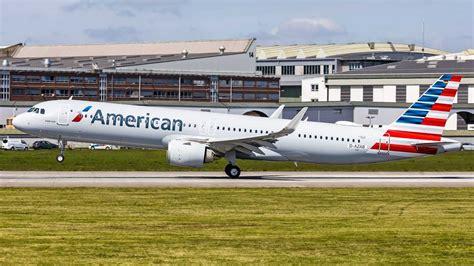
Despite the buzz surrounding the aircraft’s extended range and efficiency, only a single US airline will operate a transatlantic A321XLR service in 2026. That airline is American Airlines, and the route is from New York John F. Kennedy International Airport to Edinburgh Airport in Scotland. The significance of this lone corridor stretches far beyond a seasonal schedule; it reveals the cautious pace of American fleet deployment and the broader strategic recalibration underway among US carriers.
The North Atlantic remains one of aviation’s most competitive arenas. Traditionally dominated by widebody jets such as the Boeing 777 and Airbus A330, the corridor has long required high passenger volumes to justify operations. The A321XLR changes that equation by allowing airlines to serve thinner markets—routes with steady but insufficient demand for larger aircraft—while maintaining premium cabins and transatlantic comfort.
The Sole Confirmed Route: JFK to Edinburgh
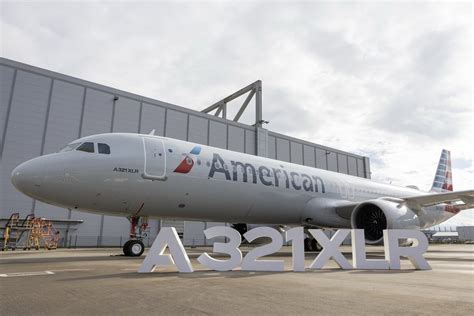
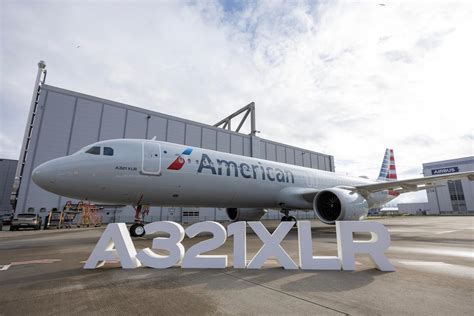
As of 2026, American Airlines stands alone among US carriers in deploying the A321XLR across the Atlantic. The seasonal service between JFK and Edinburgh begins at the end of March, marking the aircraft’s first transatlantic mission under a US flag.
Fleet data indicates that American has received four A321XLR aircraft from its total order of 50. Rather than immediately pushing the type into international service, the carrier initially introduced it domestically on high-profile transcontinental routes such as New York to Los Angeles. This incremental rollout reflects operational prudence: testing reliability, cabin configuration feedback, and maintenance cycles before entrusting the aircraft with long-haul international exposure.
The JFK–Edinburgh route is strategically sound. Scotland’s capital draws consistent tourism, strong heritage travel demand, and business traffic tied to financial and energy sectors. Yet the route has historically been marginal for daily widebody service year-round. The A321XLR, configured with 155 seats across three classes, strikes an optimal balance between premium revenue generation and disciplined capacity management.
American’s network planners have been clear: this aircraft exists precisely for routes like this. It opens city pairs previously deemed commercially fragile while preserving the economics required for sustained profitability.
A Narrowbody With Widebody Ambitions
The Airbus A321XLR is not simply a longer-range derivative; it represents a philosophical shift in long-haul strategy. With a range approaching 4,700 nautical miles, it comfortably bridges East Coast hubs with much of Western Europe. The economics are compelling: lower trip costs, reduced fuel burn per seat, and the ability to sustain daily service without the risk of empty widebody cabins.
European carriers have moved swiftly. Airlines such as Iberia and Aer Lingus have already deployed the aircraft across multiple Atlantic routes, proving the concept’s viability. In contrast, US carriers have approached deployment more cautiously. Regulatory certification timelines, supply chain constraints, and fleet harmonization complexities have all contributed to the measured pace.
American’s cabin product has also attracted scrutiny. Early passenger feedback from domestic operations suggests that the Flagship Business suites on the A321XLR are more compact than those found on larger widebody aircraft. While fully lie-flat and private, they lack the spatial indulgence of transatlantic flagship cabins on aircraft like the Boeing 777-300ER. The trade-off, however, lies in efficiency and route sustainability rather than sheer opulence.
Expansion Plans Beyond 2026
The 2026 transatlantic footprint may be limited to one route, but expansion is already charted. In May 2027, American Airlines plans to launch a second transatlantic A321XLR service connecting Philadelphia International Airport with Porto, Portugal. That route perfectly illustrates the aircraft’s raison d’être: a culturally rich European destination with solid demand but insufficient year-round volume for widebody consistency.
This staggered expansion reflects both delivery schedules and strategic calibration. Deploying a new aircraft type internationally requires careful sequencing. Crew training, ETOPS certification, spare parts logistics, and ground support coordination must align flawlessly before scaling operations.
Meanwhile, United Airlines—which also ordered 50 A321XLRs—remains in a holding pattern. Originally expecting deliveries earlier in the decade, the Chicago-based carrier now anticipates its first aircraft in summer 2026 due to supply chain delays. Its ambitions include transatlantic expansion from Newark Liberty International Airport and Washington Dulles International Airport, but those plans remain prospective rather than operational for 2026.
Why Only One Route Matters
At first glance, a single confirmed route may appear underwhelming. Yet its significance lies in precedent rather than volume. The A321XLR introduces a new structural flexibility into US transatlantic planning. It lowers risk thresholds, enables experimentation with secondary European cities, and allows airlines to respond dynamically to seasonal demand shifts.
The JFK–Edinburgh service becomes a proving ground. If load factors, yield management, and passenger satisfaction align, more routes will follow. If operational reliability meets expectations, confidence will grow across network planning departments. The aircraft’s success or stagnation in 2026 will shape fleet allocation decisions deep into the next decade.
For now, the landscape is clear: one aircraft type, one airline, one confirmed transatlantic route. The restrained rollout underscores both ambition and caution within the US aviation market. The Airbus A321XLR was engineered to transform long-haul economics. In 2026, its American transatlantic chapter begins not with a sweeping network revolution, but with a single, strategically chosen corridor between New York and Scotland—a modest start that may quietly redefine the Atlantic map.