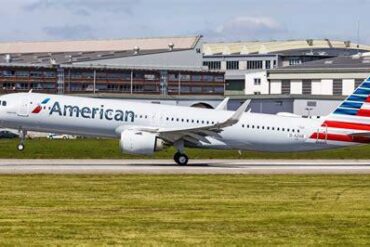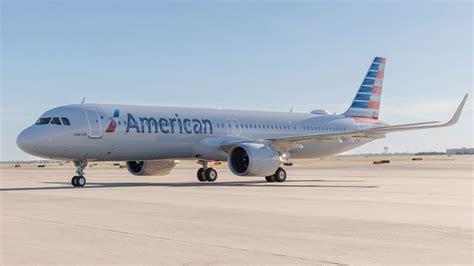
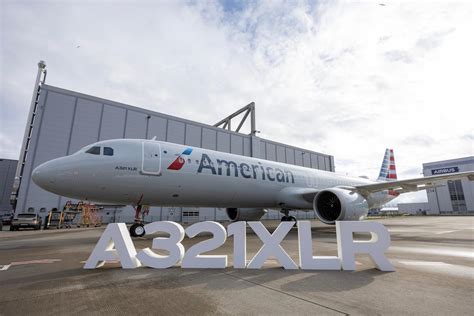
American Airlines is preparing to open a new chapter in narrowbody long-haul flying. On March 8, the carrier will inaugurate its first Airbus A321XLR transatlantic route, linking New York John F. Kennedy International Airport (JFK) with Edinburgh Airport (EDI) in Scotland. The launch is significant not only for the airline but also for the North American aviation market, as it represents the first time a North American carrier deploys the Airbus A321XLR across the Atlantic.
The route highlights the growing importance of next-generation narrowbody aircraft capable of operating long distances with greater efficiency. With the A321XLR’s extended range and optimized fuel performance, airlines can now serve routes that were previously uneconomical for larger widebody aircraft. American Airlines is positioning itself at the forefront of this trend by introducing the aircraft on a high-profile transatlantic service.
The new service marks American Airlines’ return to the JFK–Edinburgh market, a route the airline previously operated between 2015 and 2018 using the Boeing 757-200. Those flights disappeared after the retirement of American’s aging 757 fleet, leaving a gap in the airline’s presence on the route until now.
A321XLR Enables American’s Longest Narrowbody Flight
The launch of the Airbus A321XLR on the New York–Edinburgh route sets a new operational benchmark for American Airlines. Covering approximately 2,829 nautical miles (5,239 kilometers) each way, the flight becomes the airline’s longest narrowbody route in both distance and block time.
Previously, the title belonged to Dallas/Fort Worth–Anchorage, which operates using the standard Airbus A321neo. The XLR’s extended range and additional fuel capacity make it uniquely suited for routes such as JFK to Edinburgh, where passenger demand is steady but may not justify larger widebody aircraft year-round.
This milestone also represents American’s first transatlantic narrowbody service in seven years, signaling a strategic shift back toward smaller aircraft for certain international markets. The A321XLR provides the economics needed to sustain long-distance routes that are seasonal or demand-sensitive.
A Competitive Transatlantic Corridor Emerges
American’s return to the JFK–Edinburgh market dramatically intensifies competition. The airline will now join Delta Air Lines and JetBlue Airways, both of which operate the route. JetBlue entered the market in 2024, adding further capacity to an already competitive corridor.
Together, the three airlines will offer up to three daily flights between New York JFK and Edinburgh during peak periods. According to aviation data from Cirium Diio, the route will see approximately 242,000 round-trip seats available in 2026, a record for the city pair.
This growth reflects an extraordinary increase in demand and capacity:
- 45% more seats compared to the previous year
- 162% growth compared with 2019, when only Delta served the route
When flights from Newark Liberty International Airport (EWR) are included—primarily operated by United Airlines—the broader New York–Scotland market becomes even larger. Travelers will see up to four daily departures across the New York metropolitan area.
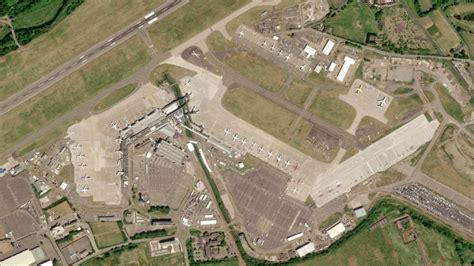
Despite this expansion, growth could have been even higher. United has reduced its Newark–Edinburgh frequency as it reintroduces Newark–Glasgow service, redistributing its Scottish capacity.
The surge in transatlantic flights has transformed Edinburgh’s aviation landscape. The airport now accounts for 87% of all air capacity between Scotland and the greater New York region, making it the dominant Scottish gateway for transatlantic travel.
Edinburgh Climbs The UK–New York Rankings
The increased flight activity has elevated Edinburgh Airport’s position among UK airports serving New York. The Scottish capital has rapidly become one of the busiest transatlantic markets outside London.
In 2025, Edinburgh ranked as the fourth-busiest UK airport for flights to New York. The surge in services now places it in second place, overtaking major gateways such as Manchester and London Gatwick.
Several industry developments contributed to this shift:
- Aer Lingus closed its Manchester base, reducing transatlantic capacity.
- British Airways and Delta cut flights from London Gatwick to JFK.
- JetBlue withdrew from Gatwick in 2024, consolidating its New York presence elsewhere.
These changes have redirected transatlantic demand toward Edinburgh, strengthening its position as a major aviation hub for Scotland.
Inside American Airlines’ Airbus A321XLR Cabin
American Airlines has begun receiving its Airbus A321XLR fleet, with two aircraft currently active: N303NY and N305NY. The airline has 50 XLRs on order, with up to 15 expected to arrive by the end of the year.
The aircraft is configured with 155 seats, designed to provide a premium experience even on a narrowbody platform.
The cabin layout includes:
- 20 business class seats in a 1-1 configuration, offering fully lie-flat beds
- 12 premium economy seats arranged 2-2, featuring 38-inch pitch
- 12 Main Cabin Extra seats in a 3-3 layout with 34-inch pitch
- 111 standard economy seats with 32-inch pitch
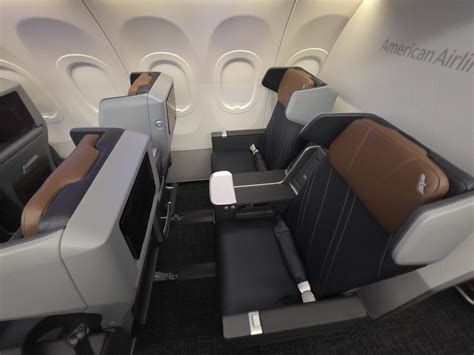
The configuration reflects a growing industry trend: narrowbody aircraft designed to deliver widebody-style comfort on long-haul routes. Lie-flat business seats and premium economy sections are increasingly common as airlines seek to maximize revenue on thinner international markets.
Seasonal Operations Reflect Strategic Flexibility
American Airlines will operate JFK–Edinburgh as a seasonal service, aligning flights with peak transatlantic travel demand. The final departure for the 2026 season is scheduled for October 23, after which the route will pause until the following year.
Typical flight schedules, based on summer timetables, include:
- JFK to Edinburgh: Depart 9:34 PM, arrive 9:30 AM (+1 day)
- Edinburgh to JFK: Depart 11:48 AM, arrive 2:33 PM
Flight times range from 6 hours 56 minutes eastbound to 7 hours 48 minutes westbound, depending on prevailing winds across the North Atlantic.
In addition to the new JFK route, American Airlines will continue operating flights to Edinburgh from Philadelphia, using the Boeing 787-8 Dreamliner configured with 234 seats.
More Long-Haul A321XLR Routes On The Horizon
The JFK–Edinburgh launch represents only the beginning of American Airlines’ A321XLR expansion strategy. The aircraft’s exceptional range—over 4,700 nautical miles—opens a wide range of possibilities for smaller transatlantic markets.
One confirmed future route is Philadelphia to Porto, Portugal, scheduled to begin in May 2027. The flight will mark American Airlines’ first-ever service to Portugal’s second-largest city.
Industry observers expect additional destinations to be announced as the airline receives more aircraft. Markets that lack sufficient demand for widebody jets but still require transatlantic connectivity are prime candidates.
Cities such as secondary European hubs and emerging leisure destinations could benefit from the aircraft’s unique capabilities.
The Airbus A321XLR represents a quiet revolution in airline network planning. With long range, lower operating costs, and premium cabin features, it allows airlines to connect cities in ways that once seemed impractical. American Airlines’ first transatlantic deployment is more than a new route—it is a preview of how long-haul aviation networks may evolve in the coming decade.