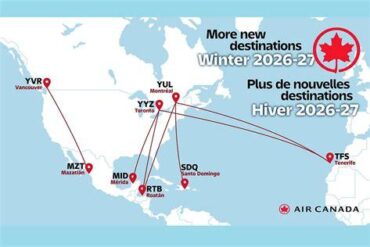
Air Canada is reshaping long-haul travel expectations with a calculated yet surprising move: launching two new transatlantic routes to the Canary Islands using the cutting-edge Airbus A321XLR. The announcement signals a deeper strategic shift for Air Canada, blending precision capacity planning with bold market experimentation.
These new routes—linking Toronto and Montreal to Tenerife South Airport—challenge conventional assumptions about long-haul network design. Traditionally dominated by widebody aircraft, these distances are now being tackled by a single-aisle jet engineered for efficiency and flexibility.
Toronto–Tenerife: A High-Stakes Winter Sun Bet
The first route launches on October 25, aligning with the global shift to winter aviation schedules. Operating twice weekly, the Toronto–Tenerife South service spans approximately 3,135 nautical miles, making it one of the longest narrowbody routes in the world.
This is not merely a network addition—it is a calculated gamble. Demand between Toronto and Tenerife has historically been minimal, with fewer than 1,500 local passengers annually. Yet, the route carries strategic significance. By leveraging Toronto’s status as a major hub, Air Canada can funnel connecting passengers from across North America, particularly the United States, effectively manufacturing demand where little existed before.
The timing is equally deliberate. The Canary Islands remain one of Europe’s few reliably warm destinations during winter, making them highly attractive to travelers escaping harsh North American climates. This seasonal advantage provides a compelling foundation for route viability.
Montreal–Tenerife: Ultra-Niche, Ultra-Targeted
Just six days later, on October 31, Air Canada will introduce an even more unconventional route: a once-weekly service from Montreal to Tenerife South. If the Toronto route is ambitious, Montreal’s is surgical.
With fewer than 1,000 annual passengers historically traveling between the two markets, this route represents one of the airline’s smallest transatlantic opportunities. Yet, its inclusion reflects confidence in the A321XLR’s economics. The aircraft allows airlines to profitably operate “thin routes” that would be unsustainable with larger widebody jets.
Operating on a weekly frequency also minimizes risk while preserving market presence. It’s a strategic toe in the water—testing demand elasticity without overcommitting resources.
Lessons From a Failed Predecessor
The shadow of United Airlines looms over these new routes. Its Newark–Tenerife South service, discontinued in May 2025, struggled despite multiple adjustments in scheduling and operational strategy.
That failure underscores the inherent difficulty of sustaining long-haul leisure routes with limited local demand. However, Air Canada’s approach differs in key ways. Instead of relying heavily on origin-and-destination traffic, it is banking on its hub connectivity and the efficiency of the A321XLR to tilt the economics in its favor.
This distinction could prove decisive. Where United faced structural challenges with a larger aircraft and less optimized feed, Air Canada’s model is designed for adaptability and lower risk exposure.
The A321XLR: A Network Game-Changer
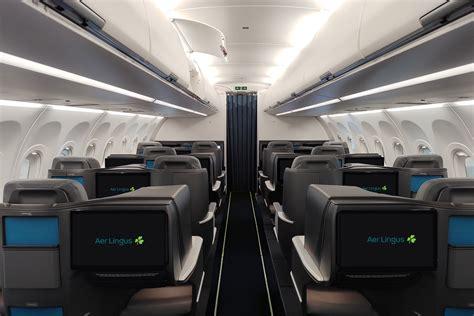
At the heart of this expansion lies the Airbus A321XLR, an aircraft redefining what is possible in long-haul aviation. With a range exceeding 4,700 nautical miles and a capacity of around 180 passengers, it bridges the gap between narrowbody efficiency and widebody reach.
For Air Canada, this aircraft unlocks routes that were previously impractical. It enables:
- Lower operating costs per flight
- Increased frequency flexibility
- Access to underserved or niche markets
- Reduced financial risk on experimental routes
These advantages are particularly valuable in today’s volatile aviation landscape, where demand patterns remain unpredictable and fuel efficiency is paramount.
A Broader European Expansion Strategy
The Tenerife routes are not isolated developments—they are part of a broader A321XLR deployment across Europe. Air Canada is rapidly building a diversified transatlantic network from Montreal and Toronto, targeting secondary cities often overlooked by traditional long-haul planning.
From Montreal, destinations such as Toulouse, Berlin, and Porto highlight a clear focus on niche yet high-potential markets. Meanwhile, Toronto’s growing XLR network—including Copenhagen and Manchester—reinforces its role as a primary transatlantic gateway.
This dual-hub strategy allows Air Canada to maximize connectivity while distributing risk across multiple routes and regions.
Balancing Risk and Opportunity
Not every planned A321XLR route has survived. Previous proposals to cities like Dublin and Palma de Mallorca were revised or dropped, reflecting the airline’s willingness to adapt based on operational realities. Factors such as runway performance, stage length, and seasonal temperatures all influence aircraft viability.
This flexibility is crucial. The A321XLR is powerful, but not limitless. Strategic deployment requires constant recalibration—a balance between ambition and pragmatism.
A New Era of Long-Haul Precision
Air Canada’s Tenerife announcement represents more than just new routes—it marks a shift toward precision aviation. Instead of relying on broad, high-capacity strategies, the airline is embracing targeted, data-driven expansion.
By pairing the right aircraft with the right markets, it is redefining how long-haul networks are built. The result is a more agile, responsive approach—one that prioritizes sustainability, efficiency, and strategic growth.
If successful, these routes could set a precedent for airlines worldwide, proving that even the most unlikely city pairs can thrive under the right conditions.