The competitive landscape of the U.S. airline industry has shifted in a way that no legacy carrier can afford to ignore. At the center of this transformation is a subtle but powerful pivot: passenger experience is no longer a cost center—it is a revenue engine. For American Airlines, this realization is arriving with increasing urgency as both Delta Air Lines and United Airlines double down on premium cabins, seamless connectivity, and onboard consistency.
What makes this moment particularly compelling is not that American lacks innovation. It is that its strategic philosophy—once grounded in efficiency, simplification, and cost control—is now colliding with a market that rewards experience-driven loyalty and premium spending. The result is a growing sense that American may need to retrace its steps and rethink decisions that once looked financially prudent.
A Tale of Three Strategies: Diverging Paths in 2026
The contrast between the three largest U.S. carriers has never been sharper. While American Airlines is focused on repairing margins and optimizing operations, Delta and United are aggressively expanding their premium ecosystems—and doing so with confidence.
Delta’s approach is almost surgical in its precision. The airline has cultivated a high-margin, diversified model, where revenue streams such as loyalty programs, cargo operations, and maintenance services contribute significantly to overall performance. This diversification allows Delta to invest heavily in passenger-facing products without jeopardizing financial stability.
United, meanwhile, has taken a more visibly bold approach. Its strategy revolves around scaling premium capacity and redefining onboard luxury, making it clear that the airline sees premium travelers not as a niche, but as the core of its future growth.
American, by contrast, is navigating a more delicate balancing act. Its 2026 roadmap emphasizes:
- Consistency in customer experience
- Network and fleet optimization
- Expanded loyalty partnerships
- Improved revenue management
These are sensible priorities—but they are layered on top of an older philosophy that prioritized lean cabins and cost efficiency, often at the expense of visible passenger amenities.
The Cabin Arms Race: Where Delta and United Are Pulling Ahead
Step onboard a Delta or United aircraft today, and the difference is immediately tangible. These airlines have transformed their cabins into immersive environments designed to capture attention, comfort, and loyalty.
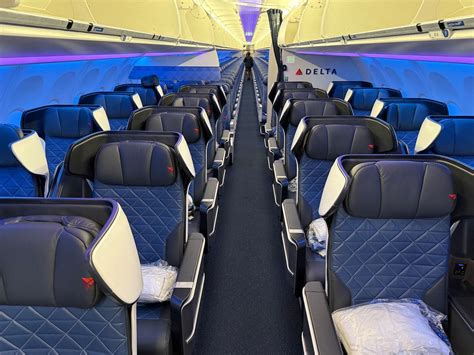
Delta has leaned into refinement rather than flashiness. Its Delta Sync platform, now installed across hundreds of aircraft, integrates seatback entertainment with personalized digital experiences. Combine that with fast, free Wi-Fi and thoughtfully designed seating, and the result is a product that feels cohesive and modern.
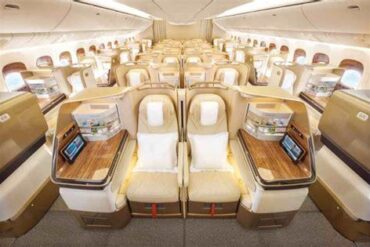
United, on the other hand, has embraced a more dramatic evolution. Its new 787-9 interiors featuring Polaris Studio suites represent a clear escalation in premium offerings. These suites are not incremental upgrades—they are statements of intent, featuring:
- 25% more space than standard Polaris seats
- Privacy doors and companion ottomans
- Large, high-definition entertainment screens
- Bluetooth connectivity at every seat
The message from both airlines is unmistakable: the onboard experience is a primary driver of revenue, not an afterthought.
American Airlines’ Product Gap: Not Absence, But Inconsistency
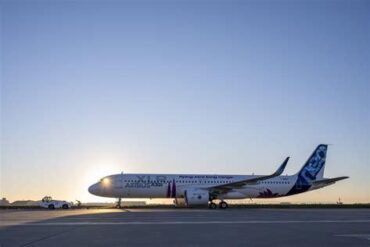
It would be inaccurate to suggest that American Airlines lacks competitive products. Its Flagship Suite and upcoming A321XLR premium cabins are genuinely strong offerings, capable of standing shoulder-to-shoulder with competitors in isolation.
The real issue is inconsistency.
Across much of its domestic fleet—particularly the A319 and A320 aircraft—American has focused on practical improvements:
- Increased first-class seating capacity
- Power outlets at every seat
- Larger overhead bins
- Refreshed interiors
These upgrades are valuable, but they are also subtle. They do not deliver the kind of immediate, visible impact that passengers associate with innovation.
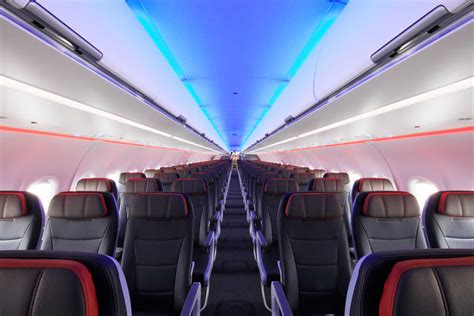
Meanwhile, competitors are saturating their fleets with seatback screens, high-speed Wi-Fi, and premium design elements. The absence of these features on many American aircraft creates a perception gap—one that matters deeply to high-yield travelers who expect consistency across every flight.
The Streaming Gamble: A Strategy Under Pressure
For years, American Airlines placed a calculated bet on personal device streaming rather than installing seatback screens. The logic was sound: reduce weight, lower maintenance costs, and align with a world where passengers increasingly rely on their own devices.
But the market has evolved in ways that challenge that assumption.
Passengers today value choice and redundancy. They want to use their own devices—but they also appreciate the convenience and reliability of built-in entertainment systems. More importantly, seatback screens have become symbolic of quality, signaling that an airline is investing in the passenger experience.
Delta and United understood this early and doubled down. American is now reportedly reconsidering its stance, exploring a return to seatback screens and next-generation connectivity.
That reconsideration is more than a technical adjustment—it is a philosophical shift.
Premium as the New Battleground
The numbers tell a compelling story. United reported flying 27.4 million premium seats in 2025, representing about 12% of its total capacity. Delta, meanwhile, continues to grow premium revenue at a steady pace, supported by its integrated ecosystem.
These figures highlight a critical trend: premium cabins are no longer peripheral—they are central to airline profitability.
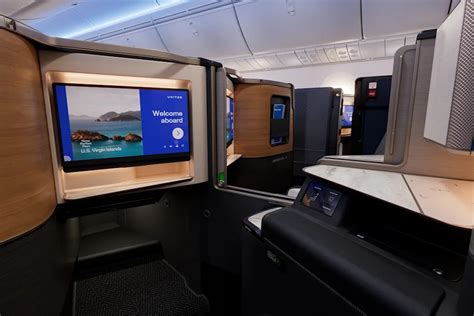
American Airlines is participating in this trend, but not leading it. Its premium expansion—through aircraft like the 787-9 and A321XLR—is real, yet it lacks the same level of system-wide integration and visibility.
This creates a strategic vulnerability. Premium travelers are not just buying a seat; they are buying an end-to-end experience. If that experience feels inconsistent, even a strong individual product may fail to secure long-term loyalty.
The Loyalty Loop: Experience Drives Revenue
One of the most underappreciated dynamics in this competition is the feedback loop between experience and loyalty.
Delta has reported millions of new SkyMiles enrollments driven in part by its onboard enhancements. United’s upgraded interiors consistently score higher in passenger surveys, reinforcing customer preference.
This is not accidental. When passengers encounter a consistently high-quality experience, they are more likely to:
- Choose the same airline repeatedly
- Engage with loyalty programs
- Spend more on premium upgrades
American Airlines risks falling behind in this loop. Without a uniformly competitive onboard product, it becomes harder to convert occasional customers into loyal, high-value travelers.
Financial Constraints
Here is where the situation becomes particularly complex. American Airlines generated an impressive $54.6 billion in revenue, yet operates with relatively thin margins and a substantial $36.5 billion debt load.
This financial reality limits flexibility. Investing in cabin upgrades is expensive—not just in terms of capital, but also operational disruption. Aircraft must be taken out of service, retrofits must be executed, and returns on investment may take years to materialize.
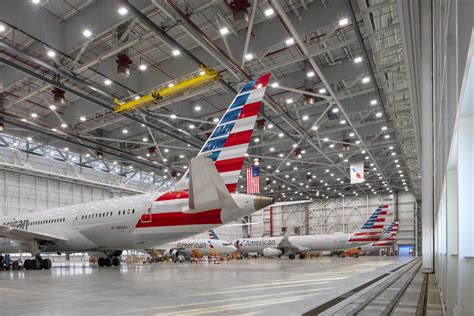
Delta and United, with stronger margins and balance sheets, can absorb these costs more comfortably. American must be more selective, more cautious—and yet, paradoxically, cannot afford to stand still.
This tension defines the airline’s current predicament.
The Risk of Being “Almost Competitive”
There is a subtle but dangerous position in any industry: being close to competitive, but not quite there.
American Airlines is not far behind its rivals in absolute terms. Its products are improving, its network remains extensive, and its brand is still powerful. But in a market where perception and consistency drive purchasing decisions, small gaps can have outsized consequences.
High-value travelers—corporate clients, frequent flyers, premium leisure passengers—are particularly sensitive to these differences. They compare not just price, but predictability. They want to know that every flight will meet a certain standard.
If Delta and United continue to deliver that consistency while American lags, the competitive gap may widen—not through dramatic losses, but through gradual erosion of preference.
A Strategic Backtrack—or a Necessary Evolution?
The idea that American Airlines might “backtrack” on previous decisions—reintroducing seatback screens, upgrading connectivity, and investing more heavily in cabin experience—should not be viewed as a failure.
It is, in many ways, a recognition of market reality.
Airlines operate in a dynamic environment where customer expectations evolve rapidly. What worked a decade ago may no longer be sufficient today. The willingness to adapt—even if it means reversing course—is often the difference between stagnation and resurgence.
The challenge for American is execution. It must:
- Invest in visible, high-impact improvements
- Ensure fleet-wide consistency
- Balance financial discipline with strategic ambition
The Bottom Line: Experience Is the New Currency
The competitive dynamics reshaping the airline industry are not subtle. Passenger experience has become the currency of differentiation, and Delta and United are spending aggressively to accumulate it.
American Airlines finds itself in a position that is both challenging and full of potential. It has the scale, the network, and the foundational products to compete—but it must align its strategy with a market that increasingly rewards comfort, connectivity, and consistency.
The question is no longer whether these investments matter. The market has already answered that.
The real question is how quickly—and how decisively—American Airlines can respond.