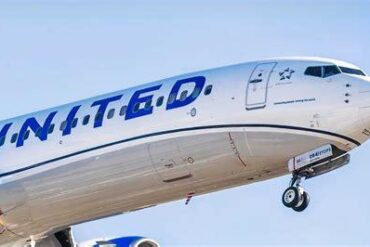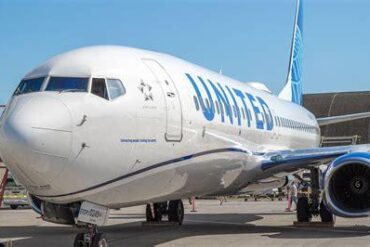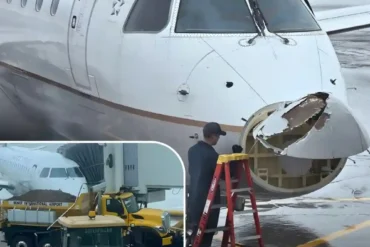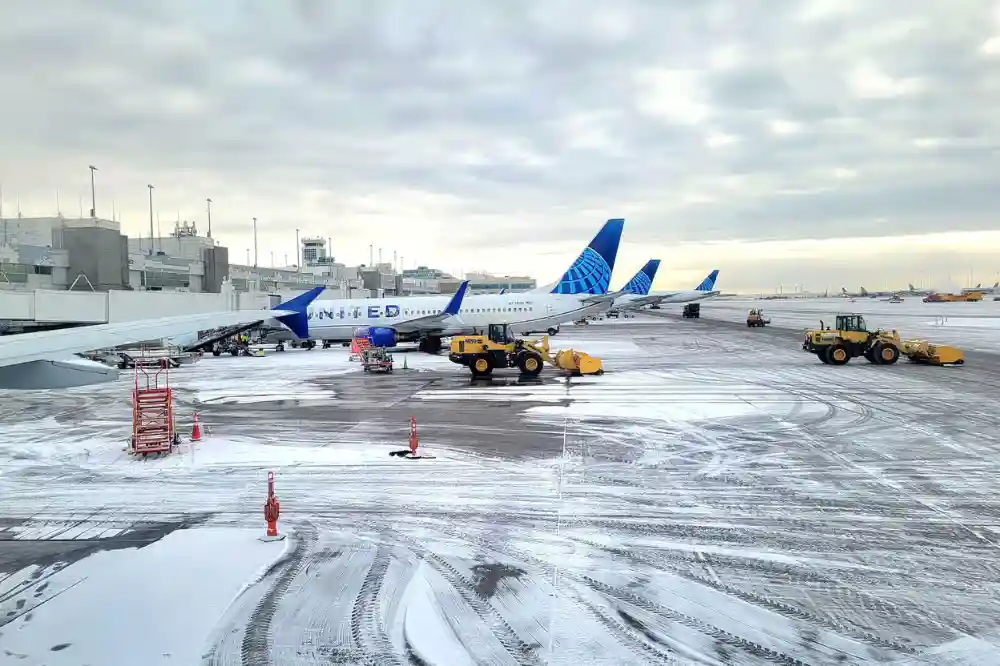
A routine winter departure at Denver International Airport (DEN) took an unexpected turn when a United Airlines Boeing 737-800 preparing for departure struck a deicing truck during ground operations, triggering an emergency response and forcing passengers to leave the aircraft. The incident, which occurred on Friday morning, disrupted United Airlines Flight 605 bound for Nashville International Airport (BNA) and resulted in a contractor being transported to a local hospital.
The aircraft, carrying 122 passengers, two pilots, and four cabin crew members, had been preparing for departure amid active winter weather conditions across Colorado. Snowfall and freezing temperatures had prompted extensive aircraft deicing operations, a routine but critical procedure used to remove ice accumulation from aircraft wings and control surfaces before takeoff.
During these operations, ground support equipment made contact with the aircraft, prompting an immediate halt to the flight’s departure and the initiation of emergency procedures.
Winter Conditions Intensify Ground Operations at Denver Airport
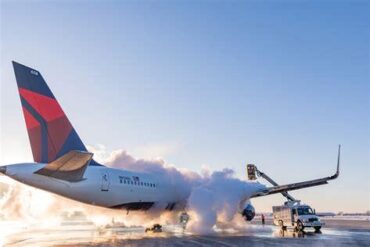
Denver International Airport frequently experiences heavy winter weather, making deicing procedures a regular feature of flight operations during colder months. Aircraft preparing to depart in snowy or freezing conditions must undergo treatment with specialized heated fluids designed to remove and prevent ice buildup that could interfere with aerodynamic performance.
On the morning of the incident, a winter weather advisory was in effect across much of Colorado, leading to increased deicing activity across the airport’s departure areas. Ground crews were actively servicing aircraft, including the United Airlines 737-800, as it prepared for its scheduled 8:01 a.m. departure to Nashville.
Deicing typically occurs in designated areas of the airfield where trucks equipped with extendable spray booms apply anti-icing fluid across wings, stabilizers, and fuselage sections. These operations require precise coordination between pilots, ground crews, and airport controllers to ensure safe distances between vehicles and aircraft structures.
Despite these precautions, the close proximity required during deicing operations can occasionally lead to accidents.
Deicing Truck Reportedly Strikes Aircraft Winglet
According to early reports and passenger accounts, the deicing truck collided with the left wing of the aircraft, damaging the aircraft’s winglet while maneuvering around the plane during the deicing process. Winglets are the vertical extensions located at the tips of aircraft wings, designed to reduce aerodynamic drag and improve fuel efficiency.
Passengers onboard the aircraft described a sudden disruption during the procedure. Several travelers later shared their experiences online, noting that the aircraft had been undergoing deicing when the incident occurred.
While United Airlines confirmed that a deicing truck made contact with the aircraft, some passengers claimed the aircraft had begun moving shortly after the captain announced that deicing was complete. According to these accounts, the truck may still have been positioned alongside the wing at the time.
Such claims remain unverified, and investigators will review ground control communications, aircraft data, and operational procedures to determine the precise sequence of events.
Emergency Response and Passenger Evacuation
Emergency responders quickly arrived at the scene after the collision. Denver Fire Department vehicles surrounded the aircraft, and paramedics rushed to assist the deicing truck operator who had been injured during the incident.
The contractor was stabilized and transported to a nearby hospital on a backboard, indicating responders were taking precautions for potential spinal injuries. Officials have not yet released details about the severity of the worker’s condition.
Meanwhile, the aircraft was taken out of service for inspection, and passengers were instructed to deplane using air stairs. Rather than returning directly to the gate, travelers were transported by airport buses back to the terminal, a procedure commonly used when aircraft are located in remote deicing areas away from passenger gates.
Replacement Aircraft Arranged for Delayed Flight
Following the incident, United Airlines arranged a replacement aircraft to complete the journey to Nashville. Passengers received notifications through the airline’s mobile system indicating that their flight would be delayed due to a maintenance issue affecting the original aircraft.
The notification message explained that the delay was necessary to address safety concerns before the flight could proceed. United emphasized that passenger safety remained the airline’s top priority.
Flight tracking data indicated the aircraft had originally been scheduled to depart Denver at 8:01 a.m., with the incident occurring around 8:30 a.m. After passengers were transported back to the terminal and reassigned to a replacement aircraft, the updated estimated departure time was listed as 1:13 p.m.
While delays are frustrating for travelers, aviation safety protocols require aircraft involved in ground collisions to undergo thorough structural inspections before returning to service.
Aircraft History: Boeing 737-800 N27213
Flight tracking and fleet databases identified the aircraft involved as Boeing 737-800 registration N27213, a narrowbody jet with a long operational history in U.S. commercial aviation.
The aircraft was originally delivered in July 1998 to Continental Airlines, one of the carriers that later merged with United Airlines. Following the airline merger, the aircraft officially joined the United Airlines fleet in November 2011, continuing its service on domestic routes across North America.
Configured to carry 166 passengers, the aircraft includes 16 seats in United First Class and 150 seats in economy. Like many aircraft of its generation, the 737-800 has undergone numerous upgrades and maintenance cycles to maintain operational safety over decades of service.
Interestingly, aviation records indicate this same aircraft was involved in another unusual incident in April 2025, when it reportedly ingested a rabbit into one of its engines during departure from Denver on a flight bound for Edmonton, Canada.
FAA Investigation Underway
The Federal Aviation Administration (FAA) has launched a formal investigation into the collision to determine exactly how the accident occurred and whether operational procedures were followed correctly.
Investigators will examine several factors, including:
- Aircraft movement timing during deicing procedures
- Communication between ground crews and cockpit personnel
- Vehicle positioning and clearance protocols
- Operational control in areas where air traffic control oversight is limited
Ground collisions, while relatively rare compared with other operational incidents, remain a key area of aviation safety monitoring because aircraft are particularly vulnerable during tight ground maneuvers involving service vehicles.
The findings of the FAA investigation will ultimately determine whether procedural changes, equipment adjustments, or additional training measures are necessary to prevent similar incidents in the future.
For passengers aboard United Flight 605, the event served as a reminder that even routine ground operations can present unexpected challenges in the complex environment of modern airports—especially during winter weather conditions when safety procedures become even more demanding.