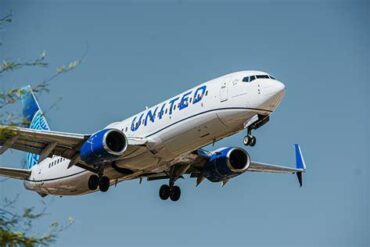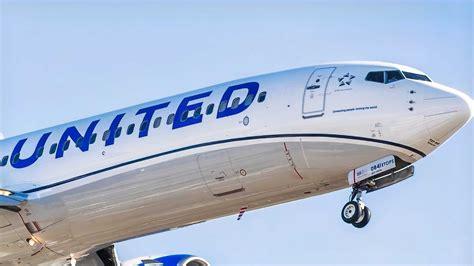
In a stunning development that has reignited concerns around unregulated high-altitude activity, the National Transportation Safety Board (NTSB) has released its preliminary report on the October 16, 2025, midair incident involving United Airlines Flight 1093, a Boeing 737 MAX 8. The report confirms that the aircraft, cruising at 36,000 feet near Moab, Utah, collided with a high-altitude weather balloon developed by WindBorne Systems, a California-based tech firm.
The incident initially sparked speculation of space debris or unknown aerial objects due to the suddenness and altitude of the collision. However, NTSB investigators have now traced the impact to a Global Sounding Balloon (GSB) launched from Spokane, Washington, a day earlier. This balloon had lost contact with its operators shortly after launch, and radar data confirmed it was directly in the flight path of United 1093 at the time of the crash.
The Incident: Glass Showers Cockpit, Captain Injured
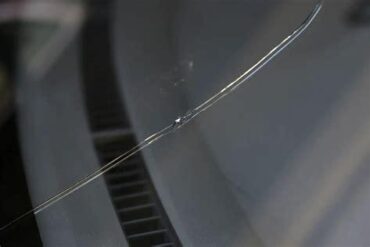
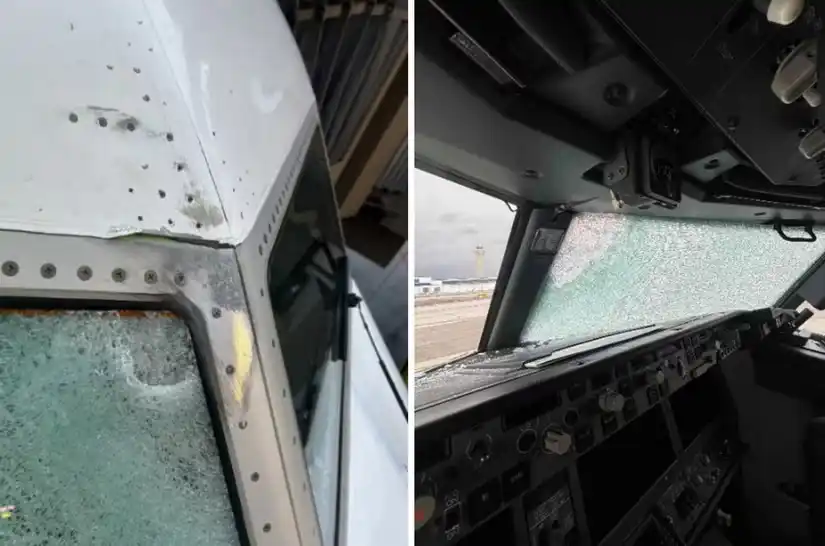
As the 737 soared westbound from Denver to Los Angeles, the captain noticed a small object far on the horizon. Before he could alert his first officer, the jet collided with the object. The impact produced a loud bang, shattering the outer pane of the windshield and spraying shards of glass into the cockpit.
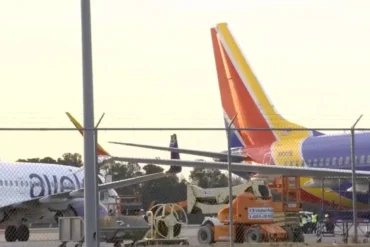
The captain sustained lacerations to his right arm, though the crew was able to maintain control of the aircraft. They promptly declared an emergency and diverted to Salt Lake City International Airport, where the aircraft landed safely.
Fortunately, the aircraft’s cabin pressurization systems remained stable, averting what could have escalated into a catastrophic failure. Still, the first officer’s window overheat light did illuminate during descent, pointing to potential thermal stress on the windshield’s internal components.
WindBorne Systems Identified As Source of Balloon
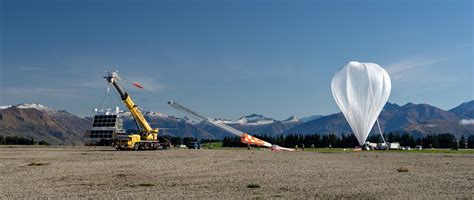
WindBorne Systems, the private entity behind the balloon, confirmed that its GSB was unaccounted for shortly after launch. According to the NTSB’s detailed tracking data, the balloon had traveled from Washington through Oregon and Nevada before reaching Utah, aligning precisely with United 1093’s flight path.
The company emphasized that its GSBs are constructed with ultralight, flexible materials such as thin plastic film and silica-based ballast containers. These are designed to minimize harm in the rare event of midair contact with other aircraft. Following the incident, WindBorne announced internal protocol upgrades:
- Enhanced air traffic alert systems.
- Reduction in time balloons spend in commercial airspace.
- Further decrease in GSB structural mass to reduce collision risks.
Why the Damage Was Contained: Aircraft Windshield Engineering
One of the more miraculous aspects of the incident is the limited scope of the damage, owing to the resilience of modern aircraft windshield systems. The windshield on United’s Boeing 737 MAX 8 was produced by PPG Aerospace and built to withstand bird strikes of up to four pounds.
The structure features multiple interlayered protections:
- Two panes of thermally tempered glass.
- Conductive heating film for de-icing.
- A combination of urethane and vinyl interlayers to absorb impact energy and prevent splintering.
This complex lamination played a pivotal role in containing the damage and preventing depressurization or pilot incapacitation, both of which could have had far graver consequences at cruise altitude.
Aircraft Grounded Since Incident
According to Flightradar24 data, the aircraft involved — registration N17327, a two-year-old 737 MAX 8 — has remained largely inactive since the October 16 event. After the emergency landing, it flew once to Chicago Rockford International Airport on October 19. Since then, it has been grounded for more than a month.
The damaged windshield was removed and sent to the NTSB Materials Laboratory in Washington, D.C., where forensic testing is underway. United Airlines has not yet issued a public statement regarding the incident or the timeline for the aircraft’s return to service.
A Wake-Up Call For High-Altitude Airspace Safety
NTSB Chair Jennifer Homendy did not understate the gravity of the event, noting the collision “could have been really devastating” had it occurred in another portion of the aircraft, such as the engines or stabilizers. The rare nature of such incidents at cruising altitude brings attention to the increasing congestion in the upper layers of Earth’s atmosphere, where research balloons, drones, and even orbital debris now pose potential threats to commercial aviation.
While weather balloons have long played a crucial role in atmospheric science, this event serves as a stark reminder that stricter regulation, tracking, and communication protocols must accompany any object released into navigable airspace. The NTSB continues to investigate, and a final report is expected within several months. For now, the aviation community is left grappling with one of the most unusual — and potentially dangerous — midair collisions in recent U.S. commercial aviation history.