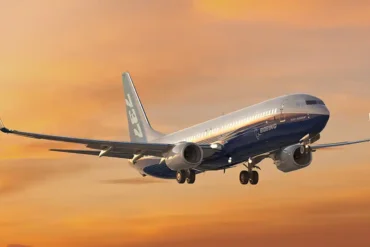
The Boeing 737 MAX became one of the most closely examined aircraft programs in modern aviation history after two fatal accidents exposed a critical weakness in its flight-control software. Yet the solution that returned the aircraft to service was not a complete redesign of the airplane. Instead, Boeing, regulators, and aviation engineers focused on correcting the system at the center of the problem: the Maneuvering Characteristics Augmentation System (MCAS).
The story of how Boeing fixed the 737 MAX is also a story about modern aircraft design philosophy. Commercial airplanes are not usually improved by replacing their entire structure when a problem appears. Instead, engineers analyze whether the issue comes from aerodynamics, hardware, software, operational procedures, or the interaction between humans and machines. In the case of the 737 MAX, investigators determined that the aircraft’s basic design remained viable, but the logic controlling MCAS required major changes.
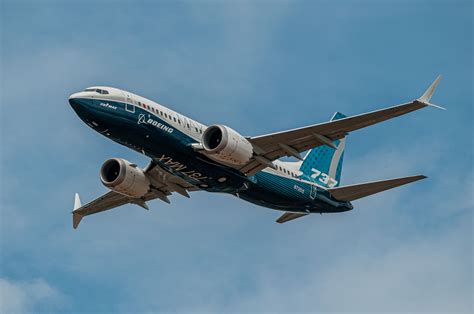
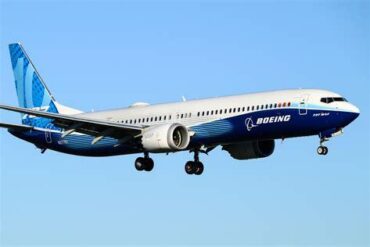
The Boeing 737 family has been one of the most successful commercial aircraft programs ever created. Since the original 737 entered service in the late 1960s, Boeing has continuously developed new versions with improved efficiency, range, and passenger capacity. The 737 MAX family, including the MAX 7, MAX 8, MAX 9, and MAX 10, represented the latest evolution of this design philosophy.
Rather than creating a completely new narrow-body aircraft, Boeing developed the MAX as an advanced version of the existing 737 platform. This approach allowed airlines to benefit from better fuel efficiency while maintaining operational familiarity. Pilots already trained on earlier 737 models could transition more easily, airports could continue using existing infrastructure, and airlines could reduce costs associated with introducing an entirely new aircraft type.
However, the decision to modernize an existing airframe created a complex engineering challenge. Boeing needed to install larger and more efficient CFM International LEAP engines while preserving the familiar handling characteristics of previous 737 generations.
The larger engines delivered significant fuel savings, but their size and placement changed the aircraft’s aerodynamic behavior. This aerodynamic difference eventually led to the creation of MCAS, the system that would become the focus of the 737 MAX crisis.
Why Boeing Added MCAS To The 737 MAX
The core reason for MCAS was not that the 737 MAX was inherently unstable. Instead, the system was introduced to compensate for a specific aerodynamic effect caused by the aircraft’s larger engines.
The LEAP engines used on the MAX are larger in diameter than the engines installed on previous 737 Next Generation aircraft. Because the 737’s landing gear height limited how far the engines could be positioned away from the ground, Boeing mounted the engines higher and farther forward on the wing.
At certain high angles of attack, the shape and position of the engine nacelles created additional lift ahead of the aircraft’s center of gravity. This aerodynamic effect could increase the aircraft’s natural tendency to pitch upward.
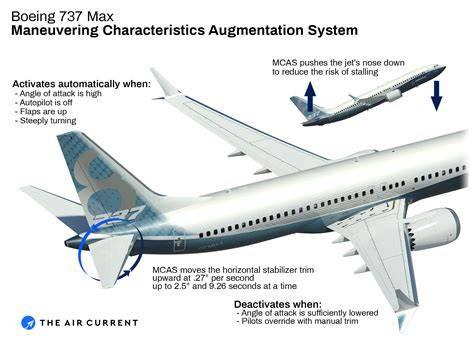
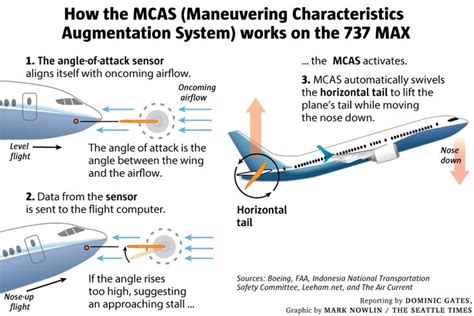
MCAS was designed to counter this tendency by automatically adjusting the horizontal stabilizer. During specific flight conditions, the system could command a small amount of nose-down stabilizer movement, helping the aircraft feel more similar to earlier 737 models.
The intention was straightforward: preserve the handling characteristics pilots expected while allowing Boeing to use more efficient engines.
The problem was not the existence of MCAS itself. The issue was how the system received information and how aggressively it responded when incorrect data entered the flight-control system.
The Software Problem Behind The 737 MAX Accidents
The two accidents involving Lion Air Flight 610 and Ethiopian Airlines Flight 302 revealed a critical weakness in MCAS design. Both aircraft experienced incorrect readings from an Angle of Attack (AOA) sensor, causing MCAS to believe the aircraft was climbing at an unsafe angle.
Instead of recognizing the faulty information, the original system repeatedly activated nose-down stabilizer commands. Because MCAS relied on input from only one AOA sensor, a single failed component could influence the aircraft’s behavior.
The system also had the ability to repeatedly command additional stabilizer movement if the incorrect sensor data continued. Under certain circumstances, these repeated commands could create a situation where pilots struggled to maintain control.
The investigation showed that MCAS was not intended to overpower pilots. However, the combination of limited sensor input, repeated activation logic, and insufficient awareness among some pilots created a dangerous chain of events.
This was the fundamental reason the 737 MAX fleet was grounded worldwide in March 2019.
The important engineering conclusion was that the problem existed primarily in software logic and system integration, not in the aircraft’s basic structure. Boeing did not need to redesign the wings, replace the fuselage, or create a completely different airplane.
Instead, engineers focused on changing the way MCAS operated.
How Boeing Redesigned MCAS Without Redesigning The Aircraft
The return-to-service process lasted approximately 20 months and involved extensive engineering reviews, simulator testing, flight testing, and regulatory examination.
The redesigned MCAS introduced several major safety improvements that fundamentally changed how the system behaved.
The first major improvement was the introduction of dual AOA sensor input. The original system relied on information from one sensor. The updated system compares data from both AOA sensors installed on the aircraft.
MCAS will only activate when both sensors provide consistent information. If the readings disagree beyond an acceptable limit, the system will disable itself rather than rely on potentially incorrect data.
This change addressed one of the biggest weaknesses identified during the investigations: a single faulty sensor could no longer trigger repeated automatic commands.
The second major improvement was limiting MCAS activation. The updated system can only command one nose-down stabilizer movement during a high-angle-of-attack event.
Previously, MCAS could repeatedly activate if the aircraft continued receiving incorrect information. The revised software prevents this repeated cycle, ensuring that pilots maintain greater authority over the aircraft.
The third major change involved pilot control inputs. Under the original design, pilots using electric trim switches could temporarily counter MCAS commands, but the system could then activate again. The updated version prevents this behavior, meaning pilot actions cannot unintentionally reset MCAS and allow another automatic trim command.
Together, these changes transformed MCAS from a system that could dominate a chain of events into a limited augmentation feature operating within strict safety boundaries.
Why Boeing Did Not Move The Engines Or Build A New 737
A complete redesign of the 737 MAX would have been a dramatically different project. Boeing could theoretically have changed the engine position, redesigned the landing gear, modified the wings, or developed an entirely new aircraft.
However, such changes would have introduced enormous technical and financial challenges.
The 737 MAX was designed around the efficiency advantages of the LEAP engine. Moving the engines significantly would have required major structural modifications and potentially reduced the benefits that made the aircraft attractive to airlines.
A completely new aircraft program would also have taken many years to develop and certify. It would require new manufacturing systems, new pilot training programs, and significant investment from both Boeing and airline customers.
Regulators ultimately determined that the aircraft itself could meet certification requirements without MCAS being treated as a fundamental stability system. This finding was important because it showed that MCAS was a handling-quality enhancement rather than a feature required to keep the aircraft safely flying.
The solution was therefore focused on improving the software and safety architecture rather than rebuilding the airplane.
The Role Of Regulators In The 737 MAX Recovery
The Federal Aviation Administration (FAA), European Union Aviation Safety Agency (EASA), and Transport Canada played important roles in reviewing Boeing’s changes.
The updated aircraft underwent extensive flight testing and analysis before regulators approved its return to commercial service.
The review process examined not only MCAS but also broader questions about aircraft certification, pilot training, software development, and Boeing’s internal safety procedures.
One major lesson from the 737 MAX crisis was that modern aircraft systems require a deeper understanding of how software interacts with human decision-making.
Aircraft safety is no longer only about mechanical reliability. Digital systems, sensors, and computer logic are equally important parts of modern aviation design.
The updated 737 MAX certification process reflected this reality by placing greater emphasis on redundancy, system behavior, and failure scenarios.
Boeing’s Safety Culture Changes After The 737 MAX Crisis
The technical fix to MCAS was only one part of Boeing’s response. The company also made significant organizational changes following the accidents.
Boeing established additional safety oversight structures, including a permanent aerospace safety committee within its board of directors. It also created new safety-focused organizations designed to improve engineering review processes.
The company introduced stronger design requirements and expanded operational safety programs. These efforts aimed to ensure that future aircraft development would include more rigorous evaluation of potential system interactions.
The 737 MAX crisis also resulted in leadership changes at Boeing and increased scrutiny of the company’s engineering practices.
The financial consequences were significant. The grounding, delayed deliveries, compensation agreements, and production disruptions created billions of dollars in costs for the company.
However, the most important consequence was the renewed focus across the aviation industry on safety culture and certification independence.
The Future Of The Boeing 737 MAX
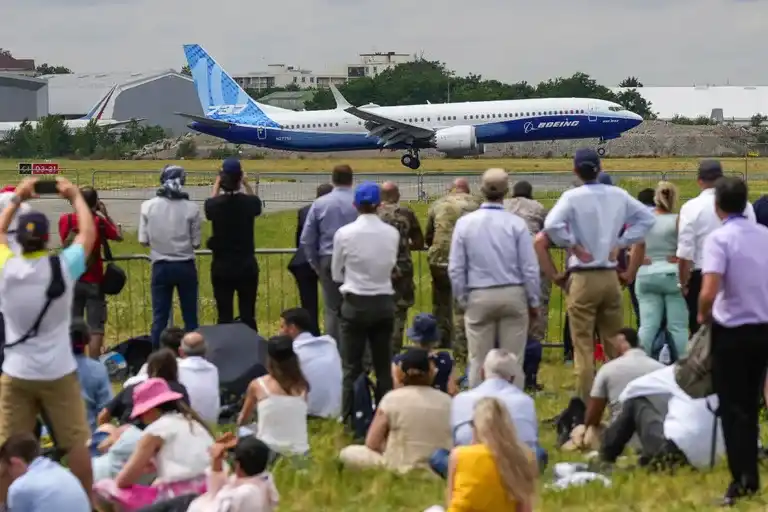
The Boeing 737 MAX continues to represent an important part of global commercial aviation. Airlines around the world operate the aircraft because it provides improved fuel efficiency, lower operating costs, and compatibility with existing 737 infrastructure.
The aircraft’s return to service does not erase the tragedy of the two accidents. The loss of 346 lives remains a defining moment in aviation history and a reminder that even highly advanced aircraft systems must be designed with exceptional care.
However, the recovery of the 737 MAX also demonstrates how aviation engineering responds to failure. Investigators identified the weakness, engineers redesigned the software, regulators reviewed the changes, and airlines gradually returned the aircraft to operation.
The key lesson from the 737 MAX is that modern aircraft do not always require complete physical redesigns to solve complex problems. In many cases, improving software architecture, adding redundancy, and strengthening human-machine interaction can create a safer aircraft.
Boeing fixed the 737 MAX not by replacing the entire airplane, but by understanding precisely where the system failed and rebuilding the technology around stronger safety principles. That approach allowed the aircraft to retain its efficiency advantages while addressing the critical weaknesses that caused its greatest crisis.