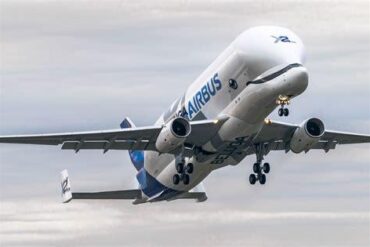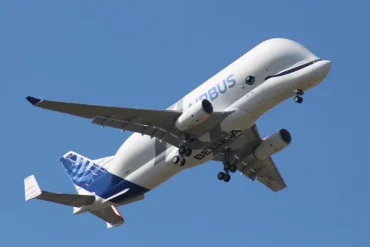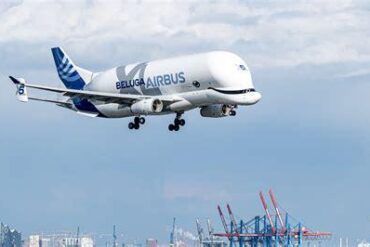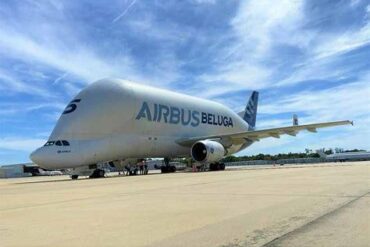
At first glance, the Airbus Beluga XL looks almost fictional. Its swollen upper fuselage, rounded nose, and smiling livery have made it one of the most recognizable aircraft in the world. Aviation enthusiasts love it, casual travelers photograph it, and social media treats it like a flying cartoon. Yet beneath that playful exterior sits one of the smartest engineering solutions in modern aerospace design.
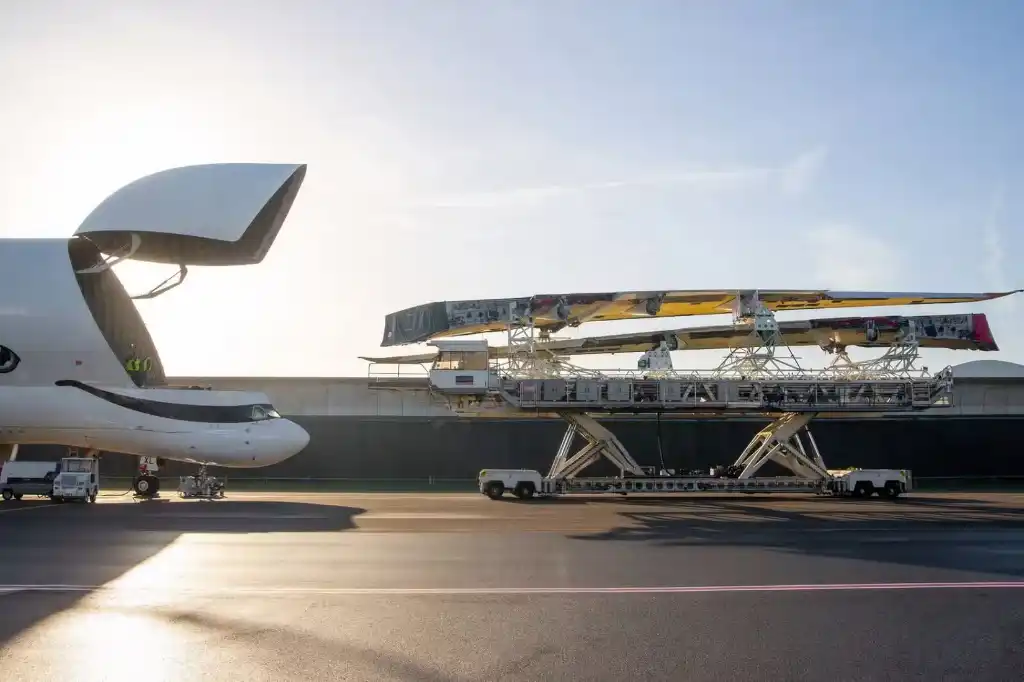
The Beluga XL was never meant to be stylish. It was built to solve a serious industrial problem: how to move giant aircraft components quickly across Europe. Wings, fuselage sections, tail assemblies, and other oversized parts needed transportation between Airbus factories without delay. Roads were too slow, ships too limited, and conventional cargo aircraft too small.
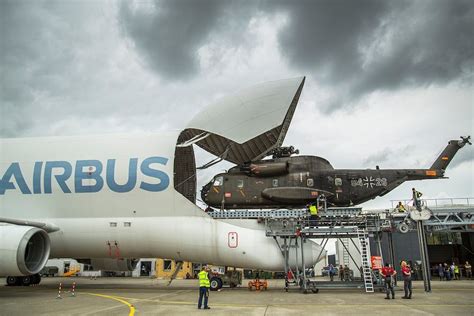
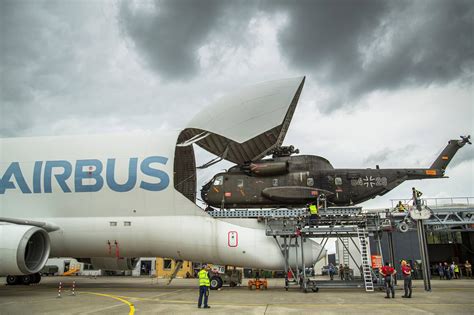
That challenge led Airbus engineers to create something extraordinary. One of the most important features was not the huge cargo bubble or reinforced structure, but the lowered cockpit. Moving the flight deck downward allowed Airbus to install a front-opening cargo door and preserve valuable loading space. It was a radical decision, but it became the key to the entire aircraft.
After all, when your cargo includes aircraft wings, normal design rules start to look very small.
Why Airbus Needed the Beluga XL
Airbus operates a manufacturing system spread across multiple European countries. Wings may be built in the United Kingdom, fuselage sections in Germany, tail parts in Spain, and final assembly completed in France. That distributed model is efficient for specialization, but it creates a constant logistics challenge.
Every major aircraft program depends on moving giant parts from one site to another on tight schedules. If one shipment is late, production lines slow down. In aviation manufacturing, delays become expensive very quickly.
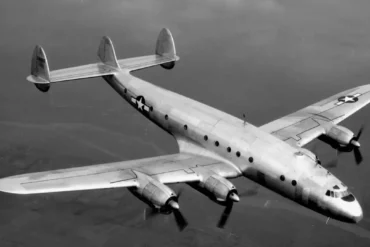
The earlier Airbus BelugaST fleet handled this mission for years. Those aircraft were based on the older A300 platform and provided valuable internal transport capacity. But Airbus production volumes increased, especially with the arrival of the A350 XWB program. Larger components and higher output demanded more cargo volume.
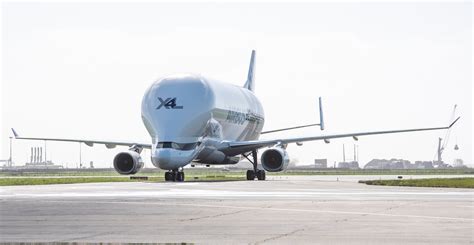
So Airbus developed the Beluga XL, based on the A330-200 Freighter platform. It would carry more cargo, operate efficiently, and replace the aging BelugaST fleet with a modern solution tailored to Airbus operations.
From A330 Freighter to Giant Air Transporter
Calling the Beluga XL a “modified A330” is technically correct but dramatically understated. The transformation was extensive. Engineers retained the proven lower fuselage, wings, engines, and many systems of the A330, but above that foundation they created an entirely new aircraft profile.
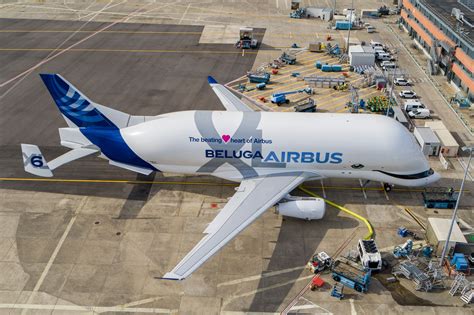
The most obvious feature is the oversized upper fuselage. This cargo chamber dramatically increases internal volume, allowing the Beluga XL to carry components too large for conventional freighters.
Its hold measures roughly:
- 150 feet in length
- 25.3 feet in width
- Nearly 25.9 feet in height
That space allows the aircraft to transport two A350 wings simultaneously, a major efficiency improvement. Moving two wings in one trip instead of splitting loads across flights saves time, fuel, and scheduling complexity.
But making an aircraft bigger on top is not as easy as adding a shell. Aircraft fuselages are pressure vessels designed to distribute loads precisely. Add a giant bubble overhead, and structural loads change everywhere.
Airbus had to redesign junction areas, reinforce frames, and integrate thousands of new components where the enlarged cargo hold met the base fuselage.
The Wild Engineering Problem at the Nose
Now came the real puzzle.
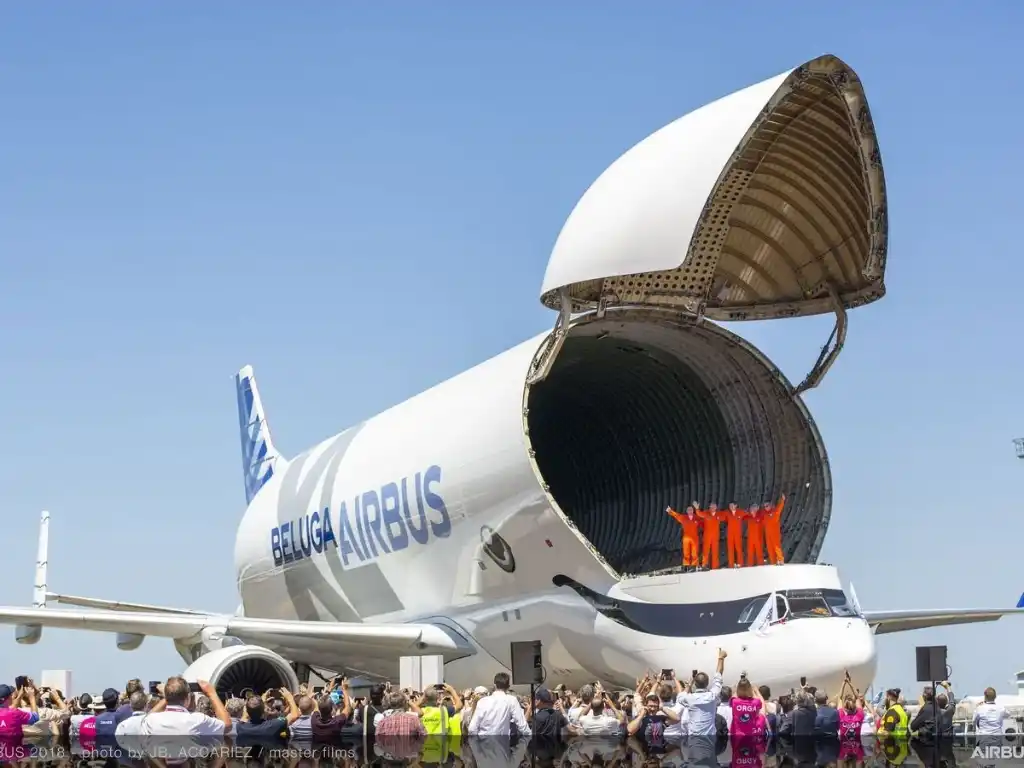
Large cargo aircraft need efficient loading systems. Airbus wanted the Beluga XL to accept giant aircraft components directly into the hold with minimal ground handling time. The best solution was a front-opening cargo door.
That sounds simple until you remember where the cockpit normally sits.
On conventional airliners like the A330, the cockpit occupies the nose section. If engineers kept the cockpit in its original location, the front cargo door would conflict with the flight deck structure. Loading operations would become slow, awkward, and mechanically complex.
Imagine trying to open a giant front cargo hatch while the cockpit is sitting exactly where the door needs to move. That is less an engineering plan and more a very expensive argument.
Airbus needed full forward access to the cargo chamber without disturbing pilot systems or removing structural elements. So instead of forcing the cargo door around the cockpit, Airbus moved the cockpit out of the way.
Why the Cockpit Was Lowered
The Beluga XL cockpit was positioned below the main cargo deck, creating a separate lower front section for the pilots. This elegant solution unlocked several critical benefits.
First, it allowed the huge front cargo door to swing open freely. With the cockpit no longer blocking the loading path, oversized parts can enter directly into the hold.
Second, it preserved internal cargo volume. Rather than sacrificing precious loading space for a traditional cockpit position, Airbus kept the upper section available for freight.
Third, it sped up turnaround times. The aircraft can be loaded and unloaded in approximately 70 minutes, an important advantage when factories depend on just-in-time delivery schedules.
Fourth, it reduced operational complexity. Ground crews do not need to reposition cockpit components or use cumbersome loading workarounds.
The lowered cockpit is therefore not a novelty. It is the central feature that made the Beluga XL practical.
Challenges Created by the Lower Flight Deck
Moving the cockpit solved one problem but created several new ones.
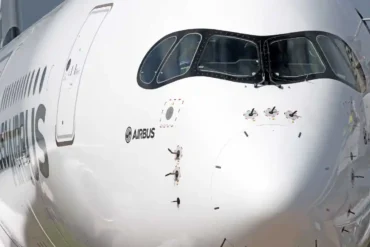
Pilots now sit lower relative to the cargo deck and the aircraft’s bulbous upper structure. Visibility had to be carefully engineered through cockpit window placement, sight lines, and camera support systems where needed.
The nose shape also changed the pilot perspective during taxiing, takeoff, and landing. Flight crews had to adapt to operating an aircraft with unusual geometry and dimensions.
Inside the cockpit, Airbus ensured commonality with the A330 family wherever possible. Familiar avionics, controls, and operating logic reduce training burdens and improve fleet efficiency.
That balance matters. Airlines and manufacturers prefer innovation where needed, not reinvention everywhere. Airbus changed the aircraft dramatically while preserving proven systems underneath.
Aerodynamics of a Flying Whale
The Beluga XL’s shape may delight photographers, but aerodynamicists probably had a few long meetings.
Large bulbous surfaces increase drag. They alter airflow over the wings and tail. They can affect directional stability, especially in crosswinds. A tall upper fuselage can behave like a sail if not carefully managed.
To compensate, Airbus modified the vertical and horizontal stabilizers. These surfaces help maintain control authority and stable handling despite the unconventional fuselage profile.
Engineers also studied how cargo weight distribution would affect the center of gravity. Many Beluga XL loads are physically large but comparatively light, such as wings or fuselage skins. That means cargo placement becomes a careful balance between volume and mass.
Despite its appearance, the Beluga XL behaves predictably within its mission envelope. That is the mark of successful engineering: dramatic visual differences with dependable operational behavior.
Power and Performance
The Beluga XL uses two Rolls-Royce Trent 700 engines, each producing around 71,000 pounds of thrust. These engines provide the power needed to move the aircraft’s larger body while maintaining reasonable efficiency.
Approximate performance figures include:
- Payload capacity: 51 tonnes
- Maximum takeoff weight: around 500,000 pounds
- Range: roughly 2,485 miles (4,000 km)
This is not a long-haul cargo aircraft designed to cross oceans daily. It is a specialized transporter optimized for regional industrial routes across Europe.
That mission focus is important. The Beluga XL was designed for exactly what Airbus needed, not for every possible cargo market.
The Logistics Lifeline of Airbus
The Beluga XL connects Airbus production centers across Europe, including locations such as:
- Toulouse, France – headquarters and final assembly
- Hamburg, Germany – major narrowbody production hub
- Broughton / Hawarden, UK – wing manufacturing
Without rapid component transport, these facilities would struggle to function as one coordinated enterprise.
The Beluga XL effectively turns scattered factories into a single connected production organism. Wings built in one country can arrive for assembly in another on schedule. That reliability helps Airbus maintain output targets and manage supply chains.
In manufacturing, glamorous headlines often focus on finished aircraft deliveries. But behind every delivery is logistics discipline. The Beluga XL is one of the quiet reasons Airbus can build airplanes at scale.
Engineering Trade-Offs Done Right
Every aircraft design is a compromise among weight, strength, efficiency, manufacturability, and cost. The Beluga XL simply makes those compromises more visible.
Its enlarged fuselage adds drag, but provides vital cargo volume.
Its lowered cockpit complicates pilot sight lines, but enables front loading.
Its structural reinforcements add weight, but preserve integrity under new loads.
Its specialized mission limits commercial flexibility, but maximizes usefulness for Airbus operations.
This is what excellent engineering often looks like: not perfection, but the smartest balance of competing needs.
Airbus also used advanced manufacturing methods, including precision forming techniques for curved fuselage panels. These methods helped create the aircraft’s unusual geometry while maintaining structural reliability.
Why the Beluga XL Matters Beyond Airbus
The Beluga XL demonstrates an important truth in aerospace design: when requirements change, tradition may need to move aside.
Most aircraft place the cockpit at the front because that arrangement works. But when front access for giant cargo became essential, Airbus did not cling to convention. It rethought the nose completely.
That willingness to redesign fundamental assumptions is valuable across industries. Sometimes the best solution is not improving the old layout by five percent. Sometimes it is moving the cockpit.
And yes, that sounds like advice for office politics too.
Conclusion: The Cleverest Part Is the One Below the Smile
The Airbus Beluga XL is famous for its whale-like face, but its most brilliant feature sits beneath that grin. The lowered cockpit solved a problem that could have crippled the concept: how to load giant aircraft parts through the nose without sacrificing efficiency or cargo space.
By moving the pilots below the main deck, Airbus enabled a full front-opening cargo system, faster turnarounds, and practical transportation of oversized components across Europe.
The result is an aircraft that looks whimsical yet embodies serious engineering discipline. Every curve serves a purpose. Every odd proportion reflects a requirement. And every time a Beluga XL lifts off carrying wings inside its giant body, it proves that smart design is often unconventional.
Sometimes the wildest-looking solution is the most rational one.