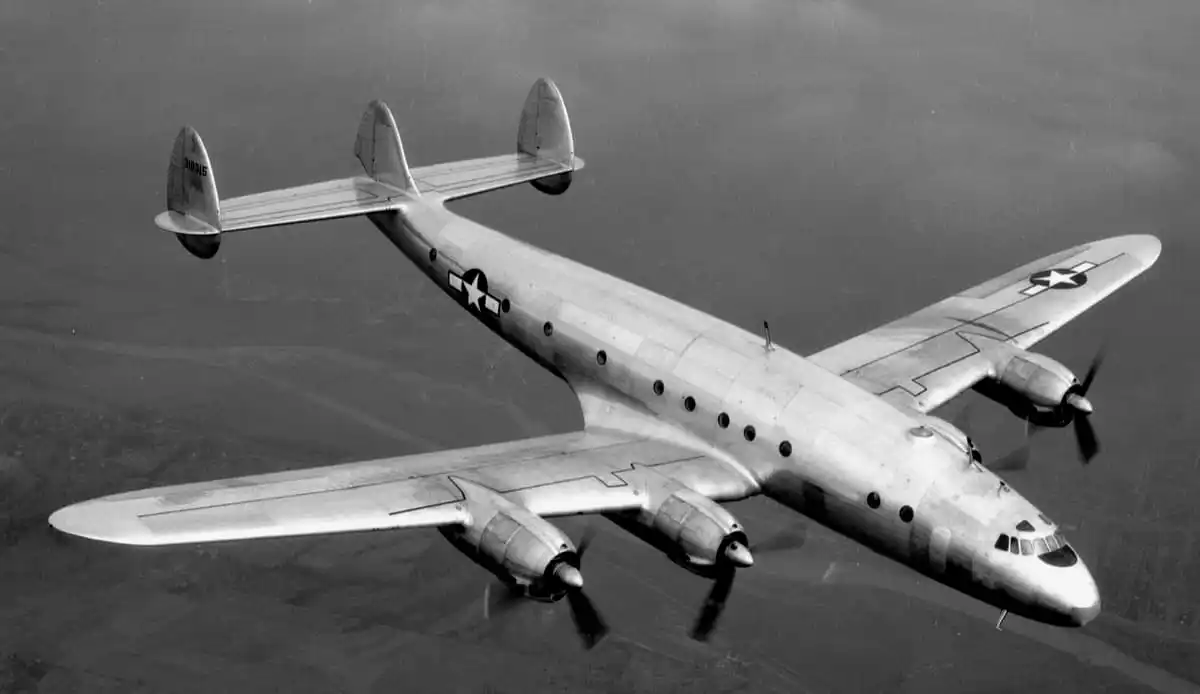
The Lockheed Constellation remains one of the most iconic aircraft designs in aviation history, instantly recognizable because of its elegant fuselage curves, powerful four-engine layout, and especially its unusual triple-tail configuration. While many people assume the three vertical stabilizers were created for style or aerodynamic experimentation, the real reason was far more practical: Lockheed needed the aircraft to fit inside Trans World Airlines’ existing hangars.
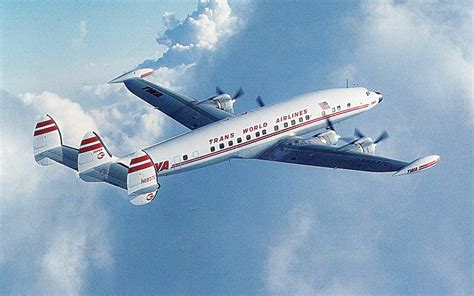
The story began in 1939, when TWA owner Howard Hughes approached Lockheed with ambitious requirements for a new generation of long-range passenger aircraft. Hughes wanted an airliner that could fly farther, faster, and higher than existing commercial aircraft. However, alongside performance goals, he included one unusual but critical condition: the new aircraft had to operate within TWA’s existing maintenance infrastructure.
This requirement shaped one of the most distinctive engineering decisions in commercial aviation. A conventional aircraft of the Constellation’s size would normally require a large single vertical stabilizer to maintain directional stability. However, that design would have made the aircraft too tall for TWA’s hangar doors. Instead of changing the airline’s facilities, Lockheed changed the airplane.
TWA’s Hangar Requirement Created the Triple Tail Design
Howard Hughes’ specifications for the new Lockheed airliner were extremely demanding for the late 1930s. He wanted an aircraft capable of carrying a 6,000-pound payload, traveling thousands of miles without refueling, and cruising above weather at speeds exceeding 250 mph. These requirements pushed engineers toward a large, pressurized, four-engine aircraft that would become dramatically larger than existing passenger planes.
The problem was that size created a practical limitation. The Constellation’s four Wright R-3350 Duplex-Cyclone radial engines required large propellers, which meant the aircraft needed tall landing gear to maintain sufficient ground clearance. The taller landing gear raised the fuselage, and the higher fuselage position increased the height of the tail.
A traditional single vertical stabilizer would have needed substantial surface area to control such a large aircraft. The bigger the aircraft, the greater the aerodynamic forces acting on it, especially during turns, crosswinds, and engine failures. A large central tail would have extended beyond the height that TWA’s hangars could accommodate.
Lockheed engineers, led by Hall Hibbard and Clarence “Kelly” Johnson, faced a unique design challenge. They needed to create enough vertical stabilizer area without increasing the aircraft’s overall height.
The answer was remarkably simple: instead of building one tall fin, they divided the required surface area into three smaller vertical stabilizers mounted across the horizontal tailplane.
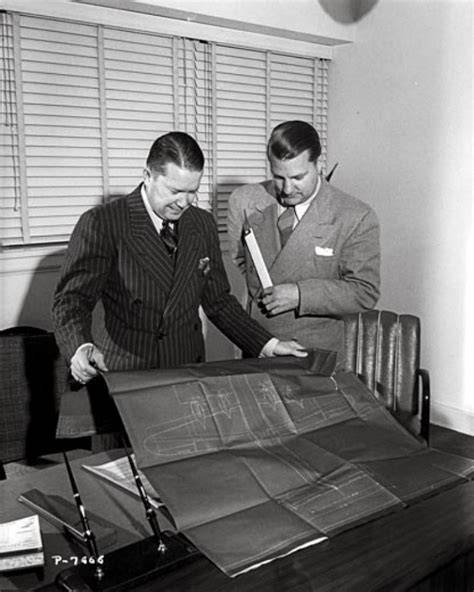
The triple-tail arrangement allowed Lockheed to maintain the necessary aerodynamic stability while keeping the aircraft’s maximum height at approximately 23 feet 8 inches (7.2 meters). The Constellation could now roll into TWA’s existing hangars without requiring expensive modifications to airport facilities.
This was not merely a visual signature. The famous silhouette of the Constellation was born from a business requirement.
How Three Vertical Stabilizers Replaced One Large Tail
The primary purpose of a vertical stabilizer is to provide directional stability. It prevents the aircraft from rotating unintentionally around its vertical axis, a movement known as yaw. Without sufficient tail area, a large aircraft could become difficult to control, especially in turbulent conditions or during asymmetric engine operation.
The amount of stabilizer area required depends on several factors, including aircraft weight, speed, fuselage length, and the distance between the aircraft’s center of gravity and the tail. The Constellation was large and fast for its era, meaning it needed a substantial vertical tail.
By dividing the total required area into three separate fins, Lockheed did not sacrifice stability. The aircraft still had the same approximate amount of vertical stabilizer surface area, but it was distributed more efficiently within the height limitation.
The design also offered an unexpected aerodynamic advantage. The two outer vertical stabilizers were positioned near the aircraft’s outer engines, allowing them to benefit from propeller airflow. At lower speeds, when normal airflow over a traditional tail would be weaker, the accelerated air from the propellers improved airflow across these surfaces.
This helped the Constellation maintain stronger directional control during critical phases of flight, including takeoff and landing. It was also valuable during engine-out situations, where pilots needed additional yaw control to counteract the uneven thrust from the remaining engines.
For a four-engine aircraft, losing one engine created a significant aerodynamic challenge. The operating engines on one side could generate a powerful turning force, and the additional effectiveness of the outer tail surfaces helped pilots manage that imbalance.
However, the triple-tail design was not without disadvantages. Supporting three vertical stabilizers required a stronger horizontal stabilizer structure, increasing weight. The aircraft also needed three rudders instead of one, adding complexity to the flight control system.
Compared with competitors such as the Douglas DC-6, which used a conventional single-fin tail, the Constellation carried additional structural and maintenance requirements. Lockheed accepted these disadvantages because the design solved the more immediate problem of fitting the aircraft into existing airline facilities.
The Engineers Behind the Lockheed Constellation
The Constellation was developed at Lockheed’s Burbank, California facility by a team of engineers who would later influence some of aviation’s most important aircraft programs.
Chief engineer Hall Hibbard guided the overall aircraft development, while Kelly Johnson contributed his aerodynamic expertise. Johnson was only 29 years old when work on the Constellation began, but he would later become one of the most famous aircraft designers in history through his leadership of Lockheed’s advanced development programs, known as Skunk Works.
His later projects included revolutionary aircraft such as the Lockheed U-2 and SR-71 Blackbird, but the Constellation represented one of his earliest major commercial aviation achievements.
The aircraft also borrowed ideas from Lockheed’s successful P-38 Lightning fighter. The Constellation’s wing design was influenced by the P-38’s aerodynamic research, scaled from a fighter aircraft application into a large commercial transport.
The fuselage featured Lockheed’s distinctive curved “dolphin” shape, which was not just a design choice. The unusual profile helped create an efficient pressurized cabin while allowing engineers to balance aerodynamic performance with structural requirements.
The Constellation was among the first major airliners to make pressurized passenger flight practical. Cruising at approximately 20,000 feet, it allowed passengers to fly above much of the turbulence and weather affecting lower-altitude aircraft.
From Military Transport to the Golden Age of Propeller Airliners
Although designed as a commercial aircraft, the Constellation’s first flight did not happen under an airline banner. The aircraft first flew on January 9, 1943, as the military C-69 transport, after World War II redirected Lockheed’s production priorities.
The U.S. Army Air Forces acquired early Constellation aircraft for long-range transport missions. During the war, the aircraft primarily served in domestic operations because other transports, such as the Douglas C-54 Skymaster, received priority for overseas missions.
One of the most famous Constellation flights occurred on April 17, 1944, when Howard Hughes and TWA president Jack Frye flew a C-69 from Burbank to Washington, D.C. The aircraft completed the journey in just under seven hours, demonstrating the remarkable speed potential of the design.
The aircraft even carried legendary aviation pioneer Orville Wright during part of its return journey. Wright reportedly noted that the Constellation’s wingspan exceeded the distance of his first powered flight at Kitty Hawk.
After World War II ended, TWA purchased returned military Constellations and converted them into civilian airliners. Commercial service began in February 1946, and the aircraft immediately changed expectations for passenger travel.
The pressurized Constellation dramatically outperformed aircraft such as the Douglas DC-4, offering higher cruising speeds, improved passenger comfort, and the ability to fly above much of the weather that affected earlier airliners.
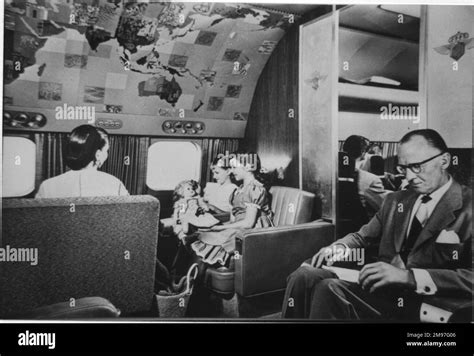
The success of the Constellation pushed Douglas to develop improved competitors, including the pressurized DC-6 and later the DC-7. This rivalry drove rapid advances in commercial aviation throughout the 1950s.
Why the Triple Tail Disappeared From Commercial Aviation
The triple-tail design became closely associated with the Constellation, but it did not become a standard feature for future airliners. When the jet age arrived, manufacturers moved toward simpler single-tail configurations.
Aircraft such as the Boeing 707 and Douglas DC-8 introduced new aerodynamic requirements. Jet engines, different fuselage designs, and expanding airport infrastructure eliminated many of the constraints that created the Constellation’s unique tail.
The original problem also disappeared. Modern airports built larger maintenance facilities capable of handling much taller aircraft. By the time wide-body jets such as the Boeing 747 entered service, hangar height was no longer a major design limitation.
The Constellation’s triple tail was therefore a solution for a specific moment in aviation history. It represented an era when aircraft designers had to balance ambitious performance goals with existing airport infrastructure.
The Lasting Legacy of the Lockheed Constellation
Lockheed produced 856 Constellations across multiple variants between 1943 and 1958. Although the aircraft was eventually replaced by jetliners, its influence on commercial aviation remains significant.
The Constellation helped establish the importance of pressurized passenger cabins, advanced flight controls, improved deicing technology, and long-range commercial operations. It transformed airline travel from a noisy, weather-dependent experience into a faster and more comfortable form of transportation.
Today, only a small number of Constellations survive, with even fewer remaining airworthy. These aircraft continue to attract aviation enthusiasts because they represent a turning point between the early propeller era and the modern jet age.
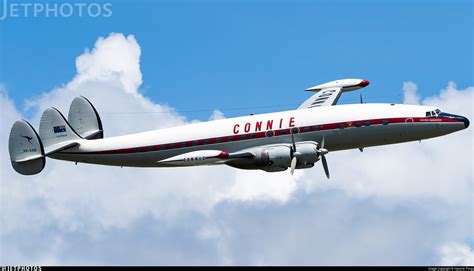
The famous triple tail was never intended to become an aviation icon. It was created because an airline needed a large aircraft that could fit through an existing hangar door. Yet that practical engineering compromise became one of the most memorable designs ever produced.
The Lockheed Constellation proves that some of aviation’s greatest visual signatures are not born from styling decisions. They are born from engineers solving difficult problems with creative solutions.