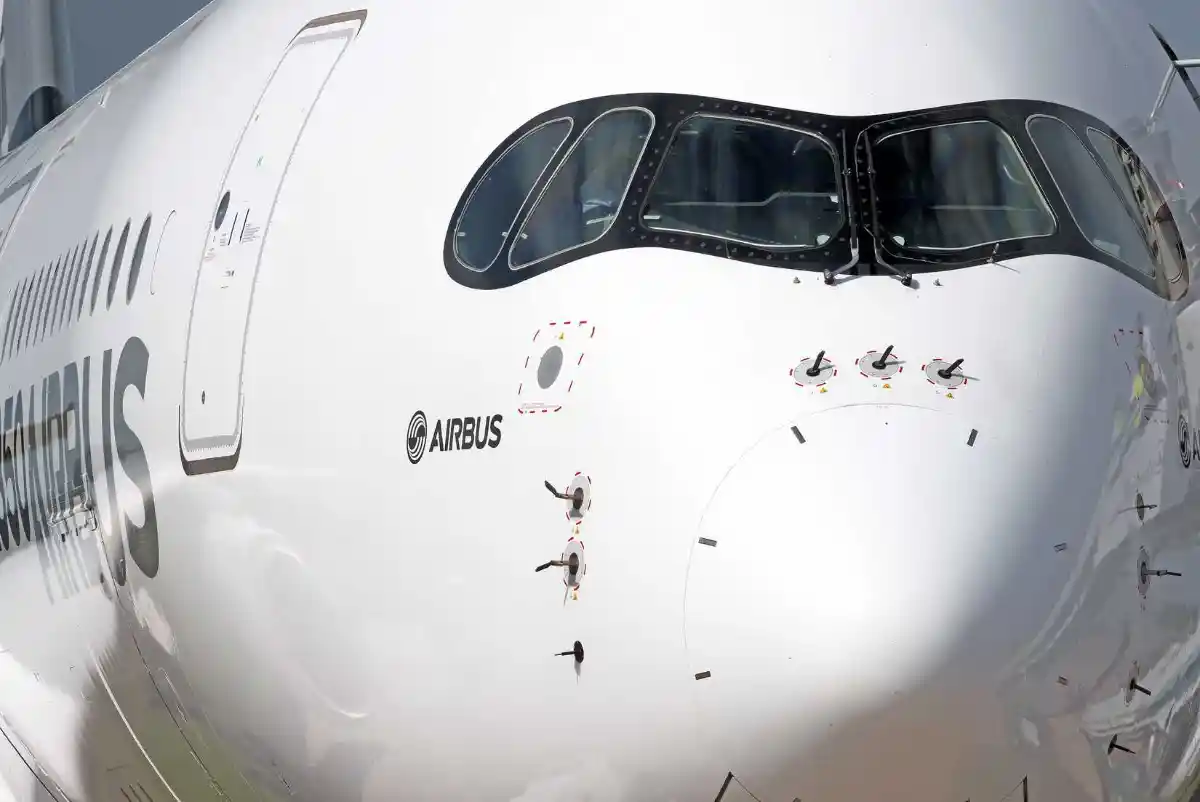
Modern commercial aviation has embraced composite materials as the foundation of next-generation aircraft, allowing manufacturers to build lighter, stronger, and significantly more fuel-efficient airframes. The Airbus A350 represents one of the industry’s greatest achievements in composite aircraft design, with more than half of its structure manufactured from carbon fiber-reinforced polymer (CFRP). This advanced material enables airlines to reduce fuel consumption, increase range, and lower maintenance costs compared with previous generations of aluminum widebody aircraft.
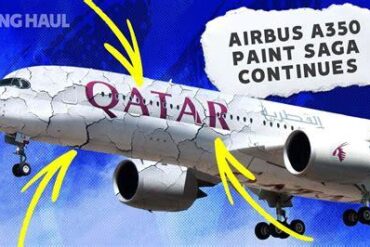
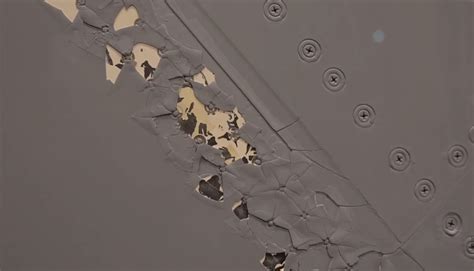
Yet even revolutionary aircraft occasionally reveal unexpected engineering challenges once they enter real-world service. The A350’s widely publicized surface cracking issue became one of the aviation industry’s most debated technical controversies. Images showing peeling paint, fine cracks, and exposed copper layers raised concerns among passengers, airlines, regulators, and aviation experts worldwide.
Despite the alarming appearance of the affected aircraft, Airbus, together with global regulators, concluded that the issue did not compromise the aircraft’s structural integrity. Instead of resorting to the enormously disruptive step of grounding every A350 in service, engineers identified the precise cause, redesigned a critical component, and introduced targeted maintenance procedures that permanently addressed the problem while allowing airlines to continue operating normally.
The successful resolution became an important example of how modern aerospace engineering relies on scientific analysis rather than assumptions when solving highly complex material challenges.
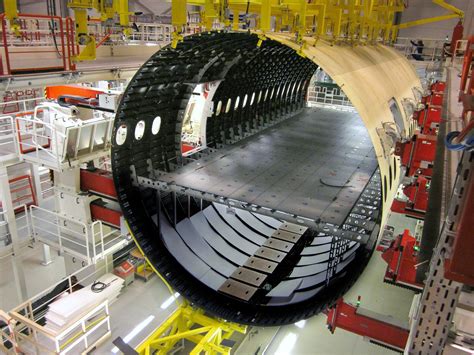
Understanding Why The Airbus A350 Uses Composite Materials
Unlike older commercial aircraft that rely primarily on aluminum alloys, the Airbus A350 was designed around an advanced composite structure. Approximately 53% of the aircraft’s airframe consists of carbon fiber-reinforced polymer, while titanium and aluminum make up most of the remaining structure.
Composite construction offers several major advantages.
- Lower structural weight, improving fuel efficiency.
- Higher corrosion resistance than aluminum.
- Greater fatigue resistance during decades of pressurization cycles.
- Improved aerodynamic performance through smoother structural designs.
- Reduced operating costs for airlines flying ultra-long-haul routes.
However, composite materials also behave very differently from metals when exposed to changing temperatures. Their unique physical characteristics require entirely different approaches to manufacturing, protective coatings, lightning protection, and long-term maintenance.
The A350 surface cracking controversy ultimately highlighted one of these differences.
The Real Cause Of The A350 Surface Cracking Problem
Many early reports suggested that the visible cracking indicated structural deterioration of the aircraft. Extensive engineering investigations later showed that this assumption was incorrect.
The underlying composite fuselage remained completely intact.
Instead, the problem occurred within the aircraft’s outer protective layers, specifically at the interface between several different materials that naturally expand and contract at different rates.
Every long-haul flight exposes an aircraft to dramatic temperature changes.
A typical international departure may begin on a runway exceeding 43°C (110°F) before climbing to cruising altitudes where outside air temperatures approach −54°C (−65°F). These rapid thermal transitions occur repeatedly throughout the aircraft’s service life.
Carbon fiber composites exhibit an exceptionally low coefficient of thermal expansion, meaning the fuselage changes very little as temperatures fluctuate.
The aircraft’s paint system and the embedded expanded copper foil (ECF) used for lightning strike protection, however, respond differently. These materials contract and expand much more than the underlying composite shell.
This mismatch created microscopic mechanical stresses between the various layers.
Over thousands of flight cycles, these stresses eventually produced:
- Fine paint cracks
- Localized blistering
- Paint peeling
- Small areas of flaking
- Visible cosmetic defects near fuselage joints
Although these defects appeared dramatic, the structural composite beneath them remained unaffected.
Why The Cracks Looked More Serious Than They Actually Were
The appearance of exposed metallic mesh naturally generated concern.
Passengers saw photographs of cracked paint revealing copper-colored material underneath, leading many to believe the aircraft itself was breaking apart.
Engineering inspections painted a completely different picture.
Non-destructive testing methods—including ultrasonic inspections, detailed material analysis, and structural examinations—confirmed that the damage was limited to the aircraft’s external finishing layers.
The carbon fiber structure showed:
- No cracking
- No moisture penetration
- No structural weakening
- No fatigue damage
- No reduction in strength
The aircraft continued meeting every structural certification requirement established during its original design and testing programs.
This distinction between cosmetic degradation and structural damage became central to the entire controversy.
The Critical Role Of Lightning Protection
One reason the issue attracted worldwide attention involved the A350’s lightning protection system.
Commercial aircraft are struck by lightning surprisingly often—typically about once each year during normal operations.
Composite materials do not conduct electricity as effectively as aluminum.
For this reason, Airbus embedded a thin conductive copper layer beneath the aircraft’s paint. This layer safely distributes lightning current across the fuselage and wings before directing it harmlessly away through the aircraft’s electrical protection systems.
The original design relied on expanded copper foil, an open diamond-shaped mesh manufactured by stretching solid copper into a lightweight lattice.
While electrically effective, engineers eventually discovered that the expanded mesh possessed limited flexibility when bonded directly to the composite structure.
As temperatures changed, the relatively rigid copper mesh concentrated mechanical stress into the surrounding paint layers.
The lightning protection itself continued functioning correctly.
Only the paint system suffered.
Why Regulators Refused To Ground The Fleet
One of the defining moments of the controversy came when aviation authorities evaluated whether the aircraft should remain in service.
Grounding an entire aircraft fleet represents one of the most serious regulatory actions possible.
Authorities such as the European Union Aviation Safety Agency (EASA) and the Federal Aviation Administration (FAA) require compelling scientific evidence that an aircraft presents an immediate safety hazard before issuing such an order.
Their investigations found no evidence that:
- Structural integrity had been compromised.
- Composite strength had deteriorated.
- Lightning protection had failed.
- Flight safety had been reduced.
Instead, regulators required inspections of affected aircraft while allowing airlines to continue flying.
This evidence-based approach avoided unnecessary disruption across hundreds of international routes while ensuring ongoing monitoring of the issue.
The High-Profile Dispute With Qatar Airways
Although regulators supported continued operations, the issue became increasingly visible after Qatar Airways grounded more than twenty A350 aircraft voluntarily.
The airline argued that the visible degradation raised concerns regarding long-term durability and lightning strike protection, particularly around critical fuel tank areas.
The disagreement escalated into a major legal dispute between Airbus and Qatar Airways.
Airbus maintained that repeated engineering testing demonstrated the aircraft remained fully airworthy.
Regulators independently reached the same conclusion.
Extensive electrical testing confirmed that even aircraft displaying visible paint degradation maintained uninterrupted electrical conductivity throughout the lightning protection system.
No dangerous electrical hot spots developed.
No increased ignition risks existed near fuel tanks.
No evidence supported the need for an emergency grounding.
Eventually, production improvements and maintenance solutions largely resolved the dispute.
Airbus Identified The Root Cause Instead Of Treating The Symptoms
Rather than repeatedly repainting aircraft, Airbus engineers focused on eliminating the underlying source of mechanical stress.
Detailed material analysis revealed that the expanded copper foil represented the weakest link within the multilayer structure.
Its geometry limited its ability to accommodate tiny movements between the composite fuselage and the paint system.
Engineers therefore redesigned the conductive layer itself.
The replacement became known as Perforated Copper Foil (PCF).
Instead of stretching copper into a mesh, the new design uses precisely engineered microscopic perforations distributed uniformly throughout the foil.
This seemingly small modification produced significant improvements.
The perforated design allows the copper layer to:
- Flex more naturally.
- Move with the composite structure.
- Reduce localized stress concentrations.
- Maintain excellent electrical conductivity.
- Preserve lightning strike protection.
The change effectively eliminated the mechanical mismatch responsible for the original paint failures.
Introducing The Improved Design Into Production
Airbus incorporated the redesigned perforated copper foil into A350 production beginning in late 2022.
Rather than halting assembly lines for a major redesign, engineers integrated the updated material seamlessly into ongoing manufacturing.
New aircraft leaving Airbus factories already included:
- Improved lightning protection layers.
- Better compatibility between structural materials.
- Enhanced paint durability.
- Updated manufacturing processes.
- Improved long-term resistance to thermal cycling.
Because the modification involved only one component within the aircraft’s multilayer exterior system, production continued without significant interruption.
This minimized delays for airline customers awaiting new aircraft deliveries.
Repairing Existing Aircraft During Routine Maintenance
For airlines already operating hundreds of A350s worldwide, Airbus developed an equally practical repair strategy.
Completely stripping and repainting an A350 would require weeks of downtime while costing millions of dollars.
Instead, engineers designed a localized repair process targeting only affected areas.
Maintenance technicians follow a carefully controlled procedure.
First, damaged paint surrounding the affected panel joints is removed.
The exposed copper layer is then inspected, cleaned, and prepared before technicians apply specialized composite-compatible resin materials that restore adhesion between the various layers.
Finally, fresh primer and paint are applied.
These repairs typically require only several days rather than weeks.
Because they can be scheduled during routine maintenance visits, airlines avoid costly disruptions to passenger operations.
Why Airlines Continued Flying The A350
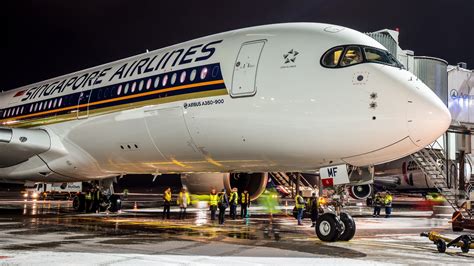
Many major operators—including Delta Air Lines, Singapore Airlines, and Lufthansa—continued operating their A350 fleets throughout the controversy.
Their maintenance programs incorporated regular inspections and localized repairs whenever necessary.
This strategy offered several advantages.
Aircraft remained available for scheduled flights.
Passengers experienced virtually no network disruption.
Maintenance costs remained manageable.
Fleet utilization stayed high.
Meanwhile, Airbus continued refining manufacturing processes for newly produced aircraft.
The combination of targeted maintenance and engineering improvements proved significantly more effective than grounding the worldwide fleet.
Scientific Testing Confirmed Lightning Protection Remained Effective
One of the most important aspects of the investigation involved validating the aircraft’s lightning protection capability.
Researchers subjected affected aircraft to detailed electrical analysis.
Testing demonstrated that even where cosmetic damage appeared visible, the conductive copper layer maintained continuous electrical pathways capable of safely dissipating lightning energy.
The aircraft’s protection system includes multiple redundant features.
Electrical current travels safely along designated conductive paths before exiting through static discharge devices positioned around the aircraft.
Even localized paint degradation failed to interrupt these pathways.
This scientific validation became one of the strongest reasons regulators rejected calls for mandatory groundings.
Lessons Learned From The A350 Surface Cracking Issue
The A350 experience illustrates how advanced composite aircraft require different engineering solutions than traditional aluminum designs.
Rather than exposing a weakness in carbon fiber construction itself, the issue highlighted the complexity of integrating multiple advanced materials into one highly optimized structure.
It also demonstrated the value of data-driven engineering.
Instead of responding to visible cosmetic damage with assumptions, Airbus and aviation regulators relied on:
- Detailed laboratory testing.
- Structural inspections.
- Material science analysis.
- Thermal expansion modeling.
- Electrical conductivity verification.
- Long-term operational monitoring.
These investigations isolated the precise cause of the problem and enabled engineers to implement a permanent solution without disrupting global airline operations.
The Lasting Impact On Future Composite Aircraft
The Airbus A350’s surface cracking saga ultimately strengthened, rather than weakened, confidence in composite commercial aircraft.
The transition from expanded copper foil to perforated copper foil represents a relatively modest design modification, yet it solved a highly complex material interaction that only became fully apparent after years of worldwide airline service.
The experience has also provided valuable lessons for future aircraft programs, where increasingly sophisticated combinations of composites, conductive materials, and protective coatings will become even more common. Engineers now possess a deeper understanding of how microscopic differences in thermal expansion can influence long-term durability across millions of flight hours.
Perhaps the most significant achievement was the manner in which the issue was resolved. Airbus identified the root cause, introduced an improved production standard, created efficient repair procedures for aircraft already in service, and maintained close cooperation with international regulators throughout the process. The result was a permanent engineering solution that preserved fleet availability while maintaining the industry’s uncompromising safety standards.
Today, the A350 continues operating some of the world’s longest and most demanding international routes, accumulating millions of additional flight hours with confidence. The episode stands as a compelling example of modern aerospace engineering in action—where careful analysis, material science, and incremental innovation proved far more effective than the costly alternative of grounding an entire global fleet.