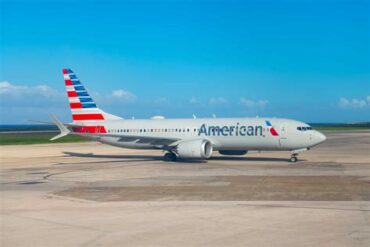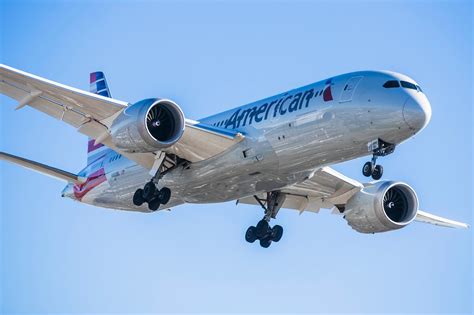
American Airlines has made significant changes to its transatlantic network, removing service to 15 airports across Europe and the Middle East over the past two decades. While the carrier remains one of the world’s largest airlines by fleet size, passengers may be surprised to learn that its presence across the North Atlantic is smaller than competitors such as United Airlines and Delta Air Lines.
According to Cirium Diio schedule data, American Airlines is expected to operate an average of 48 daily flights between the United States and the North Atlantic region from August 2026 through April 2027. This represents a 4% increase compared with the previous year, but it still places American behind United Airlines, which operates around 82 daily departures, and Delta Air Lines, which operates approximately 66.
The airline’s reduced footprint reflects changing market conditions, fleet decisions, alliance strategies, and shifting passenger demand. Many discontinued routes were operated with aircraft types that have since disappeared from American’s fleet, including the Boeing 757-200, Boeing 767-300ER, and Airbus A330 family inherited from US Airways.
American Airlines Has Eliminated 15 International Airports From Its Network
An analysis of American Airlines’ international operations between January 2006 and July 2026 shows that the airline has discontinued service to 15 airports across the Atlantic region. Fourteen of these destinations were located in Europe, while one was in the Middle East.
The changes highlight how transatlantic aviation has evolved. Routes that once depended on smaller widebody aircraft or older narrowbody jets have become increasingly difficult to sustain as airlines prioritize higher-demand markets and use newer aircraft such as the Airbus A321XLR and Boeing 787 Dreamliner.
American Airlines has never operated scheduled flights to Africa, unlike Delta Air Lines and United Airlines. The carrier previously planned to launch service from its Philadelphia hub to Casablanca, Morocco, in 2020, but the COVID-19 pandemic forced the cancellation of those plans. Instead, American continues to rely heavily on its oneworld alliance partners, including British Airways, Iberia, Qatar Airways, and Royal Air Maroc, to connect passengers to African destinations.
The airline has also maintained limited service to South Asia. American has historically operated only one route to the region, serving Delhi, India, which remains part of its international network.
European Destinations No Longer Served by American Airlines
Several European airports disappeared from American Airlines’ schedule as the airline adjusted its strategy following the global aviation downturn. Some routes were short-lived experiments, while others ended after years of operation.
One notable example was London Gatwick Airport. American operated flights from Dallas/Fort Worth and Raleigh/Durham to Gatwick until 2008. After the removal of the Bermuda II aviation agreement restrictions and the introduction of the EU-US Open Skies agreement, the airline shifted those services to London Heathrow, where demand and corporate traffic were stronger.
American also previously served London Stansted Airport from New York JFK using Boeing 767 aircraft. However, the route was discontinued as Heathrow became the preferred airport for premium international travelers.
The airline briefly operated flights to Berlin Tegel Airport, serving Germany’s capital before the airport closed permanently. American flew from Philadelphia to Tegel during the summer season of 2019, but the route recorded a relatively weak load factor of just 59.9%. The arrival of the COVID-19 pandemic accelerated the decision not to restore the service.
Other European airports removed from American Airlines’ network include:
- Moscow Domodedovo, previously served from Chicago O’Hare.
- Helsinki, formerly operated from Chicago before being covered mainly by partner airline Finnair.
- Brussels, which once connected New York, Chicago, and Philadelphia with American-operated flights.
- Düsseldorf, which eventually lost all scheduled US airline service.
- Birmingham, United Kingdom, previously linked with New York JFK.
- Glasgow, replaced by services to Edinburgh.
- Bologna, which no longer has direct flights to the United States.
- Dubrovnik, where United Airlines remains the only US carrier serving the Croatian destination.
- Keflavik, Iceland, a short-lived Dallas/Fort Worth route.
- Shannon, Ireland, previously served from Boston, Chicago, and Philadelphia.
- Manchester, United Kingdom, once one of American’s larger UK markets.
Why American Airlines Reduced These Transatlantic Routes
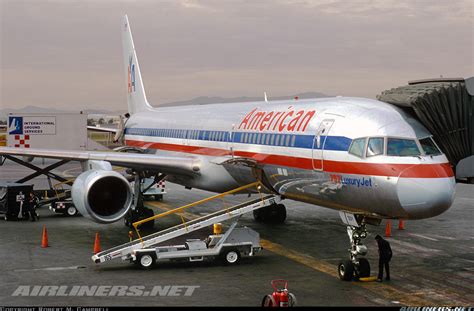
The removal of these destinations was influenced by several major changes in the airline industry. One of the biggest factors was fleet modernization. Many discontinued routes relied on aircraft that American no longer operates, especially the Boeing 757 and Boeing 767 fleets.
The Boeing 757 was particularly important for transatlantic flying because its range allowed airlines to serve smaller European cities with lower passenger demand. However, as these aircraft aged and were retired, airlines increasingly replaced them with larger or more efficient aircraft designed for routes with stronger revenue potential.
The arrival of aircraft such as the Airbus A321XLR has changed this strategy again. The new generation of long-range narrowbody aircraft allows airlines to operate thinner international routes more efficiently. American Airlines has already used the A321XLR to support selected European markets, including routes that previously required larger aircraft.
The merger with US Airways also played an important role. Several discontinued routes were inherited through US Airways’ Philadelphia hub, including services operated with Airbus A330 aircraft. As American reassessed its combined network, some routes no longer matched its long-term international priorities.
American Airlines’ Middle East Route Changes
American Airlines also ended service to its only Middle Eastern destination: Doha Hamad International Airport.
The Philadelphia-Doha route began in October 2023 and was operated with the Boeing 787-9 Dreamliner. The service was closely connected to American’s partnership with Qatar Airways, one of the airline’s key oneworld alliance partners.
The route replaced Qatar Airways’ own Philadelphia service, which operated between 2014 and 2023. American shifted its Doha operations from New York JFK to Philadelphia while Qatar Airways expanded its presence at JFK.
However, American suspended Philadelphia-Doha service in March 2026 due to regional security concerns connected to the Iran conflict. With Doha no longer served by American aircraft, the airline currently has no active Middle East destinations.
The airline is expected to resume service to Tel Aviv from New York JFK, depending on regional conditions. Future Middle East operations will likely continue to rely heavily on alliance partnerships rather than extensive American-operated flying.
The Future of American Airlines’ International Strategy
American Airlines’ transatlantic changes demonstrate a broader industry trend: airlines are becoming more selective about international expansion. Instead of operating every possible destination, carriers are focusing on routes with strong business demand, premium travelers, and reliable year-round performance.
The airline’s current strategy centers on major European gateways, strategic partnerships, and efficient aircraft utilization. While smaller destinations have disappeared from the map, American continues to strengthen its largest international markets through partnerships with British Airways, Iberia, Finnair, and Qatar Airways.
The removal of 15 destinations does not necessarily represent a retreat from international aviation. Instead, it reflects a transformation in how modern airlines build global networks. American Airlines is prioritizing flexibility, profitability, and alliance connectivity over maintaining every historic route.
As new aircraft like the A321XLR and advanced widebody jets reshape long-haul flying, the airline’s international network may continue evolving, with some smaller destinations replaced by more strategically valuable routes in the years ahead.