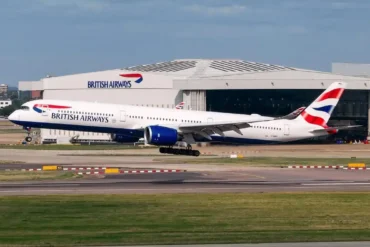
British Airways has long been one of the world’s most recognizable long-haul carriers, connecting London with major cities across six continents. However, airline networks are constantly changing, and even a legacy carrier with a powerful global brand must adjust its operations to match demand, profitability, competition, and shifting travel patterns.
Over the past two decades, British Airways has removed 36 long-haul destinations from its London network. These routes covered markets across North America, the Caribbean, South America, Asia, the Middle East, and Africa, representing a significant transformation of the airline’s worldwide footprint.
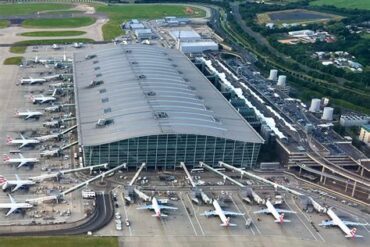
The analysis focuses on routes of at least 2,650 nautical miles, excluding shorter regional services. It also considers only destinations served from London airports, primarily London Heathrow Airport (LHR) and London Gatwick Airport (LGW), where British Airways has historically operated its largest international network.
Although these destinations have disappeared from British Airways’ own aircraft schedule, many remain accessible through the airline’s extensive oneworld alliance partnerships, codeshare agreements, and connections through other International Airlines Group carriers. The end of a direct British Airways flight does not always mean the end of commercial links between London and those cities.
British Airways Routes Removed Across the Americas and Caribbean
The Americas have experienced some of the most noticeable changes in British Airways’ long-haul network. Several destinations that once appeared on the airline’s London departure boards have been discontinued as market conditions evolved.
One of the most notable examples is Detroit Metropolitan Wayne County Airport, which British Airways served from London Heathrow until 2008. The route was operated with the now-retired Boeing 767-300ER, but increasing competition and changing passenger demand eventually led to its cancellation.
Other discontinued destinations included San Juan in Puerto Rico, Oakland in California, Charleston in South Carolina, and Fort Lauderdale in Florida. Several of these routes were influenced by competitive developments rather than a simple lack of demand.
British Airways’ Gatwick operations to Fort Lauderdale and Oakland were launched partly as a response to Norwegian’s expansion into low-cost long-haul flying. When Norwegian later adjusted its strategy, moving toward stronger markets such as Miami and eventually ending long-haul operations entirely, British Airways also reassessed its own network.
The airline eventually concentrated capacity on stronger routes, including London Heathrow to Miami and London Heathrow to San Francisco, where premium demand and corporate traffic provided better returns.
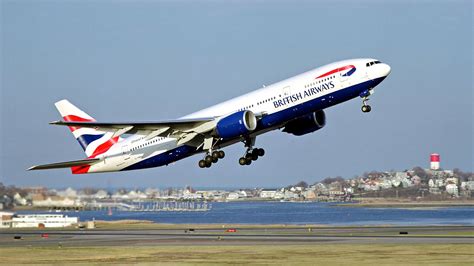
Canada also saw changes, with British Airways ending its London Heathrow service to Calgary in 2020. While Calgary remains an important business and energy hub, airlines have repeatedly adjusted capacity between Europe and Canada based on seasonal demand, aircraft availability, and economic conditions.
Major Asian and Middle Eastern Destinations Removed From The Network
Asia has also seen substantial restructuring within British Airways’ long-haul operations. Fourteen destinations across Asia and the Middle East have disappeared from the airline’s London network since 2006 under the long-haul distance criteria.
Some discontinued routes reflected changing commercial priorities. British Airways previously operated services to cities such as Kolkata, Dhaka, Osaka Kansai, Seoul Incheon, Chengdu, and Tokyo Narita, but several were later replaced, transferred, or removed entirely.
The airline’s Beijing operation provides a clear example of how aviation strategies evolve. British Airways shifted its Beijing services from Beijing Capital International Airport to Beijing Daxing International Airport before eventually ending the route. The move reflected wider challenges in the China market, including demand fluctuations and post-pandemic changes in international aviation.
Japan also saw adjustments. British Airways ended flights to Osaka Kansai and later changed its Tokyo strategy by moving operations from Tokyo Narita to Tokyo Haneda, a more convenient airport for business travelers and premium passengers.
South Asia has experienced particularly interesting changes. British Airways ended flights to Kolkata and Dhaka in 2009, despite continued travel demand between London and the region. Kolkata’s market was smaller and generally produced lower yields compared with other South Asian destinations.
Dhaka, however, remains a significant market from the United Kingdom, supported by strong diaspora traffic. The route has attracted attention because nonstop services could potentially provide advantages in convenience and product quality compared with existing alternatives.
Africa Routes That British Airways No Longer Serves
Africa represents another major area where British Airways has reduced its direct presence. Historically, the airline operated an extensive African network, but several destinations have disappeared over time.
The discontinued African routes include Addis Ababa, Dakar, Dar es Salaam, Durban, Entebbe, Freetown, Harare, Khartoum, Luanda, Lusaka, Monrovia, and Seychelles.
Some of these routes were inherited from earlier British Airways structures or operated through franchise arrangements, including services by British Mediterranean Airways (BMED). Several destinations involved one-stop services through cities such as Beirut, Amman, Alexandria, or other regional hubs.
The reduction of these routes reflects broader changes in international aviation. African markets have become increasingly competitive, with carriers such as Ethiopian Airlines, Qatar Airways, Emirates, Turkish Airlines, and regional airlines expanding their networks.
For example, Ethiopian Airlines has strengthened its London presence, while other carriers continue to connect African cities through major Middle Eastern and European hubs. As a result, British Airways has focused its resources on markets where it can achieve stronger profitability and maintain premium demand.
Why British Airways Continues To Reshape Its Global Network
The removal of 36 long-haul destinations does not necessarily represent a decline in British Airways’ international ambitions. Instead, it highlights the difficult decisions required to operate a modern global airline.
Long-haul flying requires significant investment in aircraft, crews, airport facilities, and fuel. A route may carry thousands of passengers every year but still struggle if average fares, business demand, or operating costs do not support profitability.
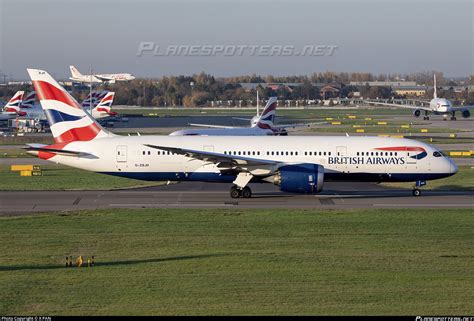
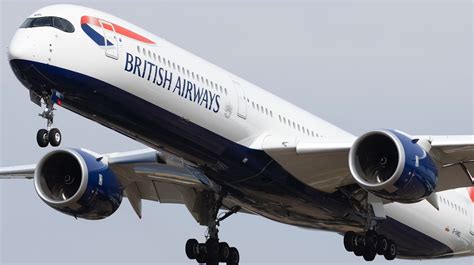
British Airways has increasingly focused on high-value markets where its premium cabins, frequent flyer base, and London Heathrow position provide competitive advantages. The airline continues to operate one of the world’s largest long-haul networks, supported by aircraft such as the Airbus A350, Boeing 787 Dreamliner, and Boeing 777.
The carrier has also relied more heavily on partnerships to maintain global connectivity without operating every route itself. Through oneworld, passengers can still access many destinations previously served directly by British Airways.
Future changes are inevitable. Airline networks are living systems shaped by economics, geopolitics, aircraft availability, and passenger behavior. Some discontinued routes may eventually return if market conditions improve, while others may remain part of British Airways’ history.
The 36 long-haul routes removed from London demonstrate how even one of the world’s most established airlines must continuously adapt. British Airways’ network today is not simply defined by where it flies, but also by the strategic decisions behind the destinations it chooses to serve.