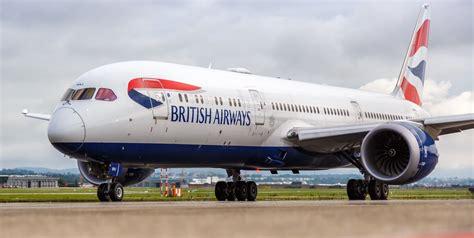
The modern long-haul network of British Airways is a quiet demonstration of how far commercial aviation has stretched the map. In 2026, the airline stands as the world’s fifth-largest long-haul operator by flight count, dispatching an average of 95 daily long-distance departures from London during the core season. These services are not merely about distance; they are about endurance, aircraft efficiency, geopolitical realities, and the economics of connecting continents nonstop from one of the world’s most slot-constrained hubs.
Ultra-long-haul flying places airlines in a narrow corridor between engineering precision and commercial risk. Block times, measured chocks-off to chocks-on, reveal the true operational burden, accounting for taxi, airspace constraints, and expected delays. For British Airways, the longest routes stretch close to 16 hours, testing crews, aircraft, and passengers alike while reinforcing London’s role as a global connector.
The following analysis focuses strictly on nonstop services scheduled between February and October 2026. These routes highlight how fleet strategy, airspace closures, and passenger demand shape the longest missions in the BA network, with Heathrow and Gatwick acting as gateways to the farthest edges of the airline’s map.
The longest routes are dominated by Asia-Pacific and South America, regions where geography leaves little room for shortcuts. Detours around Russian airspace continue to lengthen eastbound returns from Northeast Asia, adding hours, fuel burn, and complexity. What once took just over 13 hours can now approach 15, fundamentally altering aircraft utilization and scheduling discipline.
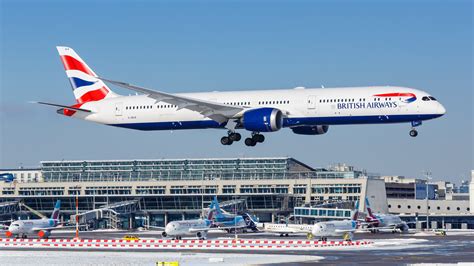
Santiago Remains the Crown Jewel of Distance
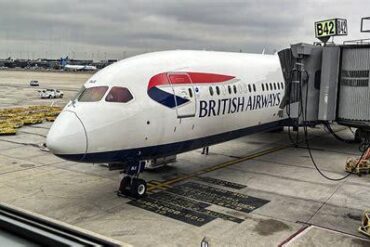
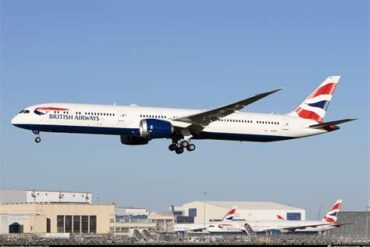
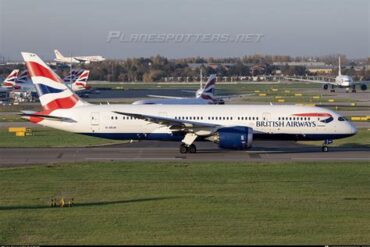
At the top of the list sits London Heathrow to Santiago de Chile, with a maximum block time of 15 hours and 35 minutes. Operated three to four times weekly by the Boeing 787-9, this route is not only British Airways’ longest but also historically significant. When BA launched nonstop service in 2017, it marked the first direct air link between the UK and Chile, a milestone enabled by next-generation aircraft efficiency rather than sheer aircraft size.
The route’s performance has validated the gamble. In 2024, nearly 80,000 round-trip passengers traveled between Heathrow and Santiago, producing a 90% seat load factor. Roughly half were local passengers, while the remainder connected onward at Heathrow, underscoring the airport’s hub power. Intriguingly, Shanghai emerged as the largest connecting market, linking BA’s longest and second-longest routes in a single itinerary.
Asia’s Lengthened Returns to Heathrow
Several of British Airways’ longest flights now exist not because of pure geography, but because of geopolitics. Flights returning from Shanghai Pudong, Tokyo Haneda, and Hong Kong are timed close to or at 15 hours, reflecting extended routings to avoid Russian airspace. Shanghai’s return to Heathrow, once comfortably under 13 hours, is now scheduled at up to 15 hours, typically using the 777-200ER or 787-9.
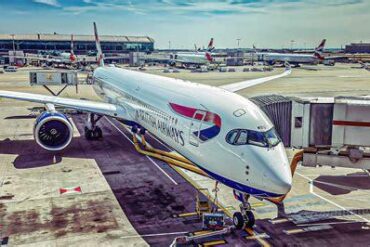
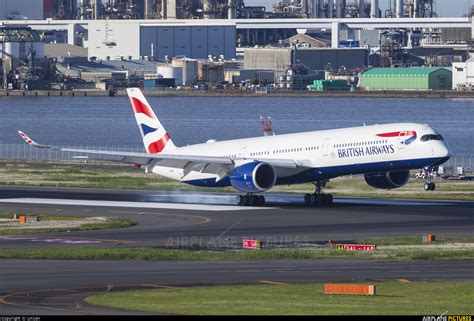
Tokyo Haneda follows closely, with up to two daily rotations operated by the Airbus A350-1000 and 787-9. Hong Kong, now firmly an A350-1000 route after the retirement of BA’s A380 presence there, clocks in at 14 hours and 50 minutes on the westbound return. These flights highlight how modern widebodies balance range, payload, and passenger comfort under less-than-ideal routing conditions.
Southeast Asia and the Long Pull of the Indian Ocean
Further south, Singapore and Kuala Lumpur remain among BA’s longest sectors back to London. Singapore to Heathrow reaches 14 hours and 40 minutes, with two daily services using the 777-300ER and 787-9, one continuing onward to Sydney. Kuala Lumpur follows at just over 14 hours, operated daily by the 787-9, a reminder that midsize widebodies have quietly replaced the need for very large aircraft on many long-haul routes.
Beyond Asia, the Indian Ocean adds its own endurance tests. Mauritius to London Gatwick, at 12 hours and 35 minutes, and Cape Town to Heathrow, exceeding 12 hours, demonstrate BA’s continued reliance on Gatwick for leisure-heavy long-haul markets. Gatwick-configured 777-200ERs remain central here, optimized for density rather than ultra-premium yield.
Mexico City and the Economics of Range
Rounding out the top ten is Heathrow to Mexico City, a daily 787-9 service timed at 12 hours. While shorter than the Asia-Pacific giants, the route faces its own challenges, including high-altitude performance constraints at Mexico City International Airport. The choice of the 787 reflects a careful balance between range capability, fuel efficiency, and operational margins at one of the world’s most demanding airports.
Why These Flights Matter in 2026
British Airways’ longest nonstop flights are not vanity routes. They are strategic instruments that protect market share, feed the Heathrow hub, and leverage modern aircraft to bypass intermediate stops. In a world of constrained airspace and rising operating costs, the ability to fly 15 hours nonstop with consistent loads and competitive economics is a quiet advantage.
These routes also illustrate a broader truth about long-haul aviation in 2026: distance alone no longer defines difficulty. Political boundaries, fuel efficiency, and network connectivity now shape which flights earn the title of “longest.” British Airways, by carefully deploying the 787 and A350 families, has turned endurance into routine, stretching London’s reach to its farthest sustainable limits without theatrics, only precision.