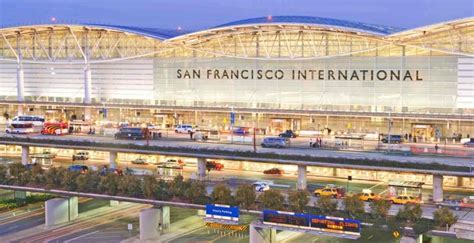
San Francisco International Airport has quietly become one of the world’s most consequential launchpads for ultra-long-haul aviation. From the edge of the Pacific Rim, SFO stretches nonstop routes deep into Asia, Australia, and the Middle East, redefining what modern commercial aircraft can achieve. In 2026, these services are no longer novelties but pillars of global connectivity, binding Silicon Valley, financial capitals, and emerging megacities with flights that routinely exceed fifteen hours.
What makes SFO exceptional is not just distance, but density. Few airports anywhere can claim multiple daily services on flights approaching eighteen hours, operated by a diverse mix of global carriers using the most advanced widebody aircraft in service. These routes demand extraordinary operational discipline, from crew management to fuel optimization, and they reward passengers with the ultimate luxury in aviation: time saved.
The following rankings examine the ten longest nonstop flights departing San Francisco in 2026, measured by scheduled block time. Each route reflects a unique combination of geography, aircraft performance, and strategic airline ambition, offering a clear picture of how far nonstop travel has come.
SFO–Singapore: The Definitive Ultra-Long-Haul Benchmark
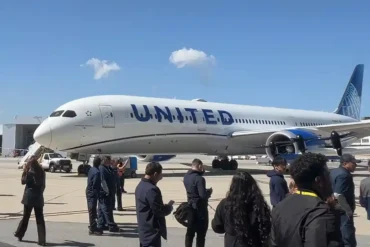
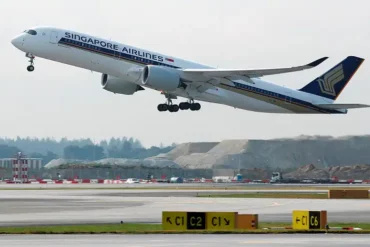
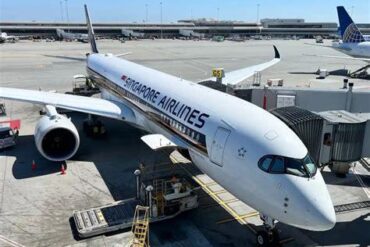
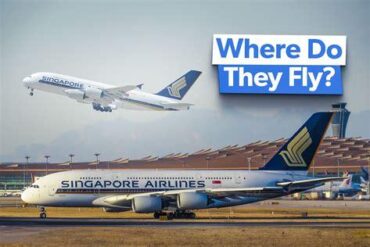
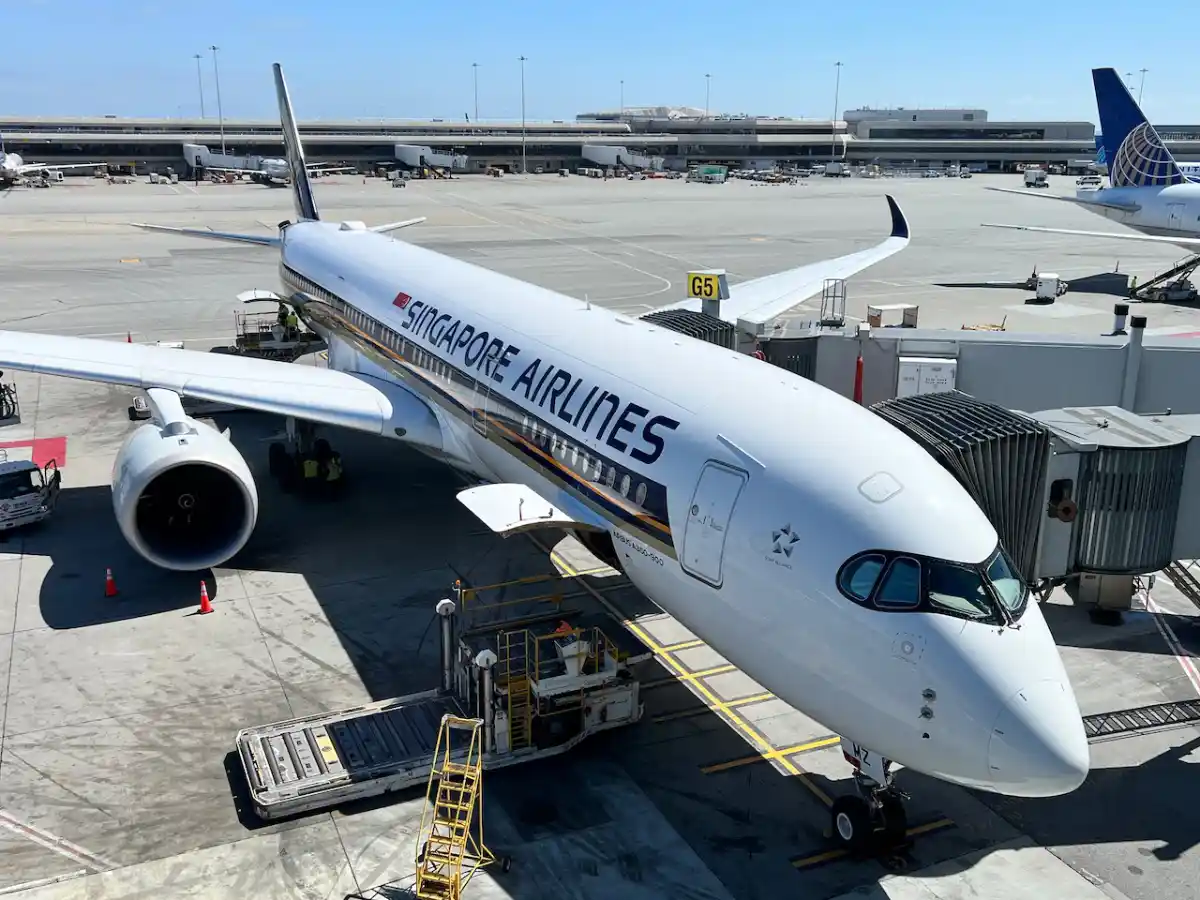
At the top of the rankings sits the nonstop flight from San Francisco to Singapore Changi Airport, a route that has become synonymous with endurance aviation. Covering roughly 7,340 nautical miles, this service carries a scheduled block time of 17 hours and 40 minutes, placing it among the longest commercial flights in the world. Operated jointly by Singapore Airlines and United Airlines, the route benefits from cutting-edge aircraft like the Airbus A350-900 and Boeing 787-9, designed specifically to make such missions economically viable.
What elevates this pairing is frequency. With four daily departures split evenly between the two Star Alliance partners, SFO–SIN is not an experimental outlier but a mature, high-demand corridor connecting two global technology and finance hubs. Cabin designs emphasize passenger wellness, with advanced humidity control and lighting systems mitigating the physiological toll of extreme duration flights.
SFO–Delhi: India’s Longest Nonstop Link to the US West Coast
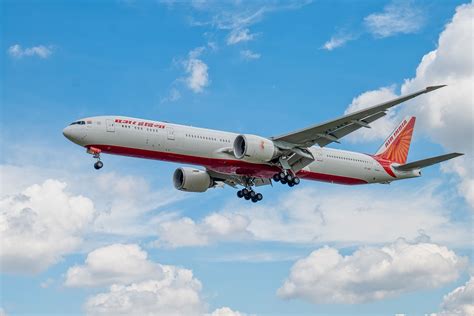
Just behind Singapore lies San Francisco’s nonstop connection to Delhi, clocking in at approximately 17 hours and 15 minutes. Operated by Air India using Boeing 777-300ER aircraft, this route represents a major leap in direct connectivity between Northern California and India’s political and economic heart. Its significance extends beyond raw distance, symbolizing a broader transformation in Air India’s long-haul strategy as the carrier rebuilds its global network.
Demand on the SFO–DEL route is driven by a powerful mix of business travel, diaspora traffic, and government movement. Despite its length, the service has proven resilient, with frequencies ranging from daily to ten times weekly, underscoring sustained demand for a nonstop alternative to traditional one-stop itineraries through Europe or the Middle East.
SFO–Kolkata: Pushing Nonstop Boundaries Further East
Air India appears again with its San Francisco to Kolkata service, scheduled at roughly 16 hours and 50 minutes. This route pushes deep into eastern India, serving a market long underserved by direct transpacific links. Using the same Boeing 777-300ER platform as its Delhi operation, Air India has demonstrated that even secondary Indian gateways can sustain ultra-long-haul demand when paired with the right aircraft and timing.
The Kolkata route carries additional cultural weight, reconnecting the Bay Area with one of India’s most historic cities. Its introduction signals a broader shift toward nonstop connectivity for regions once considered beyond the practical reach of West Coast airports.
SFO–Ho Chi Minh City: Southeast Asia Nonstop Takes Hold
Vietnam Airlines’ nonstop service to Ho Chi Minh City ranks next with a scheduled duration of about 16 hours and 30 minutes. Operated by the Airbus A350-900, this flight underscores SFO’s growing importance in Southeast Asian connectivity. The route caters to a blend of business travelers, returning expatriates, and tourists, all drawn by the convenience of bypassing traditional transit hubs.
Operationally, this service highlights how modern composite aircraft have unlocked city pairs once considered marginal. The A350’s fuel efficiency and range make it ideally suited for the long Pacific crossing and onward journey into mainland Southeast Asia.
SFO–Dubai: A380 Power Across the Pacific and Beyond
Emirates’ daily service from San Francisco to Dubai rounds out the sixteen-hour bracket with a block time of approximately 16 hours. Unlike most other routes on this list, it is operated by the Airbus A380, the world’s largest passenger aircraft. The flight connects Northern California directly to one of the globe’s most influential aviation hubs, offering seamless onward access to the Middle East, Africa, and South Asia.
The presence of the A380 adds a distinctive premium dimension, with expansive cabins and onboard amenities that soften the impact of the journey’s length. It also marks SFO as one of the few US airports capable of consistently supporting A380 operations.
SFO–Adelaide: United’s Bold New Southern Hemisphere Play
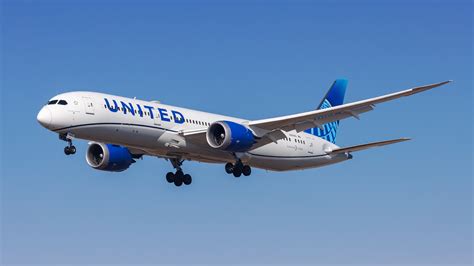
United Airlines’ newest ultra-long-haul route to Adelaide enters the rankings at roughly 15 hours and 55 minutes. Launched in late 2025, this three-times-weekly service uses the Boeing 787-9 to bridge California and South Australia without a stop. Its introduction reflects United’s strategy of opening niche long-haul markets with right-sized aircraft rather than relying solely on mega-hubs.
For passengers, the route eliminates the need to transit through Sydney or Melbourne, offering a direct gateway to a region known for wine, research institutions, and growing tech ties with the US.
SFO–Melbourne: A Daily Transpacific Workhorse
Sharing a similar block time of around 15 hours and 55 minutes, United’s daily flight to Melbourne represents a more established ultra-long-haul market. This route anchors business, education, and tourism flows between California and Australia’s second-largest city. Operated by the Boeing 787-9, it balances range with payload flexibility, ensuring consistent performance year-round.
Melbourne’s prominence in finance and academia fuels steady demand, making this route one of the most stable long-distance links in SFO’s network.
SFO–Doha: Gulf Connectivity at Extreme Range
Qatar Airways’ service to Doha comes in just under sixteen hours, with block times near 15 hours and 50 minutes. Typically operated by the Airbus A350-1000, the flight connects San Francisco to Hamad International Airport, one of the world’s most efficient transfer hubs. From there, passengers can reach hundreds of destinations across Europe, Africa, and Asia with minimal backtracking.
This route exemplifies the strategic value of ultra-long-haul flights as feeders into global networks, not merely point-to-point services.
SFO–Hong Kong: High Frequency, Heavy Demand
Despite a slightly shorter block time of about 15 hours and 40 minutes, San Francisco to Hong Kong remains one of the airport’s most important long-haul corridors. Served by both Cathay Pacific and United Airlines with high weekly frequencies, the route connects two major financial centers with deep historical ties.
Aircraft types vary between Airbus A350s and Boeing 777-300ERs, reflecting sustained demand that supports multiple daily departures and diverse cabin offerings.
SFO–Manila: Nonstop Access to the Philippines
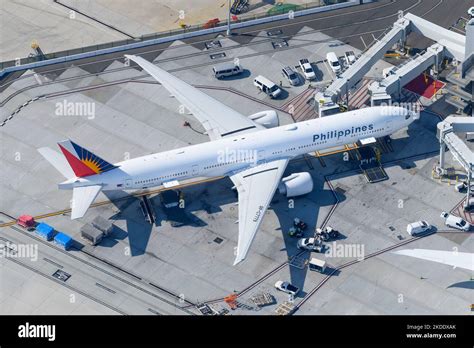
Rounding out the top ten is San Francisco’s nonstop link to Manila, scheduled at roughly 15 hours and 25 minutes. Operated by Philippine Airlines and United Airlines, this route serves one of the largest overseas Filipino communities in the United States. The flight’s endurance is matched by its cultural significance, providing a vital nonstop bridge between families, businesses, and governments.
Together, these ten routes illustrate how SFO has evolved into a global hub for ultra-long-haul travel. As aircraft technology continues to advance and airlines refine their strategies, San Francisco’s position at the forefront of nonstop endurance flying looks set to strengthen even further in the years ahead.