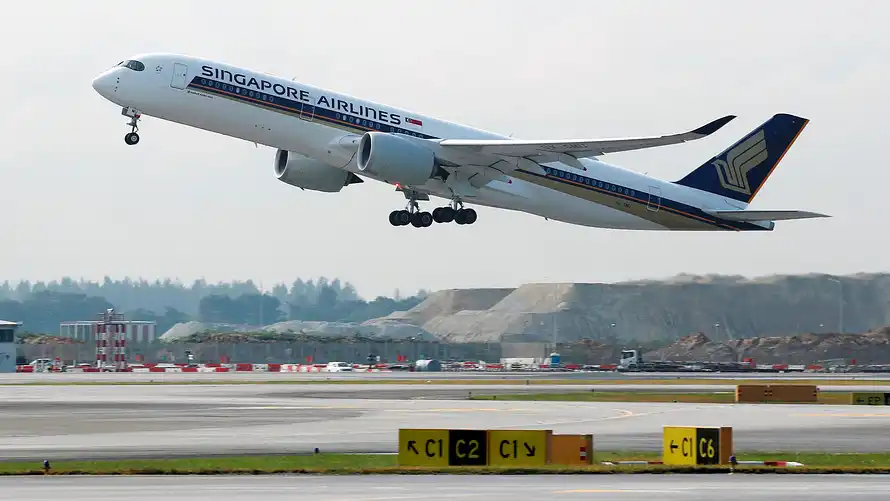
Newark Liberty International Airport has always lived slightly in the shadow of JFK, yet for travelers who value efficiency over theatrics, Newark quietly does something extraordinary. It launches aircraft on journeys so long they test the outer limits of commercial aviation, human endurance, and aircraft engineering all at once. In 2026, Newark is no longer just a convenient alternative gateway to New York City. It is one of the world’s most important launchpads for ultra-long-haul nonstop flights.
What makes Newark unique is not simply distance, but intent. These routes are designed for travelers who want to skip connections entirely, trading layovers for marathon flights that span hemispheres and time zones. Airlines operating from Newark are betting heavily on modern aircraft performance, premium-heavy cabins, and passengers who value time above all else. The result is a portfolio of flights that stretch from North America to Africa, South Asia, East Asia, and Southeast Asia without touching the ground in between.
By 2026, the longest nonstop flight from Newark pushes close to 9,500 miles, a figure that would have sounded like science fiction two decades ago. These routes are not experimental novelties. They are scheduled, daily, revenue-generating services supported by next-generation widebody aircraft, advanced flight planning, and carefully optimized cabin configurations.
The following deep dive explores Newark’s ten longest nonstop routes in 2026, not as a list of distances, but as a window into how far global aviation has come—and where it is heading next.
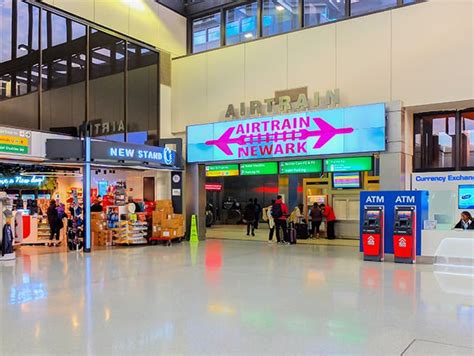
Singapore Airlines And The 9,484-Mile Benchmark
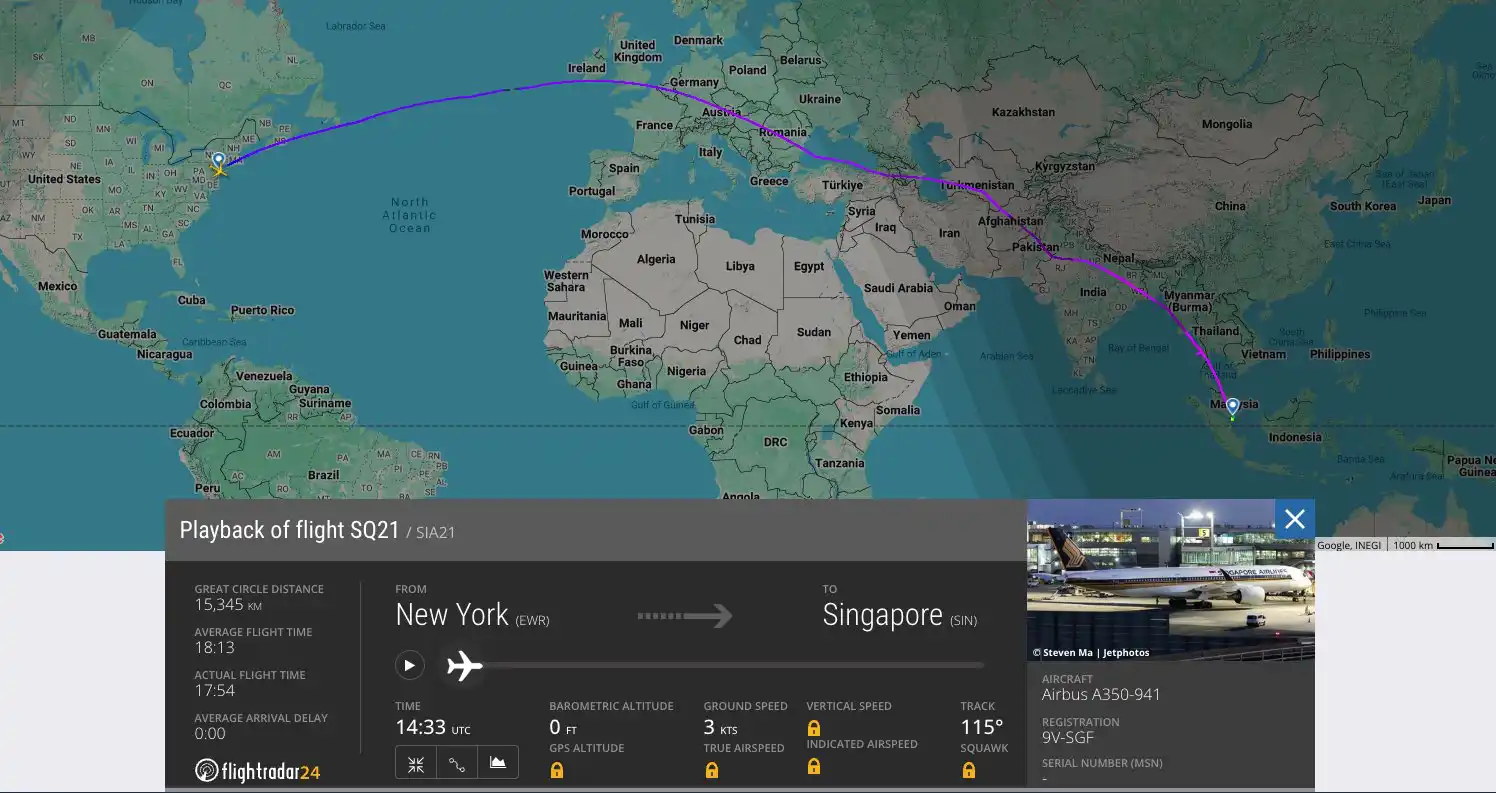
At the very top of Newark’s long-haul hierarchy sits a flight that has already earned legendary status among aviation enthusiasts. The nonstop service between Newark Liberty International Airport (EWR) and Singapore Changi Airport (SIN) remains the longest scheduled commercial flight in the world in 2026, spanning 9,484 miles (15,263 kilometers).
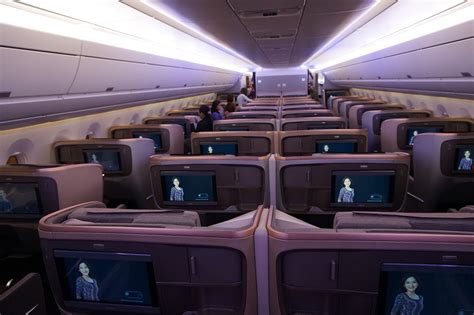
Operated daily by Singapore Airlines, this route is powered by the Airbus A350-900ULR, a specially modified ultra-long-range variant engineered for missions that stretch close to twenty hours. The westbound flight from Newark typically blocks at around 19 hours and 10 minutes, while the eastbound return trims that to roughly 17 hours and 50 minutes, thanks to favorable winds.
What truly sets this flight apart is its cabin philosophy. There is no economy class. Instead, passengers are offered a premium-focused experience with 67 full-flat business class seats and 94 premium economy seats, allowing for lower weight, improved comfort, and better onboard well-being during the marathon journey. This design reflects a clear understanding of who chooses such flights: executives, long-haul loyalists, and travelers who value seamless connectivity between two global financial hubs.
This route is less about endurance and more about precision. Every kilogram of fuel, every catering choice, and every cabin layout decision is optimized to make the impossible feel routine.
Africa Joins The Ultra-Long-Haul Conversation From Newark
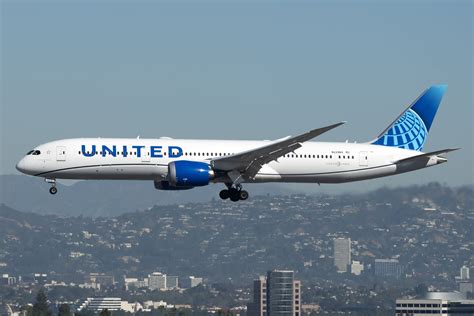
Africa features prominently among Newark’s longest nonstop routes in 2026, underlining the airport’s growing role as a bridge between North America and the African continent. The longest of these corridors connects Newark with Johannesburg (JNB), covering 7,988 miles (12,855 kilometers).
United Airlines operates this route nearly daily, with 343 scheduled departures across the year, all flown by the Boeing 787-9 Dreamliner. The choice of aircraft is no accident. The 787-9 offers an ideal balance of range, fuel efficiency, and passenger comfort, making it well-suited for ultra-long missions over the Atlantic and deep into the Southern Hemisphere.
Close behind Johannesburg is Cape Town (CPT), another South African destination served nonstop from Newark. At 7,816 miles (12,579 kilometers), this route operates between 12 and 18 times per month, also using United’s Boeing 787-9 fleet. These services reinforce United’s position as the leading U.S. carrier for nonstop connectivity to South Africa, a market that has historically required European or Middle Eastern connections.
These African routes are not seasonal experiments. They are strategic commitments that reflect strong demand from business travelers, tourism flows, and diaspora communities seeking direct access without intermediate stops.
India’s Nonstop Surge From Newark
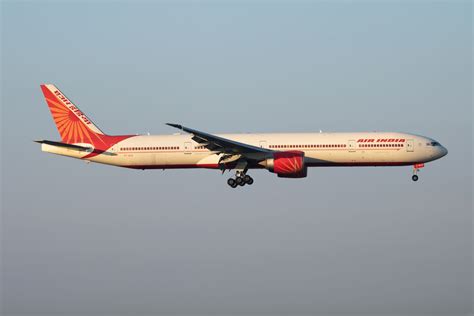
India occupies a critical position in Newark’s long-haul network, with two major cities ranking among the airport’s top five longest nonstop routes in 2026. The longest of these is Newark to Mumbai (BOM), a formidable 7,806-mile (12,563-kilometer) journey.
This route is served by Air India’s Boeing 777-300ER, operating between 12 and 14 times per month. The aircraft’s high payload capability allows it to carry both passengers and cargo over immense distances, making the route commercially viable despite its length. Air India’s presence here is also symbolic of its broader transformation, as the carrier modernizes its fleet and network strategy.
Just slightly shorter, but more frequent, is the Newark to Delhi (DEL) nonstop at 7,323 miles (11,785 kilometers). This route sees daily competition between United Airlines’ Boeing 787-9 Dreamliner and Air India’s Airbus A350-900, offering travelers multiple cabin products and scheduling options.
Together, these routes represent a major shift in transcontinental travel. What once required a stop in Europe or the Gulf can now be accomplished in a single leap, reshaping travel patterns between the United States and the Indian subcontinent.
Ethiopian Airlines And The Gateway To East Africa
Newark’s sixth-longest nonstop route in 2026 extends 6,985 miles (11,241 kilometers) to Addis Ababa, operated by Ethiopian Airlines. This service uses a mix of Boeing 787-8 and 787-9 Dreamliners, with up to 14 departures per month.
Ethiopian Airlines has built one of Africa’s most extensive intercontinental networks, and its Newark service plays a key role in connecting North America with East Africa and beyond. Addis Ababa functions as a powerful hub, offering onward connections to dozens of destinations across the continent.
From Newark’s perspective, this route adds depth rather than sheer distance. It enhances the airport’s status as a truly global gateway, linking passengers not just to a single city, but to an entire region with minimal friction.
Seoul, Dubai, And The Middle East–Asia Corridor
Asia dominates the latter half of Newark’s longest nonstop routes, beginning with Seoul Incheon International Airport (ICN). United Airlines’ new service to Seoul spans 6,897 miles (11,100 kilometers) and is flown using the Boeing 787-9. This route strengthens Newark’s connectivity to Northeast Asia and taps into strong demand from both business and leisure travelers.
Slightly shorter, at 6,861 miles (11,042 kilometers), is the nonstop route to Dubai International Airport (DXB). Interestingly, this service is operated by United Airlines, not Emirates. While Emirates does serve Newark, it does so via Athens, making United’s nonstop offering the fastest direct link between the New York region and Dubai in 2026.
These flights are emblematic of modern aviation economics. Range is no longer the primary limitation. Instead, airlines focus on aircraft efficiency, premium demand, and strategic network positioning.
Tokyo’s Twin Gateways From Newark
Rounding out Newark’s top ten longest nonstop flights are two routes to Tokyo, served by Haneda (HND) and Narita (NRT) airports. The Newark–Haneda route measures 6,760 miles (10,879 kilometers), while Newark–Narita follows closely at 6,732 miles (10,834 kilometers).
These routes reflect Japan’s unique dual-airport system, with Haneda favored for its proximity to central Tokyo and Narita offering broader international connectivity. Together, they provide Newark passengers with flexible access to Japan’s capital region, supported by aircraft capable of maintaining high comfort levels over flights that routinely exceed 13 hours.
Why Newark Has Become A Long-Haul Powerhouse
Newark’s dominance in ultra-long-haul flying is not accidental. Its role as United Airlines’ primary East Coast hub ensures a steady flow of connecting passengers, while its geographic position offers efficient great-circle routings to Africa and Asia. Add modern terminal infrastructure and strong alliance partnerships, and Newark becomes an ideal launch point for flights that redefine distance.
These routes also illustrate a broader truth about aviation in 2026. The age of range anxiety is over. Aircraft like the Airbus A350-900ULR and Boeing 787 Dreamliner families have transformed what airlines can do nonstop, enabling routes that prioritize time savings, passenger comfort, and operational efficiency.
Newark’s longest flights are not just impressive on paper. They are a living demonstration of how far commercial aviation has pushed the boundaries of physics, economics, and human patience—all while making the world feel just a little bit smaller.