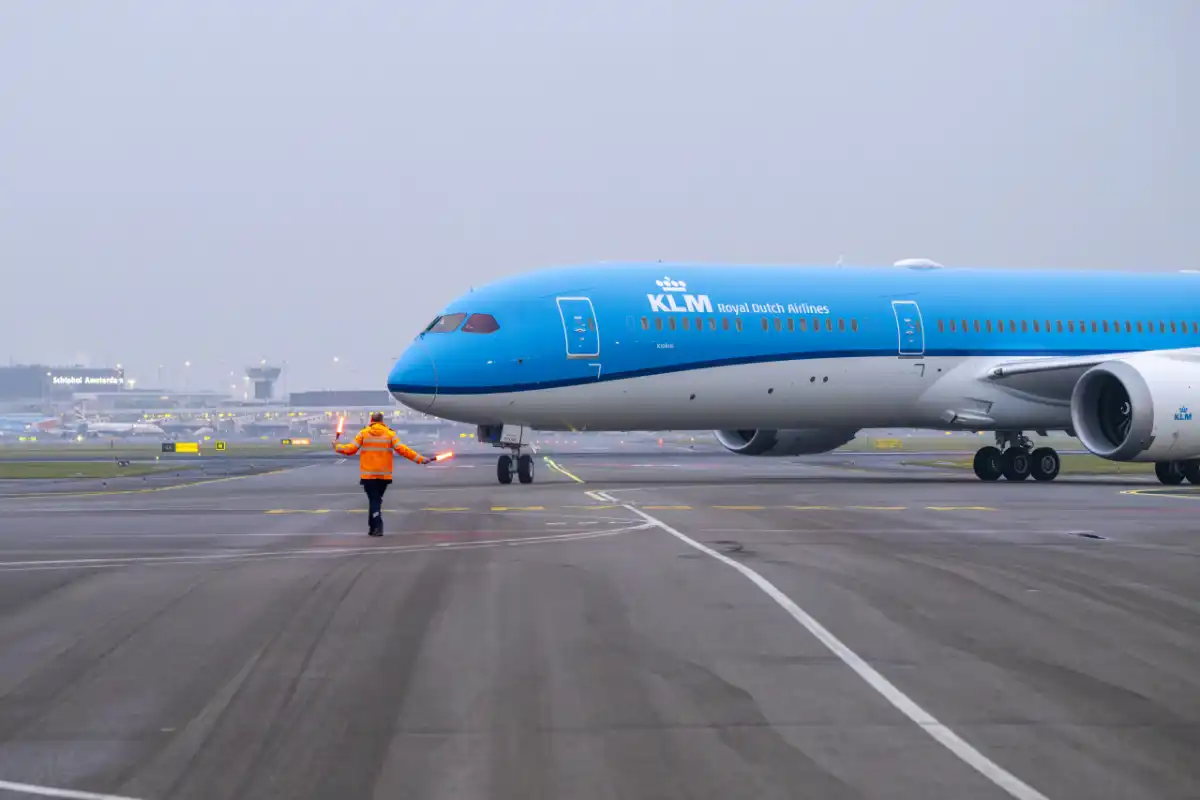
KLM is preparing for one of its most ambitious long-haul schedules in modern history, with a network of ultra-long routes stretching deep into Asia and South America through 2026 and early 2027. Operating from Amsterdam Schiphol Airport, the Dutch flag carrier is quietly building a portfolio of flights that rival the endurance missions traditionally associated with Gulf airlines and Pacific giants.
While KLM is not Europe’s largest airline, its strategic use of one-stop operations and carefully optimized aircraft deployment has created some astonishingly long journeys. Several routes now approach or exceed 18 hours in block time, placing them among the most demanding scheduled services operated by any European airline.
These flights are not simply about distance. They reveal how geopolitical restrictions, tourism demand, colonial-era travel links, aircraft efficiency, and airport slot strategy are reshaping the future of long-haul aviation.
KLM’s 2026 schedule demonstrates how airlines are adapting to a rapidly changing global market while still maintaining operational efficiency across some of the world’s most challenging city pairs.
KLM’s Longest Flight In 2026 Will Reach Nearly 19 Hours
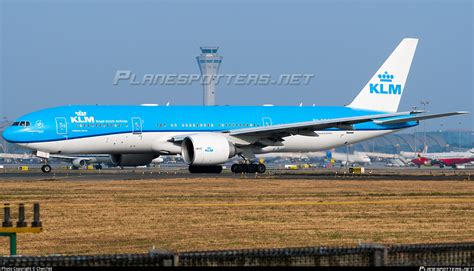
The carrier’s single longest scheduled passenger service will be the Manila-to-Amsterdam route operating via Taipei. According to schedule filings, the maximum block time reaches an enormous 18 hours and 35 minutes, making it the longest KLM service ever scheduled.
The route operates four times weekly using Boeing 777-200ER and Boeing 787-9 aircraft. Despite the stop in Taipei, passengers remain on the same aircraft during the transit operation. KLM does not hold fifth-freedom rights on the Taipei-Manila sector, meaning the airline cannot sell tickets solely between those cities.
What makes this service especially remarkable is the operational complexity behind it. Airlines must account for taxi congestion, crew duty limitations, wind patterns over Asia, and potential delays at Schiphol. Block time therefore becomes much more than simple airborne duration. It reflects a carefully engineered balance between punctuality and aircraft utilization.
The Manila market itself has become increasingly important for European carriers. Demand between the Philippines and Europe continues to rise, driven by labor mobility, tourism, and growing business links. Air France’s upcoming return to Manila further highlights the region’s strategic importance within the Air France-KLM group.
Bali Flights Continue To Anchor KLM’s Asian Expansion
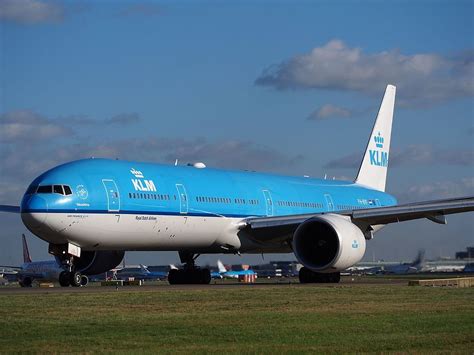
KLM’s second-longest service is its Amsterdam-Bali operation via Singapore, scheduled at up to 17 hours and 55 minutes on the return sector to the Netherlands.
Unlike the Manila route, KLM possesses fifth-freedom rights between Singapore and Bali, allowing passengers to book tickets exclusively for that segment. The route operates daily using the Boeing 777-300ER, the airline’s highest-capacity aircraft with 381 seats.
Bali has long been one of KLM’s most strategically important leisure markets. The Dutch airline resumed Bali service in 2009 and has maintained a strong presence ever since. Historical ties between the Netherlands and Indonesia continue to influence travel demand, creating one of Europe’s most resilient tourism corridors.
Passenger data shows Amsterdam ranked among Europe’s strongest local markets for Bali travel last year, generating roughly 173,000 round-trip passengers. That demand has intensified competition from airlines across the Middle East and Asia.
Even so, KLM’s routing through Singapore remains attractive for travelers seeking a single-airline journey without changing carriers midway through the trip.
South America Creates Some Of KLM’s Most Demanding Missions
KLM’s long-haul network is not limited to Asia. South America continues to generate some of the airline’s most operationally demanding flights.
The Amsterdam-to-Santiago route via Buenos Aires ranks third overall, with block times reaching 17 hours and 50 minutes. Operated daily by the Boeing 777-200ER, the route combines strong business traffic with growing tourism demand across Chile and Argentina.
The sheer geography involved creates enormous scheduling challenges. Flights crossing the Atlantic toward South America often face strong jet streams, requiring precise fuel management and timing adjustments. Airlines must also coordinate turnaround operations efficiently to maintain fleet productivity.
Further down the list, KLM’s Amsterdam-to-Guayaquil route via Quito reaches block times of 14 hours and 10 minutes. Meanwhile, Amsterdam-to-Cartagena via Bogotá stretches to approximately 14 hours using Boeing 787-9 and 787-10 aircraft.
These routes illustrate how KLM uses one-stop operations to economically connect secondary South American cities with Europe without deploying separate nonstop aircraft capacity.
Russian Airspace Restrictions Continue To Reshape Flight Times
One of the biggest influences on KLM’s ultra-long-haul operations remains the continued closure of Russian airspace to many European airlines.
Flights to destinations such as Shanghai, Seoul, Tokyo, and Osaka now require longer routings that avoid Siberian corridors once commonly used by European carriers. As a result, block times have increased substantially across Northeast Asian operations.
Shanghai Pudong-to-Amsterdam now reaches up to 14 hours and 20 minutes. Osaka-to-Amsterdam extends to roughly 14 hours and 15 minutes, while Seoul and Tokyo Narita both exceed 14 hours on certain schedules.
These longer flight paths create significant operational consequences. Airlines burn more fuel, require more crew resources, and experience lower aircraft utilization rates. At the same time, passenger demand between Europe and Asia remains strong enough to justify continued service expansion.
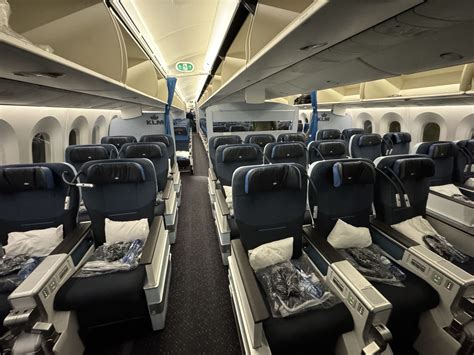
The Boeing 787-9 has become particularly valuable under these conditions thanks to its fuel efficiency and long-range economics. KLM increasingly relies on the aircraft for medium-density ultra-long-haul markets where larger aircraft would be financially inefficient.
KLM’s 10 Longest Routes In 2026
KLM’s ultra-long-haul rankings for 2026 currently stand as follows:
- Manila to Amsterdam via Taipei — 18h 35m
- Bali to Amsterdam via Singapore — 17h 55m
- Amsterdam to Santiago via Buenos Aires — 17h 50m
- Jakarta to Amsterdam via Kuala Lumpur — 16h 55m
- Shanghai Pudong to Amsterdam — 14h 20m
- Osaka to Amsterdam — 14h 15m
- Seoul to Amsterdam — 14h 10m
- Amsterdam to Guayaquil via Quito — 14h 10m
- Tokyo Narita to Amsterdam — 14h 05m
- Amsterdam to Cartagena via Bogotá — 14h 00m
Several additional destinations came close to entering the top ten. Hong Kong narrowly missed inclusion with scheduled block times approaching 13 hours and 55 minutes.
Why KLM’s Ultra-Long Flights Matter For Global Aviation
KLM’s expanding portfolio of ultra-long-haul services reveals how legacy European airlines are adapting to a fragmented aviation landscape. Instead of relying solely on giant hub-to-hub operations, the airline increasingly uses flexible one-stop services to maximize network reach while controlling operational costs.
The strategy allows KLM to serve thinner long-haul markets profitably while preserving Amsterdam Schiphol’s role as a major European connecting hub. It also demonstrates how aircraft such as the Boeing 787 have fundamentally changed long-distance economics, enabling routes that would have been commercially unrealistic only a decade ago.
As international travel demand continues recovering and evolving, KLM’s 2026 network may represent the blueprint for the next generation of European long-haul aviation — one built around endurance, efficiency, and carefully optimized global connectivity.