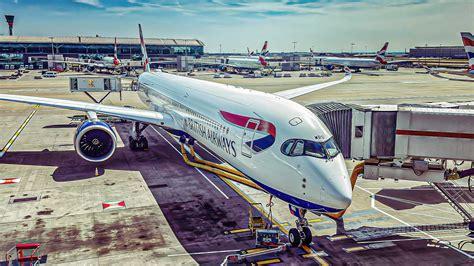
British Airways is entering a new era of ultra-long-haul aviation, with some of the world’s most demanding nonstop routes stretching close to the 16-hour mark. As Europe’s largest long-haul airline, the carrier continues to strengthen its global footprint from London Heathrow and London Gatwick, introducing new destinations while reviving strategically important routes. The result is a network that showcases both the technological capabilities of modern aircraft and the changing realities of international aviation.
Operating approximately 90 long-haul departures each day from its London hubs, British Airways has expanded its intercontinental offering by around two percent compared with the previous year. While that figure may appear modest, the underlying changes reveal a significant shift toward maintaining connectivity across increasingly complex global operating environments.
British Airways’ Ultra-Long-Haul Strategy Is Transforming
The airline’s latest network adjustments reflect a broader strategy aimed at preserving market presence in key regions while responding to geopolitical challenges, changing passenger demand, and fleet modernization initiatives.
British Airways has recently introduced services such as London Heathrow to St. Louis while preparing to restore flights between London Gatwick and Colombo. These additions reinforce the airline’s role as one of the most influential global connectors between Europe and destinations across Asia, Africa, North America, South America, and Oceania.
Unlike traditional route rankings that focus solely on geographical distance, examining scheduled block times provides a more realistic understanding of operational complexity. Block time encompasses every phase from gate departure to arrival at the destination stand, incorporating taxi operations, airborne flight duration, and contingency allowances designed to preserve schedule reliability.
For British Airways, this measurement reveals an evolving landscape where political realities increasingly shape flight planning.
After decades in which polar routing offered the fastest path between Europe and Asia, restrictions involving Russian airspace have dramatically altered journey times across several key markets.
Santiago Becomes British Airways’ Longest Nonstop Flight
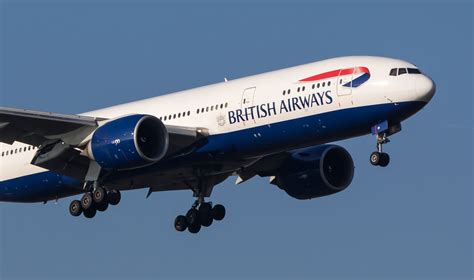
Leading the list is the nonstop connection between London Heathrow and Santiago, Chile.
With a scheduled block time reaching 15 hours and 35 minutes, this South American service represents British Airways’ longest nonstop operation. Covering approximately 6,281 nautical miles, the route highlights the importance of Latin America within the airline’s international portfolio.
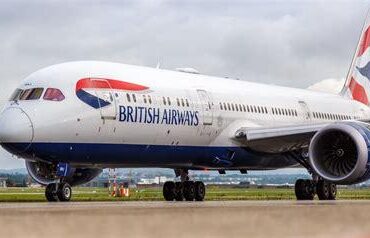
The Santiago service operates three to four times weekly using the Boeing 787-9 Dreamliner. Interestingly, British Airways deploys two separate cabin configurations on the aircraft, including an updated version equipped with the carrier’s latest Club World business-class suites.
The route itself carries considerable historical significance.
British Airways previously served Santiago through Buenos Aires aboard the iconic Boeing 747-400 until 2000. Following a sixteen-year absence from the Chilean market, nonstop operations resumed in 2017, reflecting renewed confidence in South America’s economic potential and tourism appeal.
Russian Airspace Restrictions Reshape Asian Routes
The next four positions among British Airways’ longest flights are dominated by Asian destinations affected by altered routing requirements.
Flights from Shanghai Pudong to London Heathrow now require up to 15 hours and 5 minutes, ranking as the airline’s second-longest nonstop operation. Daily Boeing 787-9 services must navigate around Russian territory, significantly extending journey duration.
Prior to these restrictions, comparable flights frequently operated in approximately thirteen hours.
The consequences extend well beyond passenger inconvenience. Longer routings increase fuel consumption, raise operational costs, contribute additional carbon emissions, and place European carriers at a competitive disadvantage against airlines still permitted to use more direct paths.
British Airways’ service from Tokyo Haneda to London Heathrow follows closely behind, reaching 15 hours in scheduled duration.
The Japanese market remains one of the airline’s most strategically important Asian destinations. Operations include a combination of Boeing 777-200ERs, Boeing 787-9s, and Airbus A350-1000 aircraft depending on seasonal scheduling requirements.
Hong Kong occupies fourth position, with return services to Heathrow extending to 14 hours and 45 minutes aboard the Airbus A350-1000.
Singapore completes the top five, recording maximum block times of 14 hours and 40 minutes. The route showcases British Airways’ diverse fleet utilization strategy, featuring Airbus A380 superjumbos alongside Boeing 777-300ER and Boeing 787-9 aircraft.
Several Singapore services continue onward to Sydney, underscoring the city’s enduring importance as a gateway between Europe and Australia.
British Airways’ 10 Longest Nonstop Routes
The airline’s longest scheduled nonstop operations currently include:
- London Heathrow – Santiago: up to 15 hours 35 minutes
- Shanghai Pudong – London Heathrow: up to 15 hours 5 minutes
- Tokyo Haneda – London Heathrow: up to 15 hours
- Hong Kong – London Heathrow: up to 14 hours 45 minutes
- Singapore – London Heathrow: up to 14 hours 40 minutes
- Kuala Lumpur – London Heathrow: up to 14 hours 5 minutes
- Bangkok – London Gatwick: up to 13 hours 20 minutes
- Mauritius – London Gatwick: up to 12 hours 35 minutes
- Cape Town – London Heathrow: up to 12 hours 10 minutes
- London Heathrow – Mexico City: up to 12 hours
Kuala Lumpur Signals British Airways’ Australian Ambitions
Among these services, Kuala Lumpur deserves particular attention.
Although currently ranking sixth with block times reaching 14 hours and 5 minutes, the Malaysian route is poised to play a pivotal role in British Airways’ future network plans.
Beginning in early 2027, the service is expected to extend onward to Melbourne, marking the airline’s return to Victoria after an absence spanning more than two decades.
The move reflects growing confidence in premium demand between Europe and Australia while leveraging Kuala Lumpur’s position as an effective intermediate hub.
Fleet Diversity Powers the Ultra-Long-Haul Network
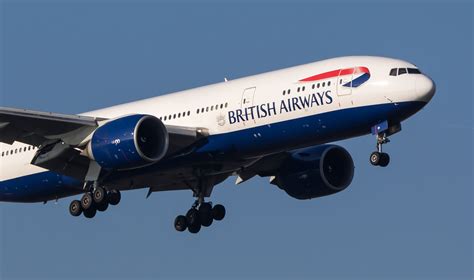
One of British Airways’ greatest strengths lies in its varied widebody fleet.
The Boeing 787-9 provides exceptional efficiency on thinner long-haul markets, while the Airbus A350-1000 delivers enhanced passenger comfort alongside reduced operating costs.
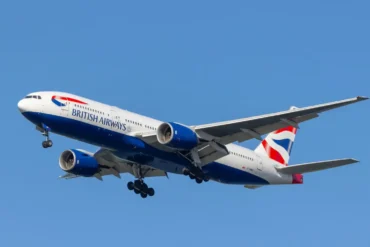
Meanwhile, the Boeing 777 family continues serving as a versatile workhorse capable of supporting high-demand routes across multiple continents.
The return of the Airbus A380 to destinations such as Singapore demonstrates that even the world’s largest passenger aircraft retains a valuable role when deployed strategically on slot-constrained, high-capacity markets.
This fleet flexibility allows British Airways to adapt rapidly to shifting demand patterns while preserving extensive global connectivity.
The Future of Ultra-Long-Haul Travel
British Airways’ expanding portfolio of marathon flights illustrates how modern aviation continues to evolve in response to external pressures and emerging opportunities.
What once seemed extraordinary has become increasingly routine. Flights approaching sixteen hours are no longer isolated anomalies but integral components of international airline networks.
Yet these routes also highlight the industry’s delicate balancing act. Airlines must simultaneously maximize efficiency, maintain reliability, navigate geopolitical realities, and deliver a competitive passenger experience.
For British Airways, the challenge is particularly pronounced. As Europe’s leading long-haul operator, every scheduling decision carries implications for profitability, sustainability, and market leadership.
Its newest generation of ultra-long-haul services represents more than an impressive list of flight times. They embody the resilience, adaptability, and global ambition required to connect an increasingly complex world from the runways of London.