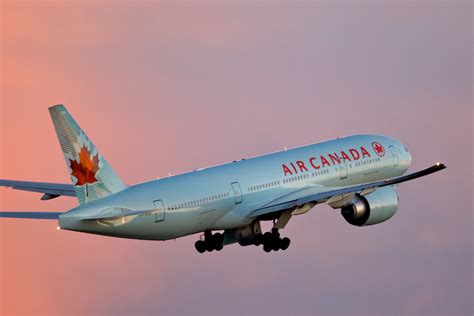
Air Canada is entering 2026 with a sharpened long-haul strategy that pushes the limits of endurance flying. With nonstop flights stretching up to 17 hours, the flag carrier is not simply adding routes; it is reshaping Canada’s position on the global aviation map. As the world’s 11th-largest airline for long-haul operations, and the dominant force in Canada with 36% of national long-haul capacity, Air Canada is consolidating its leadership from Toronto, Montreal, and Vancouver while carefully extending its reach deeper into Asia, the Middle East, and the South Pacific.
These new ultra-long routes are not symbolic gestures. They are strategic plays rooted in fleet modernization, geopolitical shifts in airspace usage, and demand patterns that have proven resilient even in volatile global conditions. In Toronto alone, Air Canada accounts for 39% of long-haul operations, and in Montreal, an impressive 45%. Vancouver, often perceived as Canada’s Pacific gateway, sees a slightly lower but still commanding 33% share. The expansion of routes in 2026 reinforces these hubs as pillars of transcontinental mobility.
What makes 2026 especially significant is the evolving fleet behind these missions. The introduction of the Airbus A350-1000, announced in February, signals a generational shift. These aircraft will eventually replace the aging Boeing 777-200LRs, while the incoming Boeing 787-10s will take over from the A330-300s. This transition is not merely about fuel efficiency; it is about range optimization, passenger comfort on flights approaching 17 hours, and competitive positioning within Star Alliance’s global network.
The Longest Nonstop Flight: Delhi to Toronto at 17 Hours
The crown jewel of Air Canada’s ultra-long-haul portfolio is the Delhi–Toronto nonstop, clocking in at a maximum scheduled block time of 17 hours and 5 minutes. Measured from chocks-off to chocks-on, block time represents the full operational envelope, including taxiing—an important metric for understanding how airlines plan crew duty cycles and fuel reserves.
This route tells a deeper story than raw duration. Prior to the war in Ukraine, flights from India to Canada typically crossed Russian airspace, keeping block times closer to 15 hours and 20 minutes. Rerouting to avoid Russian territory has added nearly two hours. The result is one of North America’s longest commercial services, surpassing Delta Air Lines’ longest offerings and approaching the extreme endurance missions operated by United Airlines.
The demand justifies the complexity. In 2025, 712,000 passengers traveled between Toronto and Delhi—nearly 2,000 travelers daily. It was the single busiest market between North America and India. For Air Canada, this is not just a route; it is a high-volume, high-yield artery connecting diaspora communities, business travelers, and government traffic.
Historically, the Toronto–Delhi corridor has been turbulent. Airbus A340 nonstops ended in 2005, replaced briefly by a one-stop Toronto–Zurich–Delhi 767 service. After several years of absence, nonstop flights returned in 2015 with the Boeing 787 before transitioning primarily to the 777-200LR. The 2026 schedule reflects a matured, stabilized commitment backed by proven demand.
Vancouver’s Asia-Pacific Powerhouse Routes
If Toronto anchors transatlantic and South Asian traffic, Vancouver dominates Air Canada’s Pacific ambitions. In 2026, several of the airline’s longest flights originate from this West Coast hub.
The Vancouver–Singapore route operates up to 16 hours and 45 minutes, served four to five times weekly year-round by the Boeing 787-9. Singapore represents both a premium business destination and a connecting hub into Southeast Asia. The 787-9’s fuel efficiency and cabin pressurization advantages make it ideally suited for such extended sectors.
Not far behind is Vancouver–Bangkok Suvarnabhumi, scheduled at up to 16 hours and 25 minutes. Frequency ranges from three weekly flights to daily service, reflecting seasonality and demand surges. Bangkok’s combination of tourism and business travel ensures balanced load factors across cabins.
The South Pacific remains critical. Vancouver–Sydney operates daily with the 777-200LR, occasionally supplemented by the 787-9, at up to 15 hours and 55 minutes. Meanwhile, Vancouver–Brisbane stretches to 14 hours and 50 minutes, with six weekly to daily frequencies. These routes anchor Canada’s connectivity to Australia and feed onward domestic networks through partnerships.
Shanghai and Seoul: Strategic Northeast Asia Returns
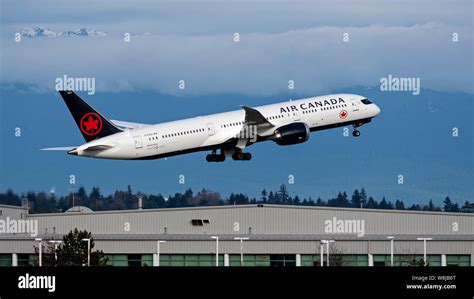
Air Canada’s 2026 network includes notable resumptions. Toronto–Shanghai Pudong, returning on June 3 after being last served in 2020, will operate four times weekly year-round with the 787-9. At up to 16 hours and 10 minutes, this flight reconnects Canada’s largest city with one of Asia’s primary economic centers.
Seoul Incheon appears twice in the top ten. Toronto–Seoul reaches 15 hours and 25 minutes, operating five weekly to daily year-round flights. Montreal–Seoul, resuming June 4, is scheduled for up to 14 hours and 40 minutes, operating three to four weekly during the summer season. These routes underscore growing commercial and cultural ties between Canada and South Korea.
Dubai: A Strategic Partnership Play
The Toronto–Dubai route, scheduled at up to 15 hours and 20 minutes, operates daily with the 787-9. Since 2015, this service has functioned as a bridge into the Gulf region, heavily supported by Air Canada’s partnership with Emirates. Due to bilateral air service agreement constraints limiting Emirates’ direct access to Canada, Air Canada effectively facilitates onward connectivity through Dubai.
Booking data indicates that a majority of passengers connect beyond Dubai rather than terminating there. This makes the route less about point-to-point demand and more about network leverage. Vancouver–Dubai operated from 2023 to 2025, and while its return remains uncertain, the Gulf region’s importance to Canadian outbound and inbound traffic is unmistakable.
Fleet Evolution: A350-1000 and the Future of 17-Hour Missions
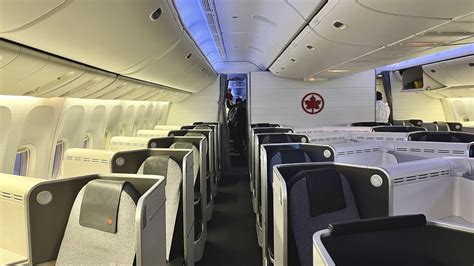
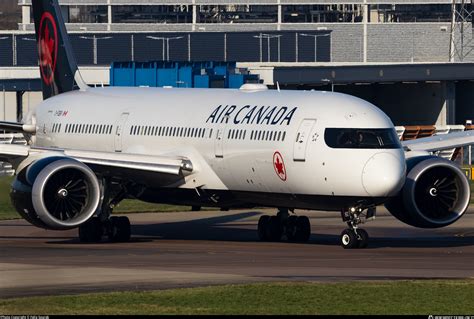
The newly ordered Airbus A350-1000 will gradually replace the 777-200LR, offering improved fuel burn, extended range capabilities, and modern cabin architecture. For ultra-long-haul operations exceeding 16 hours, aircraft economics become razor-thin calculations involving fuel efficiency, payload capacity, and maintenance cycles.
Simultaneously, the Boeing 787-10 will replace the A330-300 fleet, enabling higher-capacity long-haul operations with superior efficiency. This dual strategy positions Air Canada to remain competitive against global carriers expanding their own ultra-long-haul portfolios.
The growing role of the Airbus A321XLR in European operations also reflects a shift toward long-thin route economics, though its performance in peak summer temperatures remains a variable. Together, these fleet decisions indicate a deliberate recalibration toward range flexibility and sustainability.
Why Ultra-Long Haul Matters in 2026
Ultra-long-haul flights are more than endurance contests. They are economic statements. Every nonstop eliminates transit friction, reduces total travel time, and captures premium travelers who value direct connectivity. In markets such as Toronto–Delhi or Vancouver–Singapore, the ability to offer a single-seat journey strengthens brand loyalty and alliance positioning.
Air Canada’s 2026 expansion confirms that Canada is not a peripheral aviation player. With routes approaching 17 hours nonstop, backed by next-generation aircraft and strategically reinforced hubs, the airline is tightening its grip on transcontinental connectivity. In a world where distance once dictated inconvenience, Air Canada’s ultra-long-haul ambitions demonstrate that geography is increasingly negotiable.