Rising tensions across the Middle East are prompting a rapid shift in British naval readiness. As the confrontation involving the United States, Israel, and Iran intensifies, the United Kingdom has moved to significantly accelerate the deployment timeline of one of its most powerful naval assets—HMS Prince of Wales, the Royal Navy’s flagship aircraft carrier. The decision reflects growing concern in London that the regional crisis could expand into a wider conflict affecting maritime security, allied military bases, and vital global trade routes.
The British government has reportedly reduced the carrier’s operational deployment notice from ten days to just five, a dramatic adjustment intended to give defense planners greater flexibility in responding to sudden military developments. By compressing this readiness window, the Royal Navy signals that its carrier strike capabilities can be activated almost immediately should the situation demand a rapid response.
This heightened readiness posture places British naval personnel and supporting units on alert, preparing them for the possibility that HMS Prince of Wales could sail toward the Eastern Mediterranean or the Persian Gulf if the security environment deteriorates further. The move also underscores the United Kingdom’s ongoing commitment to supporting allied military operations and safeguarding strategic maritime routes that are essential to the global economy.
Britain Accelerates Carrier Deployment Readiness
The decision to shorten the carrier’s activation timeline marks a notable escalation in the United Kingdom’s military preparedness posture. Defense officials view the accelerated readiness as a precautionary measure designed to ensure that Britain can respond quickly if conflict between Israel and Iran widens or if regional instability begins to threaten allied forces and international shipping.
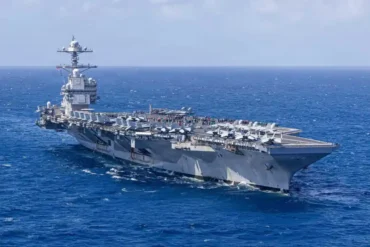
Rapid deployment capability is critical in modern naval strategy. Aircraft carriers represent floating airbases capable of delivering combat power far from national shores without relying on host-nation infrastructure. By reducing preparation time, the Royal Navy improves its ability to project military power into volatile regions at short notice, reinforcing both deterrence and operational flexibility.
This approach allows the British government to maintain strategic options without committing to immediate action. The carrier can be activated quickly, but the political decision to deploy remains contingent on how events unfold across the Middle East.
HMS Prince of Wales: The Core of Britain’s Carrier Strike Power
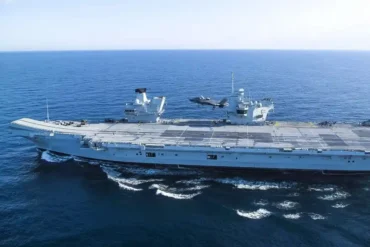
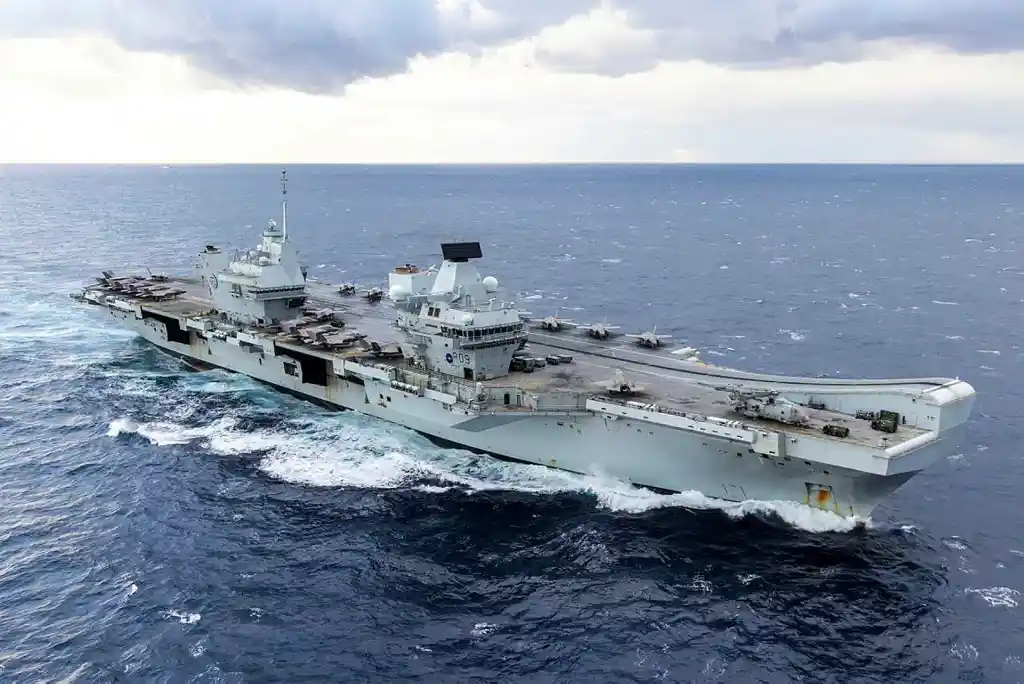
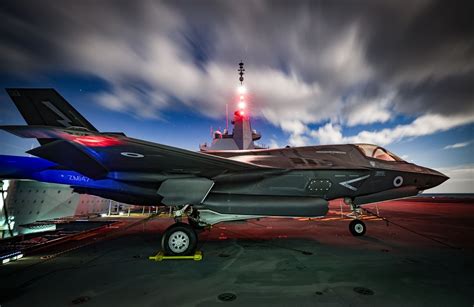
The HMS Prince of Wales is one of two Queen Elizabeth–class aircraft carriers currently serving in the Royal Navy. Displacing roughly 65,000 tons, the vessel represents the centerpiece of the United Kingdom’s modern maritime strike capability and plays a central role in Britain’s return to large-scale carrier operations.
Designed to operate a mix of advanced aircraft and support helicopters, the carrier can embark up to 36 F-35B Lightning II stealth fighters, along with Merlin helicopters configured for anti-submarine warfare and airborne early warning missions. This combination transforms the ship into a versatile platform capable of conducting a wide range of operations, including air superiority patrols, precision strikes, intelligence gathering, and maritime surveillance.
The vessel’s distinctive ski-jump flight deck allows short-takeoff and vertical-landing (STOVL) aircraft to launch without the need for catapult systems, enabling efficient operations even in demanding maritime environments. This design also simplifies maintenance requirements while maintaining high sortie rates during sustained combat operations.
How a British Carrier Strike Group Operates
An aircraft carrier rarely operates alone. When deployed into potentially hostile environments, it becomes the centerpiece of a carrier strike group, a highly coordinated naval formation designed to defend the carrier while projecting offensive power.
A typical British carrier strike group would include several key components:
- Type 45 Destroyers providing advanced air defense using the Sea Viper missile system
- Type 23 or Type 26 Frigates specializing in anti-submarine warfare
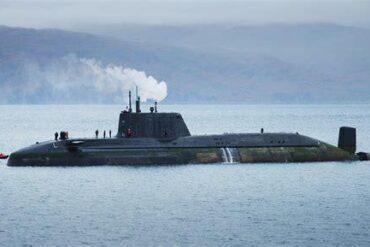
- A nuclear-powered attack submarine delivering covert surveillance and strike capabilities
- Royal Fleet Auxiliary supply ships sustaining the fleet with fuel, ammunition, and provisions
The Sea Viper air defense system aboard Type 45 destroyers combines the powerful SAMPSON radar with Aster interceptor missiles, allowing the task force to detect and engage hostile aircraft or missiles at significant distances. Meanwhile, frigates equipped with towed sonar arrays and Merlin helicopters hunt enemy submarines that might threaten the carrier group from beneath the waves.
Together, these assets create a layered defense shield capable of countering threats from air, surface, and underwater domains.
The Combat Power of the F-35B Lightning II
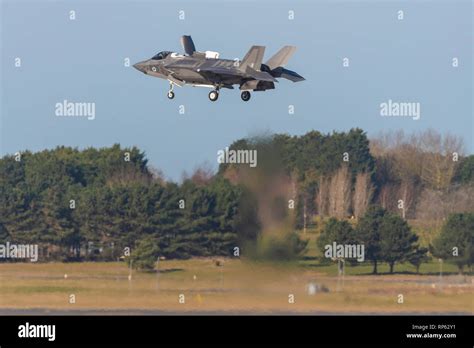
At the heart of the carrier’s offensive capability lies the F-35B Lightning II, a fifth-generation stealth fighter designed to dominate modern battlefields through advanced sensors, networked data sharing, and low observable characteristics.
The aircraft’s AN/APG-81 active electronically scanned array radar provides high-resolution targeting information while simultaneously scanning for aerial threats. Combined with sensor fusion technology, the jet integrates information from multiple onboard and external sources, giving pilots an unprecedented understanding of the battlespace.
This situational awareness allows F-35B pilots to conduct a range of missions, including:
- Precision strikes against high-value targets
- Air defense patrols against hostile aircraft
- Electronic warfare operations
- Intelligence, surveillance, and reconnaissance missions
The aircraft can carry precision-guided weapons such as Paveway IV bombs and is expected to integrate additional advanced munitions, including long-range air-to-air missiles like Meteor, in future operational configurations.
Strategic Importance of the Middle East Maritime Corridor
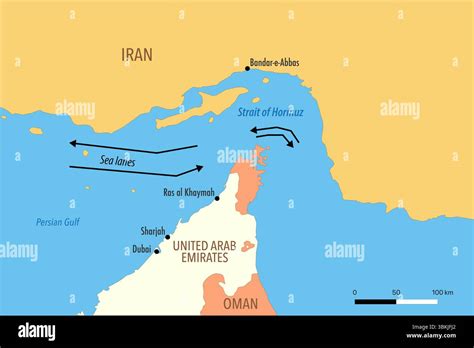
Any potential deployment of HMS Prince of Wales would place the carrier within one of the most strategically sensitive maritime regions in the world. The Strait of Hormuz, a narrow waterway connecting the Persian Gulf with global shipping routes, handles roughly 20 percent of the world’s oil shipments.
Even limited disruption to traffic through this corridor could have immediate economic consequences worldwide. Energy markets, supply chains, and shipping insurers closely monitor the security environment in the area because threats to maritime transit can ripple across the global economy.
Iran has previously demonstrated a range of capabilities that could challenge commercial shipping or naval forces operating near the strait. These include anti-ship missile batteries, naval mines, fast attack craft, and unmanned aerial vehicles. In a conflict scenario, such systems could be used to pressure international shipping lanes or disrupt coalition naval operations.
A British carrier strike group operating in or near these waters would significantly enhance allied capacity to monitor threats, intercept hostile aircraft or drones, and protect merchant vessels moving through the region.
Integration With Allied Forces in the Region
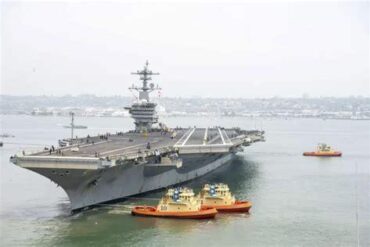
Should HMS Prince of Wales deploy to the Middle East, it would almost certainly operate as part of a broader multinational naval framework. The United States Navy maintains a persistent carrier presence in nearby waters, while NATO and allied navies routinely conduct maritime security operations throughout the Eastern Mediterranean and Arabian Sea.
British participation in these operations would strengthen coalition capabilities in several key areas. Carrier-based fighters could support air defense patrols or strike missions, while escort ships contribute additional missile defense and anti-submarine coverage. Intelligence gathered by the carrier’s aircraft and sensors would also enhance regional situational awareness for allied commanders.
The United Kingdom already maintains important military infrastructure across the region, including RAF Akrotiri in Cyprus, which supports surveillance aircraft, Typhoon fighter operations, and intelligence missions. A carrier deployment would complement these land-based assets by providing mobile airpower that can shift rapidly between operational theaters.
Carrier Power as a Strategic Signal
Placing HMS Prince of Wales on heightened readiness serves not only operational objectives but also political ones. Aircraft carriers are among the most visible symbols of national power, and their movement across global waters sends clear signals about a country’s strategic intentions.
By shortening the deployment timeline, Britain demonstrates its readiness to reinforce allied operations and protect maritime security should the regional crisis escalate. At the same time, the move stops short of immediate military intervention, preserving diplomatic flexibility while ensuring the Royal Navy can act quickly if required.
The approach reflects the enduring strategic value of aircraft carriers in modern warfare. Despite advances in missile technology and unmanned systems, large carriers continue to provide unmatched flexibility—serving as mobile airbases capable of launching combat operations, gathering intelligence, and supporting coalition forces without reliance on permanent overseas installations.
As tensions in the Middle East continue to evolve, the readiness of HMS Prince of Wales highlights how rapidly naval power can be mobilized in response to emerging crises. Whether or not the carrier ultimately deploys, the decision to place it on accelerated alert demonstrates that the United Kingdom is preparing for the possibility that regional instability could demand swift and decisive maritime action.