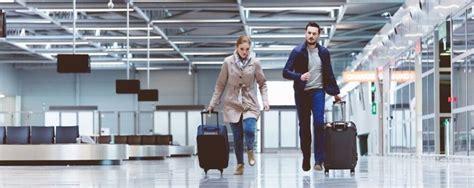
Airports compress human behavior into tight corridors, long queues, and ticking clocks. Add the stress of air travel and suddenly ordinary etiquette becomes a philosophical puzzle. One moment you are quietly inching toward the airport security scanner, shoes in hand and laptop half-extracted from your bag; the next moment someone behind you asks the question that can instantly divide a line of strangers: “My flight leaves in 20 minutes—could I please go ahead?”
At first glance the issue seems trivial. Yet the question touches on fairness, personal responsibility, empathy, and the fragile social contract that keeps crowded public spaces functioning. Cutting airport security lines when running late sits at the intersection of human courtesy and logistical reality.
Why Airport Security Lines Become Social Experiments
Airports are engineered for efficiency, but they are also laboratories of human psychology. Everyone in a security queue shares the same objective—reach the gate and board the aircraft—but their timelines differ wildly. One traveler may have arrived three hours early, sipping coffee and browsing news headlines. Another may be sprinting through the terminal after a delayed connecting flight.
Security lines expose the tension between individual urgency and collective order. Queues exist because they are the fairest way to process large groups. The moment someone jumps ahead, even with permission, the principle of equal order starts to wobble.
Yet airports themselves quietly complicate the idea of strict fairness. Premium security lanes, trusted traveler programs, and priority boarding already create layered systems where some passengers move faster than others. In that sense, the security line is not purely democratic—it is a structured hierarchy disguised as a queue.
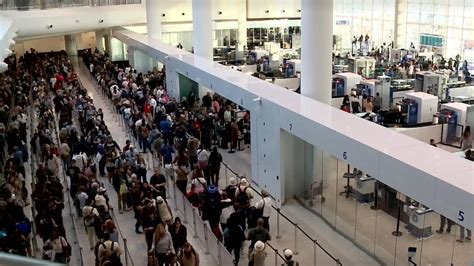
Against that backdrop, the traveler requesting to cut the line introduces a social negotiation. Instead of an official priority lane, they are asking for a temporary, informal privilege granted by strangers.
The Case Against Letting Someone Cut the Security Line
Many travelers instinctively resist the idea of letting someone pass. The reasoning is simple: poor planning should not create obligations for others.
Air travel demands time buffers for traffic, parking, baggage drop, and security screening. When someone arrives late because they underestimated those factors, allowing them to skip ahead effectively rewards bad planning. If this behavior became routine, the entire system would tilt toward chaos, where departure times—not arrival order—dictate who moves first.
Imagine a security line of two hundred passengers where half of them have flights departing soon. Determining priority would become impossible. The result would likely be arguments, frustration, and a slow breakdown of the queue itself.
There is also the psychological factor of perceived fairness. Behavioral economists have shown that humans react strongly to situations that appear unjust, even when the practical consequences are small. Watching someone bypass a line can trigger that instinctive reaction: I waited my turn—why shouldn’t they?
When Running Late Isn’t Actually the Traveler’s Fault
Reality, however, rarely fits neat rules. Sometimes travelers end up racing against the clock through circumstances outside their control.
A delayed inbound flight might leave only minutes to reach a connecting departure. A last-minute emergency trip may force someone to book a flight with barely enough time to reach the airport. Traffic accidents, train disruptions, and unexpected terminal changes can all collapse carefully planned schedules.
In those situations, the person asking to move ahead in line is not exploiting the system. They are attempting to salvage a fragile chain of logistics that has already gone wrong.
Airports themselves occasionally recognize this dynamic. Airline staff sometimes call out for passengers on flights nearing boarding closure, asking others to allow them forward. From the airline’s perspective, helping those passengers make the flight prevents the administrative headache of rebooking and luggage rerouting.
When authority figures intervene, the situation changes. The request becomes part of airport operations rather than a spontaneous negotiation among strangers.
The Hidden Variable: How the Request Is Made
Human beings are exquisitely sensitive to tone. The difference between entitlement and humility can determine whether strangers become allies or obstacles.
A traveler who approaches the line with visible urgency, offers a brief explanation, and politely asks for permission often receives sympathy. Courtesy signals respect for the people already waiting.
The opposite behavior triggers resistance almost instantly. A person strolling up while talking on the phone, coffee in hand, casually announcing that they need to pass can ignite silent rebellion in a queue.
The psychology is ancient. Social cooperation depends on reciprocal respect. When someone appears to assume privilege without acknowledging the inconvenience to others, people instinctively defend the fairness of the group.
The “Go With the Flow” Philosophy in Security Lines
Some experienced travelers adopt a pragmatic approach. Instead of making a personal judgment every time someone asks to pass, they simply follow the mood of the line.
If several people step aside and allow the traveler through, joining that cooperative gesture costs little. If the group hesitates or declines, remaining neutral avoids unnecessary confrontation.
This strategy reflects a quiet understanding of how public spaces work. A security line is not a courtroom deciding moral guilt. It is a temporary community of strangers navigating a shared inconvenience.
Getting into heated arguments rarely benefits anyone. Missing a flight is stressful enough without turning the checkpoint into a debate stage.
Airports, Stress, and the Physics of Time Pressure
Running late in an airport amplifies human emotions in a peculiar way. Cognitive scientists describe a phenomenon called time scarcity, where the perception of limited time narrows attention and increases anxiety. When someone believes their flight will depart without them, their brain shifts into problem-solving mode with a strong sense of urgency.
Meanwhile, the people in line are experiencing the opposite mental state. They have already secured their place in the queue and are progressing steadily toward the checkpoint. To them, the system is working exactly as intended.
These two mental worlds collide when the late passenger asks to move forward. One person feels a looming crisis; the others feel the importance of maintaining order.
A Practical Balance Between Courtesy and Responsibility
The reality of airport life suggests a middle ground. Refusing to let someone cut the line is not inherently unreasonable. People who arrive early and wait patiently have honored the rules of the system.
At the same time, occasional generosity toward a traveler in genuine distress costs little. Allowing a single person to step ahead rarely changes waiting times significantly, yet it can save them hours of disruption.
The trick lies in maintaining perspective. Airports already contain enough friction—security checks, delays, gate changes, and lost luggage. Turning every small etiquette dilemma into a moral battle only multiplies the stress.
Human systems function best when rules provide structure and empathy provides flexibility. In the bustling ecosystem of an airport security checkpoint, that balance keeps both order and humanity intact.