Long-haul aviation in 2026 was supposed to look smarter, faster, and more resilient. Instead, travelers are facing a year defined by missed slots, rolling delays, congested hubs, fuel pressure, and unpredictable reroutings. Across the Atlantic, between Europe and Asia, and throughout the Americas, the modern airline network is showing how fragile efficiency becomes when multiple stress points hit at once.
Passengers are discovering that the real challenge of long-haul travel no longer begins at cruising altitude. It starts with the first domestic connection, the departure queue, the passport checkpoint, or the inbound aircraft that landed late from another city hours earlier. Airlines may advertise tighter schedules and premium reliability, but the global network in 2026 often behaves like a chain reaction machine—one disruption triggering another across continents.
What makes this year especially difficult is that delays are not being caused by a single crisis. Instead, several forces are colliding at the same time: Middle East airspace instability, weather volatility, staffing shortages, stricter border procedures, and a tightening jet fuel market. The result is a long-haul sector where punctuality has become harder to protect than ever.
For frequent flyers, on-time departure now feels less like a standard and more like a pleasant surprise.
Why Long-Haul Delays Are Worse Than Short-Haul Problems
A 45-minute delay on a domestic route is irritating. On a long-haul route, it can destroy an entire itinerary. Late departures on intercontinental flights often trigger missed onward connections, lost hotel nights, crew legality complications, and aircraft rotation failures that continue for days.
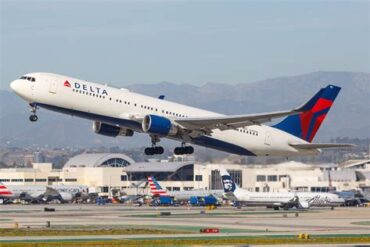
Long-haul flights are harder to recover because aircraft utilization is tightly planned. A delayed Boeing 777 arriving late into Frankfurt or Singapore may be scheduled to turn around quickly for another ultra-long route. If that inbound flight slips, the outbound service often slips with it.
Unlike short domestic sectors where another aircraft might be swapped in, widebody fleets are smaller and more specialized. There is rarely a spare Airbus A350 casually waiting nearby.
By 2026, travelers are learning an uncomfortable truth: the longest flights often depend on the smallest things going right.
Chicago to Frankfurt Has Become a Delay Hotspot
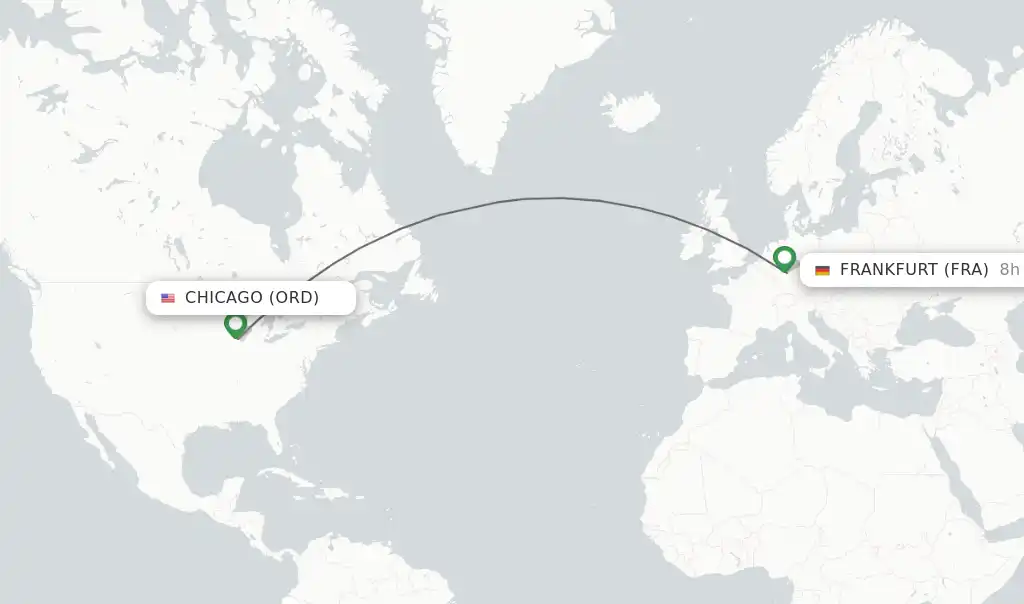
One of the most problematic major long-haul sectors in 2026 is the route between Chicago O’Hare (ORD) and Frankfurt (FRA). Roughly 46% of departures on this corridor are failing to leave on time, making it one of the most delay-prone premium business routes in the world.
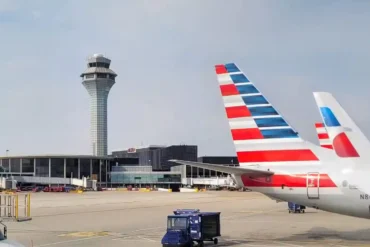
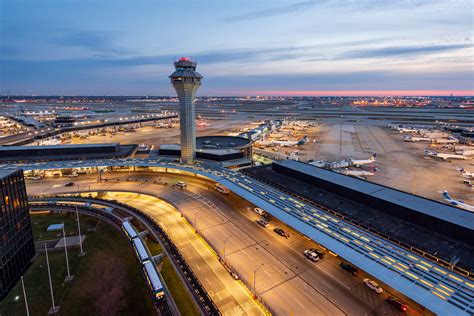
Chicago O’Hare has always been a complex airport. Multiple runways, intense weather exposure, dense domestic traffic, and international banks of departures create a difficult operating environment. When thunderstorms, staffing shortages, or arrival backlogs hit, long-haul flights are often dragged into the mess.
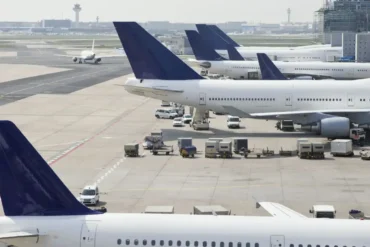
Frankfurt adds another layer. As one of Europe’s busiest transfer hubs, late arrivals from the United States can cause missed onward connections across Germany, Central Europe, and beyond. That means a delay leaving Chicago often becomes a Europe-wide scheduling problem hours later.
Washington to Frankfurt Is Facing Similar Pressure
The Washington Dulles (IAD) to Frankfurt (FRA) route is also suffering, with approximately 43% of flights delayed. This reflects a wider hub dependency issue in modern aviation.
Washington Dulles handles a mix of domestic feeders, diplomatic traffic, and transatlantic demand. When inbound narrowbody flights from smaller U.S. cities arrive late, connecting passengers miss boarding windows, bags arrive behind schedule, and departure processes slow down.
Hub systems are efficient when everything works. They become fragile when anything slips.
Airlines love the hub-and-spoke model because it concentrates demand. Travelers tolerate it because it offers more route choices. But in 2026, many passengers are seeing the downside clearly: routing thousands of people through a few giant chokepoints creates cascading failure risk.
Miami to São Paulo Is Under Growing Strain
The route from Miami (MIA) to São Paulo Guarulhos (GRU) is also reporting serious punctuality issues, with delays around 40%.
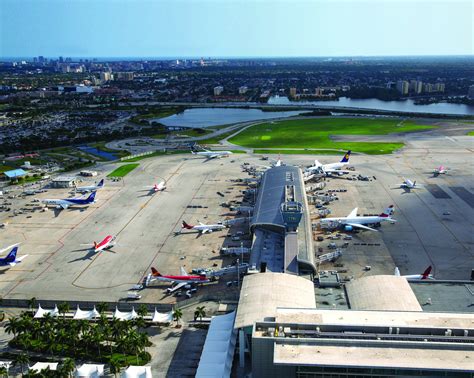
This market matters enormously. It connects financial traffic, cargo flows, tourism demand, and family travel between North America and South America. Yet Miami’s weather exposure, heavy international scheduling peaks, and airspace congestion over Florida frequently slow operations.
Summer thunderstorm patterns remain a recurring issue. A short ground stop in Miami can ripple through the entire evening departure bank, where multiple Latin America flights are scheduled within narrow windows.
São Paulo, meanwhile, is one of South America’s busiest aviation gateways. Late arrivals there affect domestic onward networks across Brazil, multiplying the impact of a delayed departure from Florida.
Domestic Flights Are Quietly Causing International Chaos
Many travelers blame long-haul delays on customs, fuel, or international regulations. Often the real cause is much simpler: the aircraft or passengers arrived late from a domestic flight.
That Chicago-to-Frankfurt departure may rely on passengers from Minneapolis, Kansas City, or Nashville. If weather disrupts those feeder flights, boarding gets delayed while connections are held. If the inbound aircraft from Denver lands late, the widebody may depart late too.
This explains why long-haul punctuality can collapse even when skies over the ocean are clear.
In recent U.S. travel data, hundreds of millions of passengers experienced some form of disruption. Peak months such as June, July, and December remain especially vulnerable because demand surges at the same time weather risks increase.
The international delay often starts in a completely different state.
America’s Worst Weather Delay Airports Still Dominate
Weather remains one of the most powerful forces in aviation, and some airports suffer more than others.
Newark Liberty continues to rank among the hardest-hit airports, with a high percentage of delay minutes tied to weather. Low ceilings, Atlantic storms, congestion, and tightly packed airspace make recovery difficult once schedules slip.
LaGuardia faces similar pressure despite shorter routes. Because Northeast traffic is interconnected, disruptions there can spread to JFK, Newark, Boston, Philadelphia, and Washington.
Chicago O’Hare remains notorious because it experiences nearly every weather hazard imaginable: snow, fog, thunderstorms, gusting winds, and winter ice.
Meanwhile, San Francisco International Airport faces marine fog and runway spacing constraints that frequently reduce arrival rates.
When these hubs slow down, long-haul schedules around the world feel the consequences.
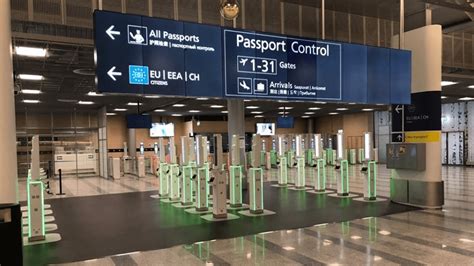
Europe’s New Entry Rules Are Creating Airport Bottlenecks
For passengers entering the Schengen Area in 2026, delays may happen before boarding rather than after landing.
The European Union’s Entry-Exit System (EES) now requires biometric registration for many non-EU travelers, including fingerprints and facial imaging. The long-term goal is smarter automated border management. The short-term reality has often been slower queues.
Major airports are experiencing extended immigration lines, limited kiosk availability, staff training issues, and technical adjustment periods. In some cases, passengers have spent hours in pre-departure or arrival processing lines.
That matters because many European airports run on tightly timed slot systems. If passengers are stuck at checkpoints and miss boarding cutoffs, flights may depart late or travelers may miss flights entirely.
Technology meant to improve flow is temporarily slowing it.
The Jet Fuel Crunch Is Reshaping Schedules
Another hidden cause of delays in 2026 is fuel supply stress.
Instability around the Strait of Hormuz has tightened global jet fuel availability, pushing prices upward and forcing airlines to rethink schedules. Some carriers are reducing weaker routes so fuel can be prioritized for strategic long-haul operations.
Others are consolidating lightly booked flights, combining passengers from two departures into one later service. For travelers, that means a “schedule change” email often translates into several extra hours at the airport.
Fuel tankering—loading extra fuel where supply is easier or cheaper—can help on shorter routes. But on long-haul flights, aircraft weight limits reduce flexibility.
When fuel becomes uncertain, punctuality often follows.
Middle East Airspace Closures Are Adding Hours to Journeys
Routes between Europe and Asia have been dramatically affected by geopolitical caution in 2026.
Even where airspace has partially reopened, many airlines remain reluctant to resume historic direct corridors over sensitive areas. Instead, flights are being pushed north through Türkiye, Georgia, Azerbaijan, and Central Asia, or south through Egypt, Saudi Arabia, and onward toward India and Southeast Asia.
Both alternatives are longer. Both are busier. Both create new congestion points.
Northern routings can add an hour or more to some journeys. Southern corridors are seeing sequencing delays as too many aircraft funnel through limited lanes.
Passengers may notice this as a flight time increase, but operationally it means more fuel burn, tighter crew limits, and fewer recovery options if something goes wrong.
Why 2026 Travelers Need a New Strategy
The smartest travelers in 2026 are adapting quickly. Nonstop flights are gaining value because every connection adds risk. Longer layovers are becoming practical again. Morning departures are often safer than late-evening flights because delays compound throughout the day.
Premium cabin passengers are also rediscovering the value of lounge access, flexible tickets, and priority rebooking—not for luxury, but survival.
Choosing the cheapest itinerary with a 52-minute connection through a stressed hub now feels less like a bargain and more like gambling with luggage.
The Future of Long-Haul Reliability
Despite current problems, the outlook is not permanently bleak. Airlines are investing in better operational forecasting, smarter crew scheduling, more fuel-efficient aircraft, and improved passenger processing systems. Airports are expanding biometric automation and modernizing traffic flow tools.
But 2026 has delivered a sharp reminder: aviation is a global ecosystem, and when weather, politics, staffing, regulation, and fuel all tighten simultaneously, delays become inevitable.
The world’s most delayed long-haul routes are not simply unlucky city pairs. They are warning signs showing where the global network is under maximum strain.
For now, the golden age of seamless long-haul travel is delayed right along with the flights.