Tensions in the East China Sea have surged following two dangerously close encounters between Japan Air Self-Defense Force (JASDF) aircraft and People’s Liberation Army (PLA) fighter-bombers on July 9 and 10, 2025. The Japanese Ministry of Defense has officially condemned these maneuvers, labeling them as “dangerous interceptions” that could result in serious accidents or diplomatic escalations.
On July 9, a JASDF YS-11EB electronic intelligence aircraft, engaged in a routine surveillance mission over international waters, was intercepted by a PLA JH-7 fighter-bomber. The Chinese aircraft closed to within just 30 meters horizontally and 60 meters vertically, maintaining the dangerously close distance for approximately 15 minutes. The following day, another JH-7 reversed the approach dimensions, flying as close as 60 meters horizontally and 30 meters vertically for 10 minutes.
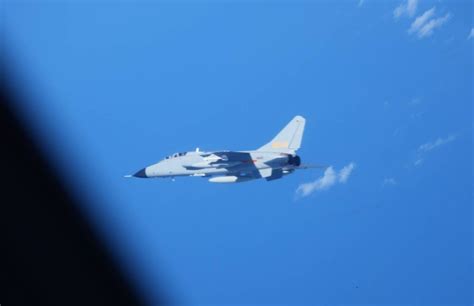
These provocative aerial encounters were met with immediate diplomatic protest. Vice Minister for Foreign Affairs Funakoshi Takehiro summoned Chinese Ambassador Wu Jianghao to lodge an official complaint and to emphasize the risks of accidental collision. Japan requested that Beijing implement measures to prevent such unsafe behavior in the future. The Ministry of Defense released photos of the July 9 incident, showing the proximity of the aircraft. Fortunately, no damage or injuries were reported.
Japan’s Aging Sentinel: The YS-11EB and Its Critical Role
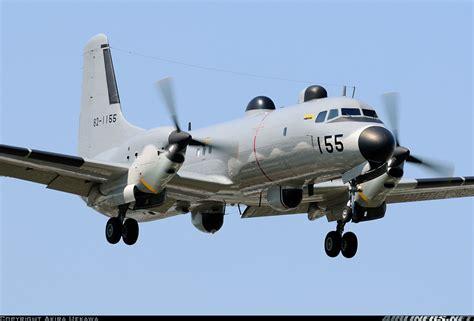
The YS-11EB is a rare and aging asset in Japan’s electronic intelligence arsenal. A military variant of the YS-11A-400, the EB model is a converted version of Japan’s first postwar airliner, originally built in the 1960s by Nihon Aircraft Manufacturing Corporation (NAMC). With only three units currently operational, the YS-11EBs are maintained by the Electronic Intelligence Squadron at Iruma Air Base, forming part of the JASDF’s Air Tactics Development Wing.
Designed for signals intelligence (SIGINT) missions, the YS-11EB is equipped with T64-IHI-10J turboprop engines, upgraded from the original Rolls-Royce Dart engines. Its unique features include a suite of electronic surveillance systems, blade antennas, and large dorsal and ventral fairings housing ELINT/COMINT equipment. Notably, the aircraft carries the J/ALR-2 electronic support system, enabling it to collect radar and communication signals across broad spectrums. A typical mission crew includes eight personnel: pilots, flight engineers, and intelligence operators.
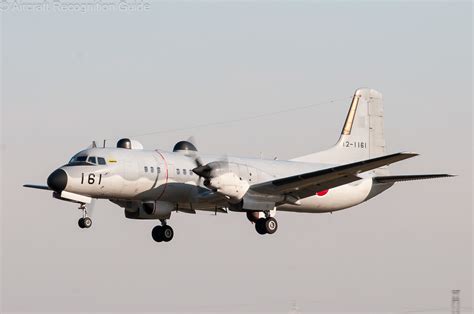
While the YS-11EB’s surveillance range of 926 kilometers and cruise speeds between 315 to 610 km/h allow for consistent monitoring, its lack of speed and maneuverability makes it vulnerable in contested skies. Despite its age, it remains the sole dedicated ELINT platform in the JASDF’s fleet—a testament to its continued relevance amid rising regional tensions.
Dangerous Patterns: China’s Growing Aggression in the Air
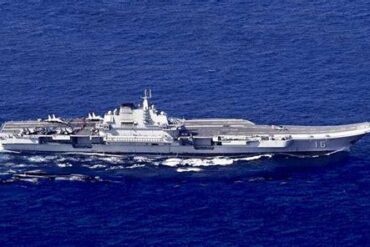
The July 2025 interceptions are part of a growing pattern of PLA aerial aggression targeting reconnaissance flights from various nations. Just weeks prior, in June 2025, Chinese J-15 fighters launched from the aircraft carrier CNS Shandong executed close-range intercepts of Japan Maritime Self-Defense Force (JMSDF) P-3C Orions over the Pacific Ocean. One such encounter involved a Chinese aircraft passing just 45 meters away, with another crossing 900 meters in front of the Japanese patrol route.
Japan lodged formal protests after those incidents as well, asserting that all of its operations were conducted in international airspace and often in support of United Nations Security Council resolutions. Japanese Defense Minister Gen Nakatani flatly rejected Chinese accusations of provocation, stating that JASDF aircraft never approach within 45 meters of foreign aircraft during missions.
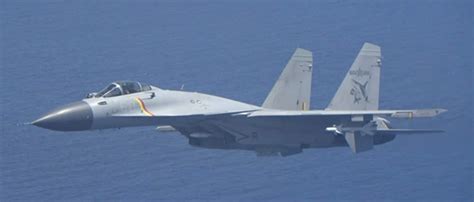
China has continued to defend its actions, claiming that foreign surveillance near Chinese military zones is provocative. However, Japan maintains that such intercepts over international waters are both unjustified and potentially catastrophic.
Regional Precedent: International Surveillance Under Siege
Japan is far from alone in experiencing these close calls. In April 2025, a U.S. Air Force RC-135W Rivet Joint was intercepted by a PLA J-10C fighter near Taiwan. The Chinese pilot declared the U.S. aircraft had violated a self-declared 24-nautical-mile zone—one that holds no standing in international law. The U.S. rejected the claim and continued its surveillance unimpeded.
Also in February 2025, a RAAF P-8A Poseidon was endangered when a Chinese J-16 released flares within 30 meters over the South China Sea. In a separate incident that same month, a Philippine Cessna 208B was approached to within 3 meters by a Chinese Z-9 helicopter near Scarborough Shoal. The Philippine government denounced the act as “blatantly hazardous.”
Even Canadian CP-140 Aurora aircraft operating under UN sanctions enforcement have faced aggressive PLA intercepts, adding to what the U.S. Department of Defense describes as a systematic campaign of “coercive intercepts.” According to Pentagon data, there have been around 300 unsafe intercepts over the past two years—180 involving U.S. aircraft alone.
The Transition Ahead: Japan’s RC-2 to Replace the YS-11EB
In light of increasing operational risk and the obsolescence of the YS-11EB, Japan is advancing the development of the RC-2, an electronic intelligence platform derived from the Kawasaki C-2 military airlifter. The RC-2 promises enhanced survivability, longer range, modern electronic warfare suites, and expanded signal intelligence capabilities that will supersede the YS-11EB and EC-1 trainers.
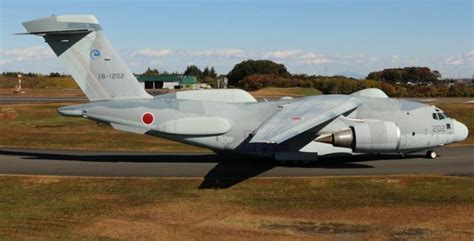
Funded and under active testing as of mid-2025, the RC-2’s entry into service will mark a generational leap in Japan’s surveillance infrastructure. Until then, however, the YS-11EB remains indispensable, flying daily missions in contested airspace, often shadowed by PLA fighters emboldened by increasingly assertive doctrine.
Diplomatic Fallout and the Risks of Miscalculation
Japan’s strong response to the July 2025 incidents reflects broader concerns over military brinkmanship in Asia-Pacific airspace. With no binding agreement between Japan and China on intercept protocol—unlike U.S.-Russia agreements from the Cold War—the risks of escalation are dangerously real. One wrong move, a misread maneuver, or mechanical failure could result in a tragedy.
International law recognizes the airspace beyond 12 nautical miles from a country’s coast as international airspace, and countries operating within it—like Japan did—are fully within their rights. Despite this, China has increasingly attempted to impose unilateral control over strategic maritime corridors, from the East China Sea to the South China Sea, using a mix of legal gray zones, air defense identification zones (ADIZ), and forward military deployments to challenge freedom of navigation.
Conclusion: Surveillance, Sovereignty, and the Struggle for the Skies
The YS-11EB incidents of July 2025 are more than isolated confrontations—they are manifestations of a growing strategic contest for control of the Indo-Pacific’s aerial commons. As China ramps up its military footprint and adopts more aggressive postures against surveillance flights, the role of legacy platforms like the YS-11EB becomes increasingly perilous.
Japan’s condemnation of China’s actions is a warning not only to Beijing but to the international community: that the erosion of safe operational norms in international airspace could have devastating consequences. Until next-generation platforms like the RC-2 assume the mantle of electronic intelligence gathering, Japan will continue relying on its aging sentinels to safeguard its interests in increasingly contested skies.