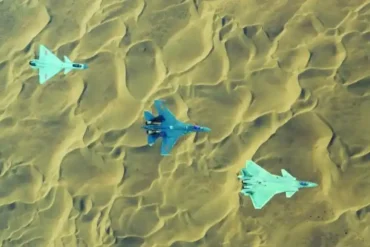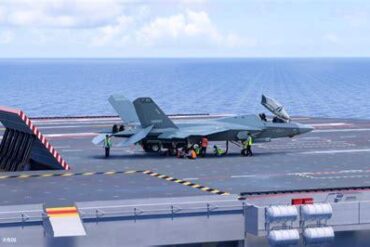
In a bold revelation by Chinese state media, the People’s Liberation Army (PLA) has publicized a series of high-stakes aerial interceptions involving its premier fighter jets—the J-16, J-15, and J-20. These aircraft, operating over contested regions such as the South China Sea and Western Pacific, reportedly engaged and expelled foreign military aircraft, including the American F-35 and F/A-18 Super Hornet, in what state broadcasters are calling “high-level interceptions.” The incidents were released in a carefully timed broadcast, underscoring China’s tightening grip over its claimed airspace and growing assertiveness in military aviation.
PLA’s Interception Playbook: Strategy, Secrecy, and Stealth
According to a June 29 report by CCTV, three separate interceptions demonstrated the capabilities of China’s modernized air fleet. Despite the PLA’s selective release of information—omitting exact dates, coordinates, and the identities of opposing forces—the broadcast conveys a clear geopolitical message: China is prepared to aggressively defend its territorial claims, even at the risk of escalating military tensions with major powers.
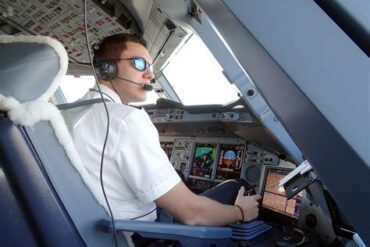
In the first reported case, two J-16 multirole fighters were deployed to intercept a foreign aircraft that allegedly penetrated China’s territorial sea boundary. The pilot, Zhang Zhanfang, detailed how he maneuvered his aircraft “to the side and slightly ahead” of the intruder, prompting it to change course. Even after circling back, the foreign aircraft faced a stern warning: “You are approaching Chinese airspace. Please leave immediately or bear the consequences!”
Notably, the aircraft type remains unspecified. Still, past encounters suggest the possibility of the aircraft being an Australian P-8 Poseidon or a US reconnaissance platform, which have frequently clashed with Chinese interceptors in the region.
J-16: From Russian Roots to Chinese Precision
The Shenyang J-16, a heavily modified version of the Russian Su-27 Flanker, now serves as one of the three mainstay fighters in the PLA Air Force, alongside the J-10C and the J-20. Dubbed by Chinese experts as the “most advanced Flanker in the world,” the J-16 boasts AESA radar, modern EW systems, and improved avionics. It has played a recurring role in PLA Air Defense Identification Zone (ADIZ) missions.
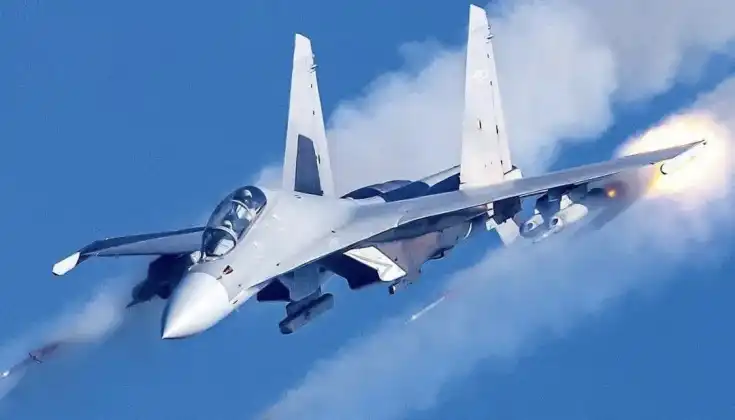
Its recurring presence in intercept missions—particularly involving the Australian Air Force and US Pacific Command assets—underlines China’s use of the platform as a versatile enforcer in contested airspace.
J-15 Carrier Fighters Confront F/A-18s Over the Philippine Sea
The second interception incident highlighted the J-15, China’s only operational carrier-based fighter, engaging in a dangerous maneuver against a U.S. F/A-18 Super Hornet. CCTV reports linked the confrontation to May 2022, during far-sea sorties involving the Liaoning aircraft carrier. The Chinese media claimed that J-15s armed with missiles chased away enemy aircraft descending from 8000 meters to 2000 meters, effectively pushing back surveillance efforts by foreign carrier groups approaching from the east and south.
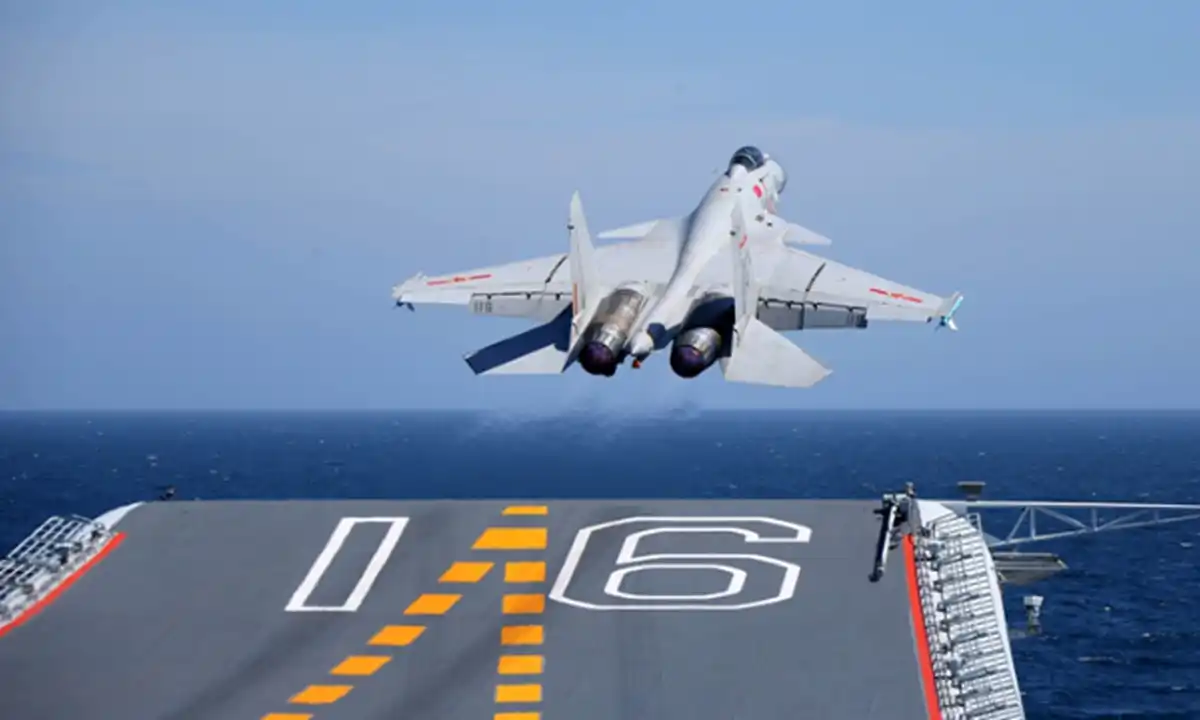
Although the U.S. and Japanese sides have not confirmed the exact nature of these interactions, recent incidents in the Western Pacific and Philippine Sea show a trend: the PLA Navy is no longer limiting its air operations to defense—it is extending its tactical reach into broader Indo-Pacific waters.
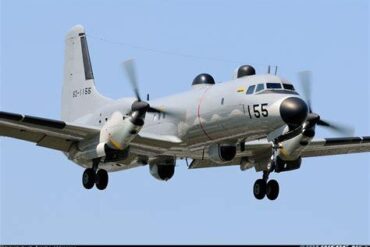
Additionally, earlier this month, Japan accused the J-15 of intercepting its P-3C Orion aircraft over international waters on two occasions, reinforcing the narrative of increased PLA naval aviation patrols and riskier behavior.
J-20 Stealth Fighters and the F-35: Ghosts in the Sky
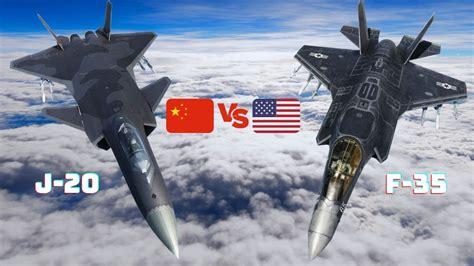
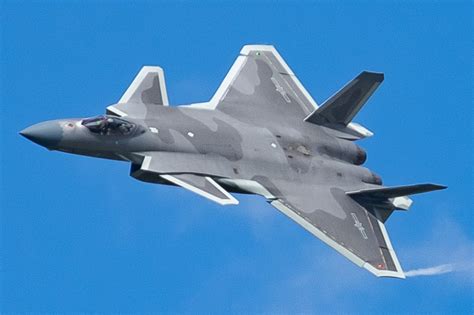
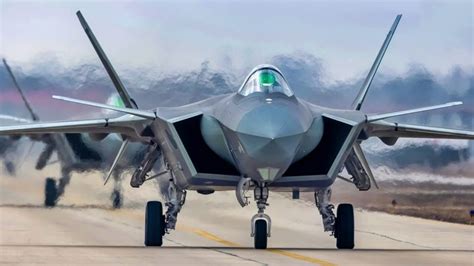
The third—and most geopolitically charged—disclosure revolves around the Chengdu J-20 “Mighty Dragon”, China’s fifth-generation stealth jet, which reportedly responded to an unidentified foreign aircraft nearing Chinese airspace. CCTV claimed that the aircraft transitioned “from training to combat,” executing multiple aggressive maneuvers that led to the foreign plane’s withdrawal after a series of “fierce attack and defense rounds.”
Although details remain ambiguous, this event closely resembles a previously acknowledged encounter between the J-20 and the F-35 in March 2022. At the time, US Pacific Air Force Commander Gen. Kenneth Wilsbach revealed that both aircraft came within close range over the East China Sea, describing the J-20’s performance and command and control systems as surprisingly proficient.
In March 2024, another reported incident saw J-20s scrambling immediately after a foreign aircraft approached Chinese airspace, leading analysts to speculate that F-35As from Kadena Air Base may have been involved again. However, experts caution that using stealth fighters for standard intercepts is both costly and operationally sensitive, suggesting these deployments occur only when China perceives a high-level strategic threat.
Strategic Symbolism Behind Interceptions
These high-profile disclosures by the Chinese state broadcaster serve multiple purposes. Domestically, they reinforce the PLA’s growing capability and resolve in safeguarding China’s maritime and aerial interests. Internationally, they act as a deterrent and warning, particularly aimed at nations conducting surveillance or patrol missions in or near Chinese-claimed airspace.
According to Cao Weidong, a Chinese military analyst featured on CCTV, the PLA’s interception rules are consistent: foreign aircraft are first warned via radio on open frequencies. If they continue, Chinese aircraft will fly parallel, then closer, and if breached, they may be subject to coercive expulsion or kinetic response.
“Our aircraft can fly parallel to the foreign aircraft, and if it moves closer inward, we can approach, warn, and drive it away. And if it enters our territorial sea and airspace, that’s a different matter,” said Cao, strongly implying that China sees military engagement as justifiable when its red lines are crossed.
A Geopolitical Shift: Control in the Indo-Pacific Skies
The PLA’s actions are not just military maneuvers—they are part of a larger strategy to redefine airspace boundaries in the Indo-Pacific. With stealth-capable aircraft, carrier strike groups, and escalating assertiveness, Beijing aims to reshape what it considers acceptable military behavior in international waters and skies.
Each interception incident—though shrouded in selective disclosure and propaganda tones—reveals a truth impossible to ignore: China is rapidly evolving its military doctrine from passive defense to active deterrence.
The use of high-tech platforms like the J-20 in direct confrontations with U.S. fifth-generation fighters signals an end to the era when China relied solely on legacy aircraft or ground-based defenses. The PLA is not merely protecting borders—it is drawing new ones.
In a region already fraught with flashpoints—from Taiwan and the South China Sea to the First Island Chain—these revelations are not just military updates. They are strategic messages delivered at Mach speeds, with afterburners lit and radars hot.
The question now is how the United States, Japan, Australia, and other regional powers will interpret these signals—and how far they’re willing to push against a PLA that’s willing to intercept, challenge, and if necessary, confront.
The sky over the Pacific is growing more crowded—and far more dangerous.