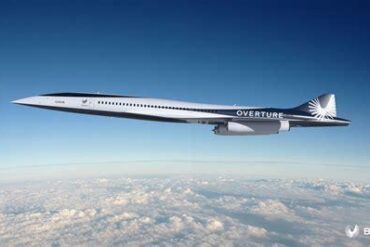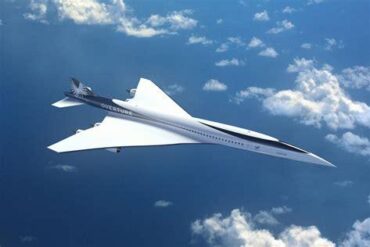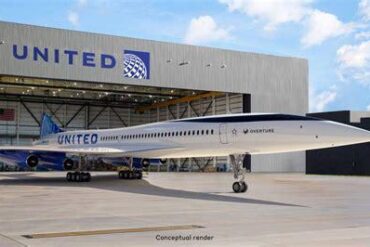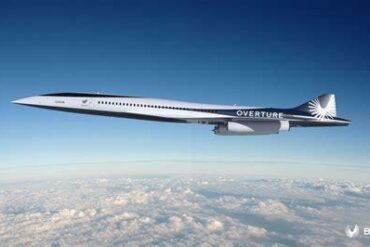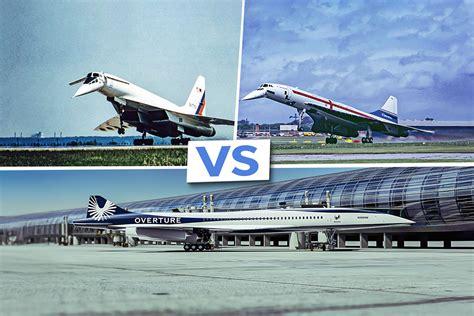
Commercial supersonic travel has fascinated airlines, engineers, and passengers ever since the Concorde first crossed the Atlantic at twice the speed of sound. Despite becoming one of aviation’s greatest technological achievements, the iconic aircraft ultimately proved that engineering brilliance alone cannot overcome poor economics. Operating costs, maintenance demands, limited passenger capacity, and astronomical ticket prices eventually brought the program to an end.
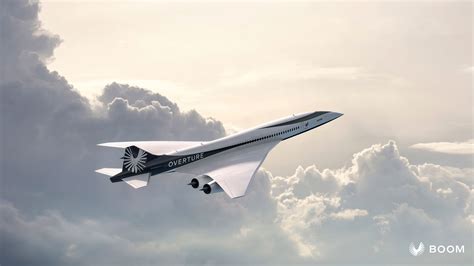
Today, Boom Supersonic is attempting something many believed impossible: bringing commercially viable supersonic travel back to the skies. Its flagship aircraft, Overture, has been designed from the ground up to solve virtually every major financial weakness that doomed Concorde. Recent regulatory changes in the United States, including the 2025 executive order easing restrictions surrounding overland supersonic flight research, have created fresh momentum for the industry. Yet regulatory progress alone does not guarantee commercial success.
For Boom Supersonic, survival depends less on reaching Mach 1.7 and far more on convincing airlines that supersonic operations can finally become profitable. The company must outperform Concorde across four critical cost lines that determine whether every flight generates sustainable revenue instead of mounting losses.
Unlike Concorde, whose economics restricted it to an ultra-exclusive niche, Overture has been engineered around modern airline business models, digital technologies, lightweight materials, and improved fuel efficiency. Whether these innovations prove sufficient remains one of the biggest questions facing commercial aviation over the next decade.
Why Concorde Failed Despite Revolutionary Engineering
The Concorde represented one of the greatest engineering accomplishments in aviation history. Flying comfortably above Mach 2, it cut transatlantic travel times nearly in half and became synonymous with luxury and prestige. Yet every spectacular flight masked an uncomfortable financial reality.
The aircraft consumed enormous amounts of fuel, required extensive maintenance after nearly every mission, demanded specialized infrastructure, and often departed with far fewer passengers than required for profitability. These issues steadily increased operating costs until airlines had little choice but to charge extraordinarily high fares.
Although the aircraft attracted celebrities, executives, and affluent travelers, the customer base simply wasn’t large enough to sustain routine operations. As ticket prices increased, demand became even more limited, creating a cycle that no amount of speed could overcome.
Boom Supersonic has carefully studied these shortcomings. Rather than building a faster version of Concorde, the company has deliberately accepted lower cruising speeds in exchange for dramatically improved operating economics.
Cost Line One: Fuel Efficiency Will Determine Everything
Among every expense involved in operating a supersonic airliner, fuel consumption remains the single largest financial challenge.
Concorde relied on four Rolls-Royce/Snecma Olympus 593 turbojet engines equipped with military-style afterburners. These engines enabled the aircraft to exceed Mach 2, but they achieved those speeds by injecting additional fuel directly into the exhaust stream. The result was staggering fuel burn, reportedly reaching approximately 6,771 gallons per flight hour.
Such consumption dramatically increased airline operating expenses while simultaneously exposing operators to volatile fuel prices.
Boom’s Overture follows an entirely different philosophy.
Instead of chasing maximum speed, the aircraft targets approximately Mach 1.7, allowing engineers to eliminate afterburners entirely. This decision alone significantly reduces fuel requirements while simplifying engine operation.
The aircraft’s lighter weight further contributes to lower consumption. Whereas Concorde exceeded 400,000 pounds at maximum weight, Overture is expected to weigh roughly 170,000 pounds, reducing the energy required throughout every phase of flight.
Equally important is Boom’s commitment to operating exclusively on 100% Sustainable Aviation Fuel (SAF). While SAF supports environmental objectives and future regulatory compliance, it also introduces a significant economic variable because global supplies remain limited and production costs remain substantially higher than conventional jet fuel.
This means Overture’s aerodynamic efficiency cannot simply be good—it must be exceptional. Every percentage improvement in fuel burn directly influences airline profitability and ultimately determines whether Boom can deliver its promised $5,000 round-trip ticket price.
Cost Line Two: Maintenance Must Become Predictable Instead Of Punishing
One of Concorde’s least visible—but most expensive—problems was maintenance.
Reports indicate the aircraft required approximately 60 maintenance hours for every hour spent flying. Such an extraordinary ratio dramatically reduced aircraft utilization while increasing labor costs and limiting revenue-generating flight time.
Much of this work centered on the Olympus engines and the unique stresses associated with sustained supersonic flight.
Boom aims to rewrite this equation entirely.
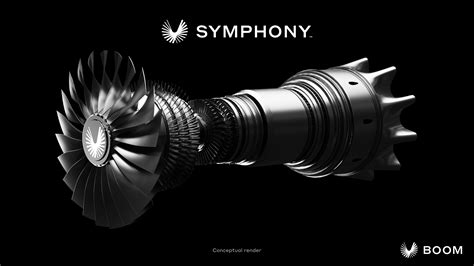
Its newly developed Symphony engines have been designed specifically for efficient supercruise without afterburners. Fewer mechanical complexities translate directly into fewer inspection requirements, lower component wear, and reduced servicing intervals.
Perhaps even more transformative is the aircraft’s extensive reliance on digital systems.
Unlike Concorde’s largely analog controls, Symphony incorporates Full Authority Digital Engine Control (FADEC) technology capable of continuously adjusting engine parameters, intake geometry, and exhaust settings during flight. These automatic adjustments maximize efficiency while reducing the risk of compressor stalls and engine surges that occasionally challenged Concorde crews.
Modern predictive maintenance systems also represent a major advantage.
Rather than waiting for failures to occur, onboard monitoring systems continuously analyze temperatures, pressures, vibration levels, and performance trends. Airlines can identify potential component replacements before they become operational disruptions, minimizing unexpected maintenance events and improving fleet availability.
Higher aircraft utilization directly translates into stronger financial performance, making maintenance optimization almost as important as fuel efficiency.
Cost Line Three: Acquisition Costs Must Make Sense For Airlines
Developing a supersonic airliner is extraordinarily expensive, but airlines ultimately judge new aircraft based on return on investment.
If purchase prices remain excessively high, carriers simply cannot justify fleet expansion regardless of technological achievements.
Boom is therefore pursuing a markedly different strategy from Concorde.
Rather than constructing an exceptionally large flagship aircraft, Overture has been intentionally sized for today’s premium long-haul market.
Its projected seating capacity of 64 to 80 passengers reflects existing international business-class demand rather than attempting to maximize total passenger volume.
The aircraft’s extensive use of advanced composite materials also offers significant long-term economic advantages.
Compared with Concorde’s aluminum and titanium structure, composites provide lower weight, improved corrosion resistance, reduced fatigue accumulation, and fewer structural inspections throughout the aircraft’s service life.
Digital manufacturing techniques further reduce production complexity compared with the largely hand-built methods used during Concorde’s era.
Combined, these improvements should help lower both acquisition costs and lifetime ownership expenses, making Overture substantially more attractive to airline finance departments.
Cost Line Four: Load Factor Profitability Could Decide Boom’s Future
Perhaps the most underestimated reason behind Concorde’s commercial failure was load factor.
Even premium airlines cannot earn profits when expensive aircraft depart half empty.
Although Concorde accommodated roughly 100 passengers, actual occupancy frequently remained well below profitable levels. Fixed operating costs—including crew salaries, airport charges, fuel, insurance, and maintenance—had to be distributed across relatively few paying customers.
The inevitable consequence was ever-higher ticket prices.
Boom has intentionally designed Overture around today’s premium travel market rather than yesterday’s assumptions.
Instead of requiring airlines to consistently fill 100 premium seats, operators need only market between 64 and 80 seats.
That difference significantly improves booking flexibility.
Many international business-class routes already generate enough premium demand to support aircraft of this size without requiring unrealistic passenger volumes.
Lower aircraft weight additionally reduces landing fees, airport charges, and handling expenses, strengthening profitability across every completed flight.
Even cockpit staffing contributes to savings.
Where Concorde required two pilots plus a flight engineer, Overture is expected to operate with only two pilots, reducing crew costs while simplifying scheduling.
NASA And Lockheed Martin Could Help Solve The Sonic Boom Problem
Although economics remain paramount, operational flexibility also plays a major role in profitability.
Concorde’s loud sonic boom effectively restricted routine overland supersonic flight across many countries, limiting airlines to relatively few transoceanic routes.
Boom hopes this limitation disappears.
Its collaboration with NASA and Lockheed Martin’s Skunk Works leverages research from the X-59 Quiet Supersonic Technology (QueSST) program.
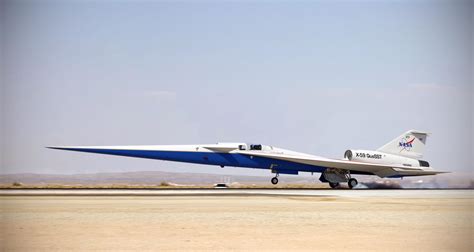
The X-59’s elongated nose, carefully shaped fuselage, swept wings, and advanced aerodynamic profile intentionally distribute shockwaves along the aircraft’s length rather than concentrating them into a single explosive boom.
Instead of producing the familiar window-rattling shockwave associated with Concorde, the design targets a much quieter 75-decibel sonic thump, comparable to hearing a distant car door close.
If regulators worldwide eventually accept these lower noise levels, airlines could access a dramatically larger network of routes.
More destinations mean higher aircraft utilization, greater scheduling flexibility, and stronger long-term profitability.
The Symphony Engine Represents Boom’s Greatest Engineering Gamble
Every successful aircraft depends on its engines, and Symphony remains one of Boom Supersonic’s boldest ambitions.
Unlike established manufacturers such as Rolls-Royce, Pratt & Whitney, or GE Aerospace, Boom is developing an entirely new engine architecture specifically optimized for modern commercial supersonic travel.
Initial testing has already demonstrated stable combustion, while engineers continue evaluating compressor performance, turbine efficiency, combustor durability, and airflow management.
Modern computational capabilities offer advantages unavailable during Concorde’s development.
Artificial intelligence, computational fluid dynamics, and sophisticated digital simulations allow engineers to analyze billions of airflow variables before physical hardware ever reaches a test stand.
These technologies dramatically reduce development time while improving confidence in final designs.
Real-time FADEC systems further enhance engine reliability by automatically adjusting airflow throughout every phase of flight, maintaining peak thermodynamic efficiency while minimizing pilot workload.
Together, these advances give Symphony capabilities that simply did not exist during the 1960s.
Can Overture Deliver Affordable Supersonic Travel?
Boom’s long-term commercial objective is ambitious but straightforward.
Instead of Concorde’s inflation-adjusted fares that frequently ranged between $12,000 and $15,000 for routine round trips—and occasionally climbed dramatically higher—the company aims to reduce average pricing to approximately $5,000.
While still positioned as a premium travel product, this pricing opens the market to a much larger segment of corporate travelers, affluent leisure passengers, and time-sensitive executives.
Success, however, depends on every economic assumption proving accurate simultaneously.
Fuel efficiency must meet expectations.
Maintenance costs must remain dramatically lower than Concorde’s.
Composite manufacturing must deliver affordable production.
Airlines must consistently achieve profitable load factors.
Sustainable Aviation Fuel supplies must expand sufficiently to support growing fleets without excessive operating costs.
If any single variable falls significantly short, ticket prices could quickly rise beyond Boom’s intended market.
The Future Of Supersonic Aviation Depends On Economics, Not Speed
Concorde proved that commercial supersonic flight was technologically possible decades ago. What it failed to prove was that airlines could operate such aircraft profitably over the long term.
Boom Supersonic is attempting to solve exactly that challenge.
Every major design decision behind Overture reflects an effort to eliminate one of Concorde’s historical weaknesses. A lighter airframe, lower cruising speed, afterburner-free engines, predictive maintenance systems, digital flight controls, composite construction, quieter aerodynamics, and right-sized passenger capacity all point toward one objective: making supersonic travel economically sustainable.
The aircraft’s success will ultimately depend less on how quickly it crosses the Atlantic than on whether airlines can consistently earn money operating it. If Boom successfully conquers the four cost lines that defeated Concorde—fuel consumption, maintenance expenses, acquisition economics, and load factor profitability—Overture could finally achieve what aviation has pursued for more than half a century: a commercially successful era of routine supersonic passenger travel.