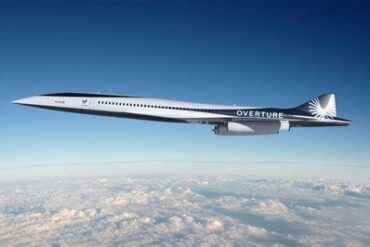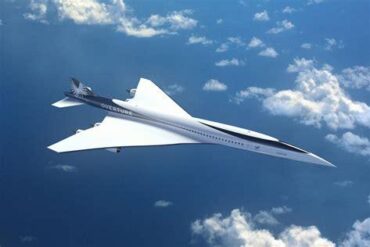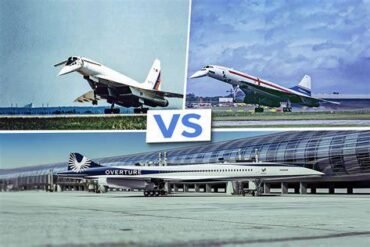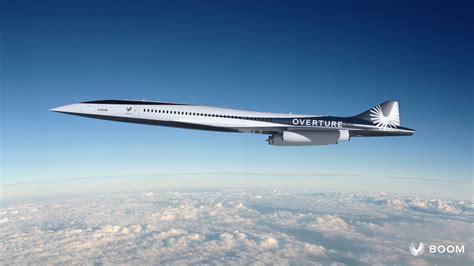
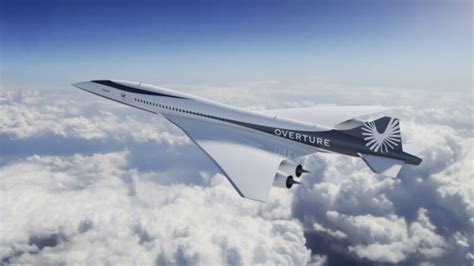
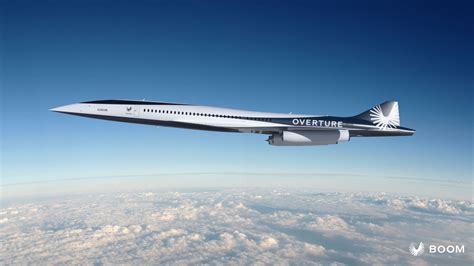
The dream of restoring commercial supersonic travel has captivated the aviation industry ever since the retirement of the Concorde in 2003. For more than two decades, airlines, aerospace companies, and travelers have waited for a successor capable of combining speed, efficiency, and commercial viability. Among all modern contenders, Boom Supersonic has emerged as the clear frontrunner. Its ambitious Overture airliner promises to carry passengers at Mach 1.7, cutting many long-haul flight times nearly in half while operating on 100% sustainable aviation fuel (SAF).
Yet despite impressive progress, one question continues to dominate industry discussions: Can Boom actually deliver commercial passenger service by 2029?
The company has achieved milestones that many aerospace startups never reach. It successfully flew the XB-1 demonstrator beyond the speed of sound, completed a dedicated manufacturing facility, secured commitments from major airlines, and even launched development of its own supersonic engine after every major engine manufacturer declined to participate.
However, these accomplishments represent only part of the journey. The remaining challenges are significantly more difficult than proving a prototype can fly. Certification, engine development, regulatory approval, manufacturing, airline confidence, and operational economics must all come together within an extremely compressed timeframe.
For investors, airlines, and aviation enthusiasts alike, the coming years will determine whether Overture becomes the next revolution in air travel—or another ambitious project delayed well into the next decade.
Boom Supersonic Has Built Remarkable Momentum
Unlike many aerospace startups that struggle to move beyond computer renderings, Boom Supersonic has steadily transformed concepts into tangible achievements.
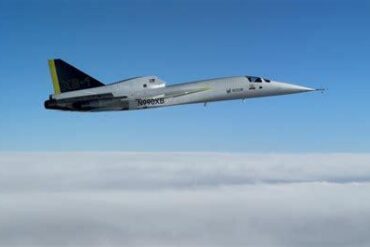
Its XB-1 technology demonstrator crossed the sound barrier on January 28, 2025, reaching Mach 1.122 at approximately 35,290 feet (10,754 meters). The achievement marked the first independently developed civil supersonic aircraft built in the United States to fly faster than sound.
The demonstration validated years of aerodynamic research while proving that the company possesses genuine engineering capability rather than merely marketing ambitions.
Equally significant is Boom’s manufacturing infrastructure.
The company’s Overture Superfactory in Greensboro, North Carolina, opened in 2024 and has been designed for an eventual production rate of up to 33 aircraft annually. Constructing a production facility before certification represents an enormous financial commitment, signaling confidence that the program will eventually enter commercial production.
Airline interest has also been encouraging.
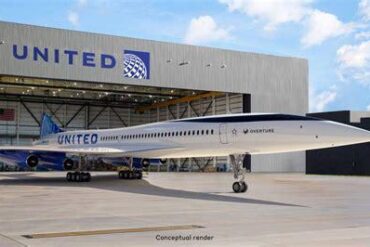
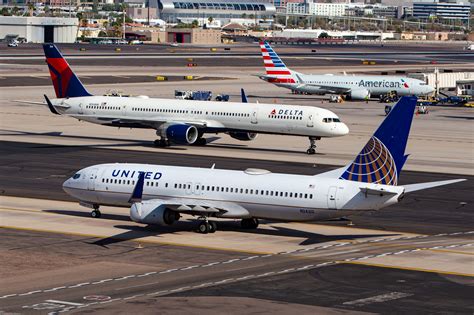
Boom currently holds approximately 130 conditional orders and pre-orders from United Airlines, American Airlines, and Japan Airlines. Although these agreements remain non-binding, they demonstrate that major global carriers believe there is potential demand for premium supersonic travel if the aircraft performs as promised.
From a business perspective, Boom has advanced further than any privately funded commercial supersonic aircraft developer in modern aviation history.
Conditional Orders Are Not the Same as Guaranteed Sales
While headlines frequently highlight Boom’s order book, the distinction between conditional commitments and firm purchases deserves careful attention.
Major airlines have essentially reserved production slots while expressing commercial interest. However, these agreements generally allow carriers to reconsider their participation if development timelines slip, certification proves more difficult than expected, or operating economics fail to meet expectations.
Unlike traditional aircraft orders, airlines have not committed billions of dollars in irreversible capital expenditures.
This flexibility benefits both parties.
Boom gains market credibility by demonstrating customer interest, while airlines preserve future fleet options without assuming significant financial risk.
The challenge is that any substantial delays could encourage airlines to postpone deliveries—or withdraw entirely—especially if alternative premium aircraft better satisfy future market conditions.
The Symphony Engine Represents the Program’s Greatest Technical Challenge
Perhaps no obstacle is larger than the engine powering Overture.
Boom originally hoped an established manufacturer would adapt an existing commercial engine for supersonic operations.
That never happened.
Rolls-Royce explored early discussions before withdrawing from the project. GE Aerospace and Pratt & Whitney also declined involvement.
While each company provided limited public explanation, the overall message was unmistakable: building an entirely new commercial supersonic engine carried enormous technical and financial risks with uncertain commercial returns.
Rather than abandoning the project, Boom decided to develop its own engine.
Named Symphony, the powerplant is designed specifically for sustained Mach 1.7 cruise while balancing fuel efficiency, emissions, maintenance requirements, and certification standards.
Creating an engine from scratch is one of aerospace engineering’s most difficult undertakings.
Unlike airframe development, engines must endure thousands of hours of operation under extreme thermal and mechanical stress. Certification requires exhaustive testing for bird ingestion, blade containment, ice ingestion, vibration, reliability, endurance, and countless emergency scenarios before regulators approve passenger service.
Boom has embraced advanced manufacturing technologies, including extensive 3D printing, to accelerate design iterations and reduce development costs.
While innovative, additive manufacturing cannot eliminate the fundamental complexity of engine certification.
History consistently shows that new commercial engine programs experience unexpected delays.
Certification Remains the Largest Unknown
Building an aircraft is only half the battle.
Convincing regulators that it can safely transport passengers represents an entirely different challenge.
Boom must simultaneously certify:
- An entirely new supersonic airframe
- A brand-new commercial engine
- Integrated flight systems
- Safety procedures
- Maintenance programs
- Production quality systems
Each certification path is enormously demanding.
Completing both at the same time has never been accomplished by a startup operating within such an aggressive schedule.
The Federal Aviation Administration (FAA) requires years of testing covering structural integrity, flight performance, system redundancy, emergency procedures, environmental compliance, and operational reliability.
Even relatively conventional commercial aircraft frequently spend several years navigating certification after their first prototype flies.
Boom has yet to publicly release a detailed roadmap showing how every certification milestone fits comfortably within the remaining timeframe leading to 2029.
That uncertainty fuels skepticism among industry analysts.
The Superpower Turbine Could Become Boom’s Financial Safety Net
One of Boom’s most intriguing strategic decisions extends beyond aviation altogether.
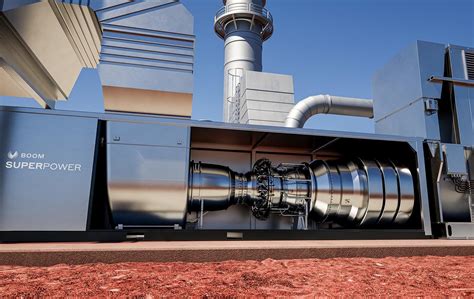
The company has introduced Superpower, an industrial gas turbine designed for electricity generation.
Rather than developing an entirely separate technology, Boom states that roughly 80% of Superpower’s hardware is shared with the Symphony engine.
This creates several meaningful advantages.
First, Superpower provides a near-term commercial product capable of generating revenue years before Overture enters airline service.
Second, manufacturing shared components across both product lines could significantly reduce unit costs through higher production volumes.
Third, the industrial turbine market—particularly power generation for rapidly expanding AI data centers—currently offers substantial commercial opportunities.
Boom has already announced significant customer interest, including agreements involving Baker Hughes, reinforcing confidence that the industrial business may develop independently of the aircraft program.
The strategy effectively diversifies company revenue while reducing reliance on outside investment during Overture’s lengthy development period.
At the same time, it raises an interesting question.
If Superpower evolves into a successful standalone business, Boom becomes less financially dependent on Overture reaching commercial service exactly as planned.
That diversification may strengthen the company’s long-term stability, regardless of aviation timelines.
Boomless Cruise Must Solve the Overland Supersonic Problem
Technical capability alone does not guarantee operational freedom.
Since 1973, supersonic flight over land has largely been prohibited in the United States because sonic booms generate disruptive noise for communities below.
Recent policy changes have encouraged regulators to replace blanket prohibitions with measurable noise standards.
However, that does not automatically permit aircraft like Overture to fly supersonically across populated regions.
Instead, Boom must demonstrate that its aircraft satisfies future acoustic certification requirements.
To address this challenge, the company developed Boomless Cruise.
Rather than redesigning the aircraft to dramatically soften its sonic boom, Boom’s software identifies atmospheric conditions where shock waves naturally refract upward before reaching the ground.
Under favorable conditions, passengers may continue flying above Mach 1 without producing an objectionable boom at ground level.
The concept is scientifically plausible.
The challenge lies in proving it consistently under real-world operating conditions.
Atmospheric conditions constantly change with temperature, humidity, altitude, weather systems, and seasonal variations.
If Boomless Cruise only works during ideal circumstances, airlines could face operational limitations that reduce schedule reliability.
Meanwhile, NASA’s X-59 pursues a fundamentally different solution by physically reshaping the aircraft to produce a dramatically quieter sonic signature.
Both approaches seek the same objective, but regulators will ultimately determine which satisfies future certification standards.
Route Economics Depend on Regulatory Success
The overland issue directly influences Overture’s commercial potential.
If supersonic operations remain limited primarily to ocean crossings, airlines will focus on premium transatlantic and selected transpacific routes.
Those markets certainly exist.
Flights such as New York–London, Washington–Paris, or San Francisco–Tokyo could benefit significantly from shorter travel times.
However, many attractive business routes include substantial overland segments.
If atmospheric restrictions prevent routine supersonic operation across continents, airlines may struggle to maximize aircraft utilization and network flexibility.
Greater route restrictions also reduce the number of city pairs where Overture’s speed advantage justifies its higher operating costs.
Consequently, regulatory decisions regarding sonic boom standards could become nearly as important as the aircraft itself.
History Suggests the Timeline Is Extremely Ambitious
Industry analysts generally agree that Boom has demonstrated remarkable execution.
Where opinions diverge is whether execution alone can overcome aerospace history.
Large commercial aircraft programs rarely proceed exactly as planned.
The Boeing 787 Dreamliner required roughly eight years from launch to commercial service despite Boeing’s vast engineering resources, established supply chains, certified manufacturing systems, and partnerships with experienced engine manufacturers.
The Airbus A350 followed a similarly lengthy path.
Both aircraft encountered certification challenges, production issues, software refinements, supplier delays, and extensive testing requirements despite relying on decades of institutional knowledge.
Boom faces every one of those challenges while simultaneously developing an entirely new supersonic platform and its own engine.
Independent aerospace research firms, including Forecast International, have therefore suggested that passenger service may realistically slip into the early 2030s rather than begin in 2029.
That assessment reflects historical precedent more than pessimism.
Can Boom Still Reach 2029?
The answer depends on whether several extraordinarily difficult milestones proceed almost perfectly.
Boom must complete engine development, validate manufacturing processes, assemble flight-test aircraft, conduct an extensive certification campaign, satisfy evolving FAA requirements, and transition into commercial production with minimal unexpected delays.
Any major setback involving the Symphony engine, structural testing, flight certification, software integration, or regulatory compliance could easily push commercial operations beyond the current target.
Nevertheless, dismissing Boom would also ignore the company’s impressive track record.
Many observers doubted the XB-1 would ever break the sound barrier.
It did.
Others questioned whether Boom could finance a dedicated manufacturing facility.
It built one.
The company has repeatedly exceeded expectations during earlier development phases.
Whether that momentum extends through the industry’s most difficult certification stage remains the defining question.
Final Thoughts: Overture Is Closer Than Ever—Yet the Hardest Work Still Lies Ahead
Boom Supersonic has accomplished what few believed possible only a few years ago. It has progressed from startup concept to genuine aircraft manufacturer with demonstrated supersonic flight, industrial infrastructure, airline interest, and an increasingly diversified technology portfolio.
Yet the journey from promising prototype to certified commercial airliner remains the most demanding phase of the program.
The Symphony engine, FAA certification, sonic boom regulations, manufacturing scalability, and the transition from flight testing to airline operations all represent major hurdles that historically consume years of additional development.
The company’s continued confidence in a 2029 entry into service reflects its ambitious vision. Whether that date ultimately proves achievable will depend less on optimism than on engineering execution, regulatory progress, and the ability to accomplish—in just a few years—what has traditionally required much longer.
Regardless of the final timeline, Boom Supersonic has already reshaped the conversation around the future of high-speed commercial aviation. The next chapter will determine whether Overture becomes the long-awaited successor to Concorde or another ambitious stepping stone toward the return of routine supersonic passenger travel.