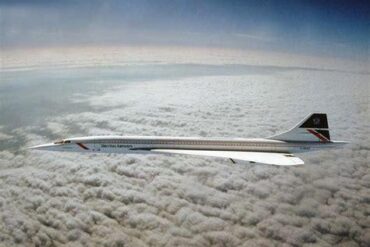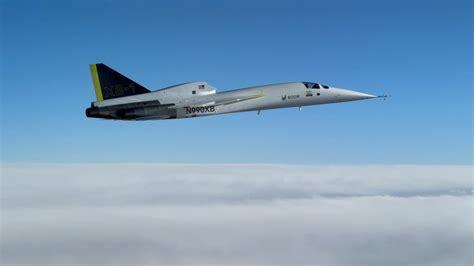
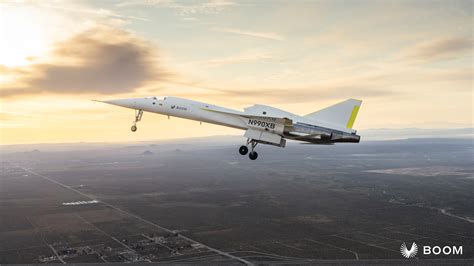
In a defining moment for modern aviation, Boom Supersonic’s XB-1 demonstrator officially broke the sound barrier, reaching Mach 1.122 on January 28, 2025, above California’s Mojave Desert. This milestone is not only a technical victory but a symbolic resurgence of supersonic commercial aviation, dormant since the Concorde’s final flight in 2003.
The XB-1, nicknamed “Baby Boom,” is a one-seat, triple-engine test aircraft designed to pave the way for Boom’s forthcoming supersonic airliner, Overture. The flight began at 8:21 a.m. Pacific Time, with test pilot Tristan Brandenburg at the controls. Climbing above 35,000 feet, Brandenburg ignited the afterburners of the aircraft’s GE J-85 engines, accelerating past the sound barrier at 8:33 a.m.
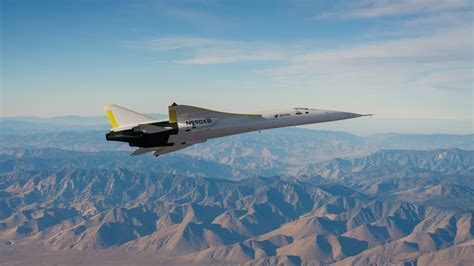
The XB-1 successfully transitioned above and below Mach 1 three times in total, each pass providing essential data on aerodynamic stability, propulsion behavior, and thermal resistance. Most notably, this was the first civil aircraft to achieve sustained supersonic flight in level altitude since the Concorde’s retirement.
Supersonic Engineering: Evolution Beyond the Concorde
Unlike its spiritual predecessor, the Concorde, Boom’s XB-1 integrates 21st-century advancements to address the limitations of past designs. One of the most visible upgrades is the replacement of the Concorde’s mechanical “droop snoot” with a high-definition synthetic vision system, incorporating multiple nose-mounted cameras to aid visibility during takeoff and landing.
This innovation not only reduces mechanical complexity but enhances safety by providing a broader, more accurate field of view. In addition, the use of composite materials throughout the airframe ensures the XB-1 maintains structural integrity at high speeds while significantly reducing weight.
Noise: The Lingering Sonic Boom Challenge
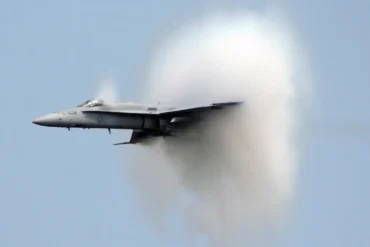
Despite the flight’s triumphant narrative, questions remain regarding the sonic impact on communities below. Supersonic booms are loud and sudden—shock waves that create explosive noise as aircraft transition through Mach 1. Surprisingly, Boom has not released public decibel measurements or shock wave data, a choice likely rooted in competitive secrecy.
However, the absence of this information highlights a broader regulatory and societal hurdle. The FAA and NASA, under the FAA Reauthorization Act of 2024, are actively studying the environmental impact of sonic booms. Their goal: to craft a regulatory framework that enables commercial supersonic flights over land without triggering public backlash.
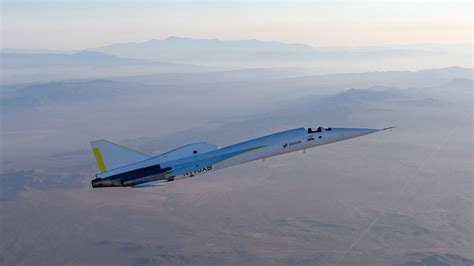
Communities affected by aircraft noise—represented by groups like the National Quiet Skies Coalition (NQSC)—demand lower DNL (Day-Night Average Sound Level) thresholds and transparent noise mitigation strategies. These discussions are crucial, especially as Boom positions the Overture for overland routes that were traditionally off-limits to the Concorde.
Overture: The Next Frontier in Supersonic Passenger Travel
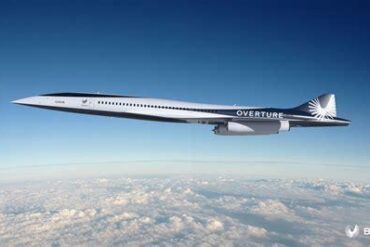
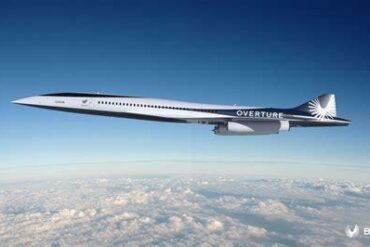
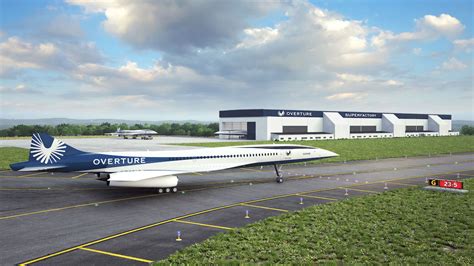
The XB-1 serves as a proving ground for Overture, a four-engine, delta-wing airliner designed to carry 64 to 80 passengers at speeds up to Mach 1.7. Unlike the XB-1, Overture will not use afterburners—a key distinction for noise and fuel efficiency. Instead, Boom is partnering with a consortium to develop a clean-sheet engine compatible with 100% Sustainable Aviation Fuel (SAF).
This move not only aligns with global carbon-neutral goals but directly addresses one of the Concorde’s most criticized attributes: its fuel-guzzling inefficiency. Boom aims for net-zero carbon emissions, a target echoed by its launch customers, including United Airlines, American Airlines, and Japan Airlines, which together have ordered or optioned over 50 Overture jets.
Flight 12: Data, Delay, and Determination
The January 28 test marks the 12th flight of the XB-1, a program that has seen numerous delays since its initial 2016 announcement. Originally slated to fly in 2017, it wasn’t until March 2024 that the XB-1 lifted off for the first time. Each subsequent mission has tested critical systems—from propulsion performance to thermal dynamics and landing visibility under extreme approach angles.
Though the aircraft’s development timeline has stretched nearly a decade, Boom’s ability to reach Mach 1.122 demonstrates the value of meticulous iteration. Every successful test consolidates trust in the platform and inches the company closer to commercial certification.
Economic Viability: Is the Market Ready for Supersonic Travel Again?
Breaking the sound barrier is only one piece of the puzzle. The economic question looms large: Will the market support the resurgence of supersonic commercial travel? Historically, the Concorde struggled financially, operating under heavy subsidies while catering to a niche demographic. For Boom, the challenge is to democratize speed without compromising sustainability or affordability.
CEO Blake Scholl believes the answer lies in technological efficiency and market repositioning. By targeting premium, transoceanic routes with reduced flight times—New York to London in 3.5 hours, Tokyo to Seattle in under 5—Boom envisions Overture competing with today’s business class rather than being an elite-only experience.
Regulatory Landscape and Political Momentum
With Congressional backing under the FAA Reauthorization Act, agencies like the FAA and NASA are now empowered to reshape rules that once banned supersonic overland travel. This involves developing new metrics for sonic disturbance and possibly even redefining what constitutes “acceptable noise.”
Efforts are also underway to modernize Part 36 certification standards, which govern aircraft noise, and integrate data-driven environmental assessments into the approval pipeline. The ultimate goal: ensure that Overture’s certification path is not blocked by regulations designed for last-century tech.
Competition and Industry Landscape
Boom’s main advantage isn’t just its technology—it’s that it has an actual aircraft in the sky. Rival efforts, such as Aerion Supersonic, collapsed before building a prototype. A proposed Gulfstream-Sukhoi collaboration never materialized. In contrast, Boom has advanced from blueprint to real-world test flight, placing it years ahead of any current competitor.
By flying a real jet that has crossed Mach 1, Boom has secured not just publicity but validation. The company’s credibility now rests on its ability to transition this proof of concept into a commercial-ready aircraft—and solve the operational, environmental, and financial hurdles along the way.
What Comes Next: From XB-1 to Overture
Boom’s immediate focus will remain on accumulating flight hours, refining subsystems, and documenting test data for FAA approval. The development of Overture’s engines, reportedly underway with partners across propulsion and sustainable fuel sectors, is also a high priority.
The company has stated that Overture’s rollout will begin by the end of this decade, with certification and first passenger flights expected by early 2032. Much hinges on regulatory milestones, public acceptance, and continued investment. But the successful Mach 1.122 flight signals that Boom has more than just ambition—it has momentum.
Conclusion: The Supersonic Dream Reignited
The successful supersonic flight of the Boom XB-1 marks a turning point in the aviation timeline. It is no longer a theoretical endeavor but a functioning reality with broader implications. With its blend of technological innovation, regulatory engagement, and market foresight, Boom Supersonic is shaping the next era of high-speed travel.
What remains is to scale from prototype to product, convince the world that faster can be cleaner and quieter, and rewrite the rules of flight for the 21st century.